A Vision of Divine Grace: The Eternal Presence of Christ
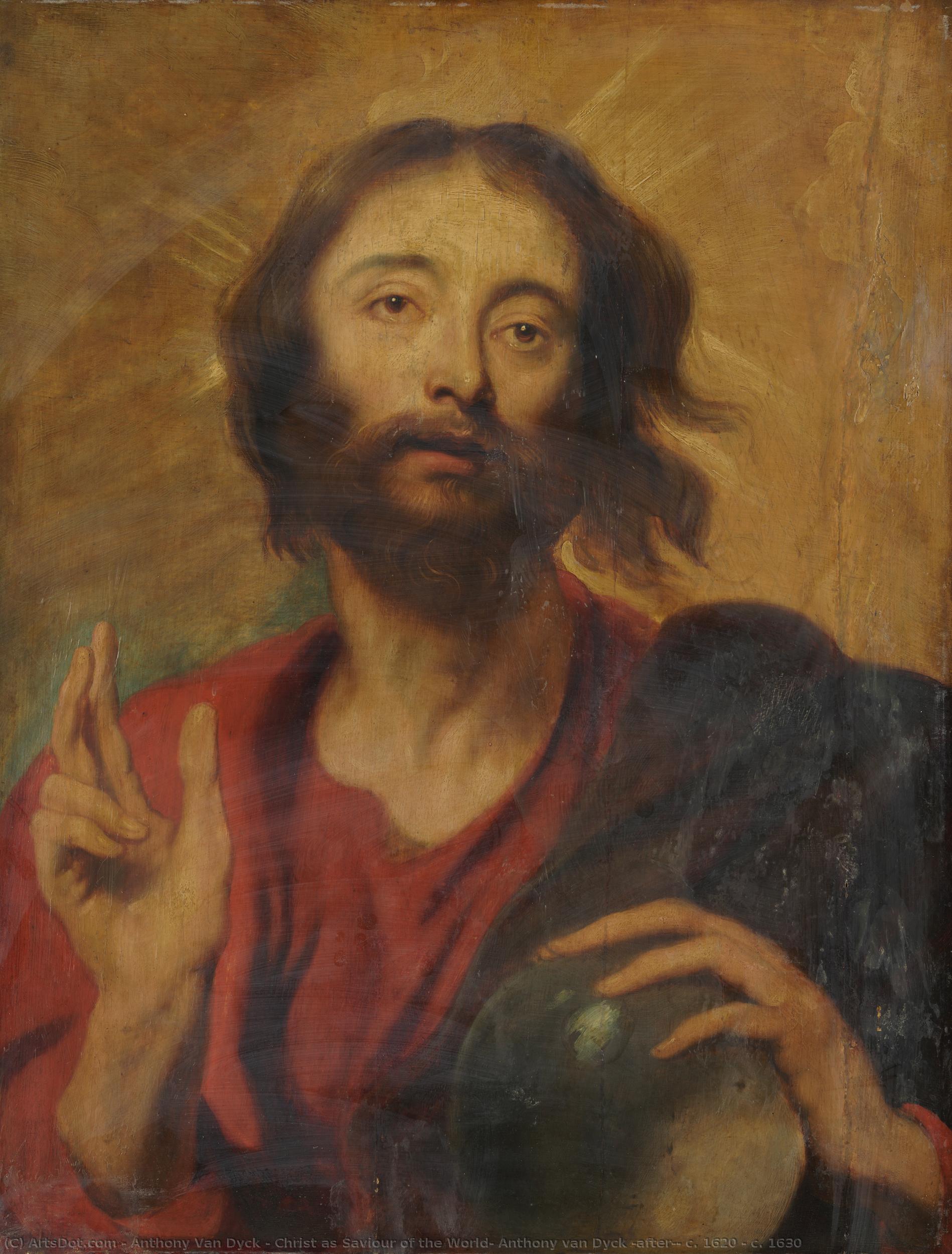
In the quiet contemplation of Sir Anthony van Dyck’s masterful interpretation of Christ as Saviour of the World, one is immediately struck by a sense of profound, celestial peace. This evocative work, created around 1630, serves as a breathtaking bridge between the Renaissance and the Baroque, capturing a moment of divine intersection between heaven and earth. At its heart, the painting presents Jesus Christ not merely as a historical figure, but as an eternal protector. Draped in a regal black robe that speaks to both profound humility and immense spiritual authority, His presence commands the space with a gentle yet undeniable gravity. As His gaze drifts upward toward the heavens, the viewer is invited to share in His communion with the divine, feeling the weight of a compassion that transcends time.
The composition is anchored by a powerful symbolic gesture: Christ’s left hand rests upon a globe, a silent but potent reminder of His dominion over the entirety of creation. This sphere, representing the universe and the earth itself, sits beneath His touch as a testament to God’s benevolent oversight. The interplay of light and shadow—the chiaroscuro technique so famously perfected by his mentor, Peter Paul Rubens—imbues the scene with a dramatic, living energy. Light seems to emanate from within the figure, illuminating the subtle textures of His hair and the soft folds of His garments, while the surrounding shadows create a sense of mystery and infinite depth. For the discerning collector or interior designer, this painting offers more than just decoration; it provides a focal point of spiritual reflection and sophisticated grandeur.
The Legacy of Flemish Mastery and Artistic Lineage
To understand the brilliance of this piece, one must look back at the rich tapestry of artistic influences that shaped Van Dyck’s hand. This particular work is a profound dialogue with the past, drawing inspiration from Titian’s iconic Christ Blessing and the lost depictions of Christ by Rubens. It represents the pinnacle of the Antwerp school's ability to blend Venetian coloristic warmth with the structural dynamism of the Flemish Baroque. The meticulous attention to detail—from the way light catches the edge of the orb to the delicate, emotive expression on Christ’s face—reflects a period where every brushstroke was an act of devotion and technical precision.
The historical significance of this imagery is further cemented by its dissemination through the era's great engravers, such as Schelte Adamsz Bolswert, which allowed Van Dyck’s vision to travel far beyond the walls of a single studio. For those seeking to adorn a space with art that possesses both historical weight and aesthetic elegance, this reproduction offers an unparalleled opportunity. It brings into a modern home or gallery the same sense of sprezzatura—that effortless, studied grace—that made Van Dyck the most sought-after portraitist of the European courts. Whether placed in a sun-drenched study or a grand, formal hall, this artwork serves as a timeless window into the soul of the Baroque era.