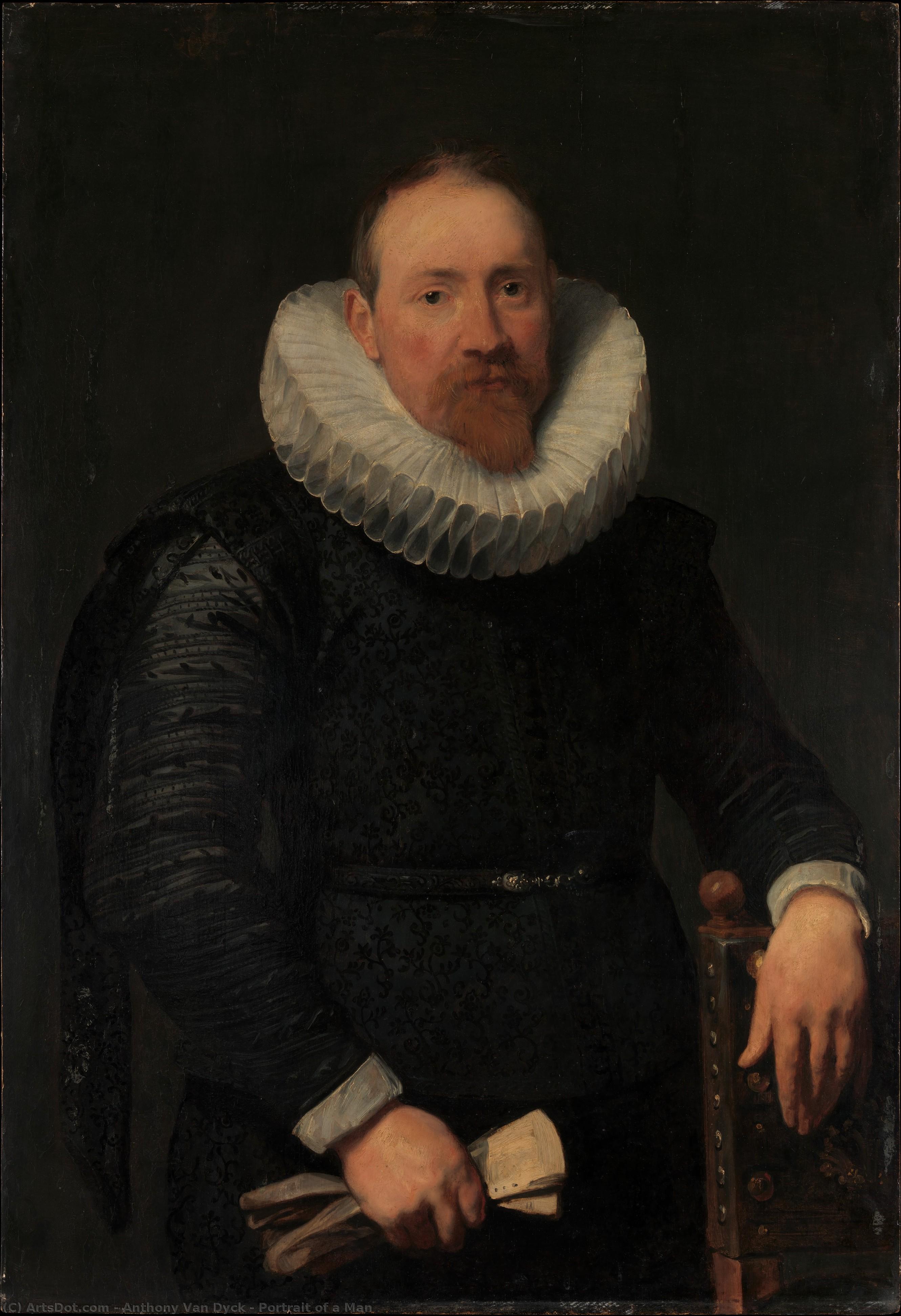
A striking portrait from 1618 by Anthony van Dyck showcases a man of dignity and authority. Influenced by Rubens and Netherlandish traditions, this oil painting exemplifies early Baroque style.
Meta Description: Sir Anthony van Dyck (1599-1641): Najpoznatiji flamski slikar Baroka poznat po elegantnim portretima evropske aristokratije i Čarlsa I., koji su revolucionarno oblikovali englesku umetnost. Dominantan stil, inovativna tehnika i nezaboravni likovi.
==== END RESPONSE ====
Subject and Composition
This impressive portrait, painted around 1618 when Anthony van Dyck was eighteen or nineteen years old, depicts a man of apparent status and refinement. The artwork is a formal, three-quarter length depiction, emphasizing the subject's face and upper body. He wears a dark velvet jacket with intricate patterns, a ruffled white collar, and a beard, indicative of the fashion prevalent during the early 17th century. The composition is centered on the figure, with a dark background that directs attention to him. The man holds a book and rests his hand on a chair back – details suggesting learning, authority, or perhaps a connection to nobility. The overall impression is one of dignity and seriousness conveyed through the pose and expression.
Style and Technique
The portrait exemplifies the style of Dutch Golden Age painting, closely resembling contemporary works by artists like Rubens, for whom Van Dyck was working at the time. It also reflects an older Netherlandish tradition seen in portraits by Anthonis Mor. The technique is oil painting, evident in the smooth gradations of color and subtle modeling of form. The lighting is dramatic and directional, highlighting his features and clothing while casting deep shadows – a characteristic feature of Baroque art that adds depth and volume to the figure. There's meticulous detail in the rendering of textures like fabric, hair, and skin, showcasing Van Dyck’s exceptional skill. The use of lines is precise and controlled, defining the contours of the face, clothing, and objects.
Historical Context
Painted in 1618, this portrait emerged during a period of significant artistic development in Flanders and Holland. The early 17th century witnessed a flourishing of portraiture as wealthy merchants and nobles sought to commemorate themselves and their families. Van Dyck’s training under Rubens exposed him to the dynamic Baroque style that was sweeping across Europe. His ability to capture not only physical likeness but also psychological depth made him highly sought after by patrons from various courts. The influence of earlier Netherlandish portraiture is evident in the formal pose and attention to detail, demonstrating a bridge between artistic traditions.
Symbolism and Emotional Impact
Beyond its aesthetic qualities, the portrait carries symbolic weight. The book held by the subject likely represents knowledge, learning, or intellectual pursuits – common symbols of status and virtue during this era. The chair back could signify authority, power, or social standing. The dark color palette—dominated by black, deep browns, and muted reds—contributes to a somber yet refined atmosphere, evoking a sense of gravitas and introspection. The overall emotional impact is one of quiet dignity and perhaps a hint of melancholy, inviting the viewer to contemplate the subject's character and place in society.
Artist Background
Anthony van Dyck (1599-1641) was a prominent figure in the Flemish Baroque movement. He began his artistic training early with Hendrick van Balen and quickly became an independent painter by 1615. Van Dyck's prolific output spanned various genres, including history painting, genre painting, landscape, portrait, and still life. His work gained recognition across Europe, leading him to serve courts in both the Spanish Netherlands and Italy. He is particularly celebrated for his portraits, which captured not only physical likeness but also psychological depth, solidifying his legacy as one of the most important artists of the 17th century.