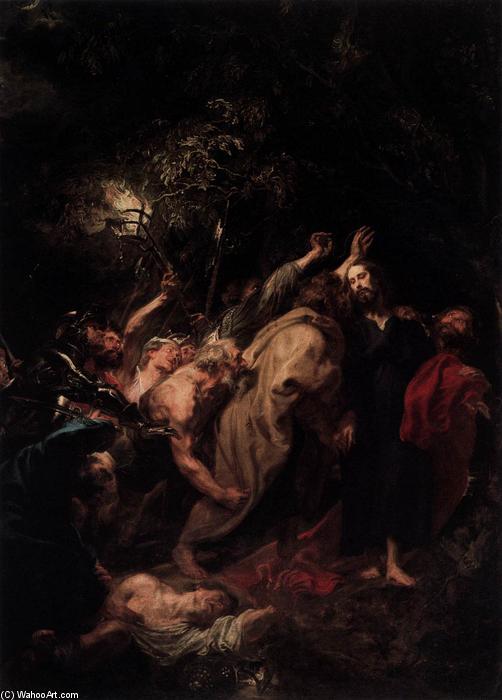
Sir Anthony van Dyck’s dramatic black and white depiction of ‘The Capture of Christ,’ a Baroque masterpiece from 1618, showcases the poignant moment of Jesus' arrest with figures in varied positions. Explore this evocative artwork and bring its timeless beauty into your space.
Meta Description: Sir Anthony van Dyck (1599-1641): Najpoznatiji flamski slikar Baroka poznat po elegantnim portretima evropske aristokratije i Čarlsa I., koji su revolucionarno oblikovali englesku umetnost. Dominantan stil, inovativna tehnika i nezaboravni likovi.
==== END RESPONSE ====
Otkrijte Museo Nacional del Prado u Madridu! Istražite remek-dela Velaquez, Goy i El Greca, obuhvatajući vekove evropske umetnosti. Obavezan kulturni spomenik!
A Dramatic Testament to Faith: Sir Anthony van Dyck’s “The Capture of Christ”
This arresting black and white depiction, "The Capture of Christ," painted in 1618 by the renowned Flemish Master, Sir Anthony van Dyck, offers a profoundly moving visual interpretation of a pivotal moment in Christian history. Measuring an impressive 344 x 249 cm, the artwork transcends mere historical representation; it’s a carefully constructed tableau brimming with symbolic weight and executed with Van Dyck's signature blend of dynamism and refined elegance. The scene unfolds with a palpable sense of urgency and sorrow, capturing the vulnerability of Christ as he is apprehended by Roman soldiers – a subject deeply resonant across centuries.
Baroque Drama and the Influence of Rubens
Van Dyck’s artistic journey was inextricably linked to the Baroque era, a period defined by its dramatic intensity, emotional fervor, and masterful use of light and shadow. His formative years were spent under the tutelage of Hendrick van Balen, absorbing the stylistic nuances of the time before forging his own path, heavily influenced by the towering figure of Peter Paul Rubens. This influence is immediately apparent in “The Capture of Christ” – the composition’s energy, the rich textures suggested through tonal variation, and the masterful handling of figures all speak to Van Dyck's deep understanding of Rubens’ techniques. The painting isn't simply a record of an event; it’s a carefully orchestrated drama designed to evoke a powerful emotional response in the viewer.
Symbolism and Narrative Composition
The composition itself is laden with symbolic meaning. The central figure, a man bearing a cross, immediately establishes Christ as the focal point of the narrative – a poignant reminder of his sacrifice. The presence of a figure wearing what appears to be a Roman soldier’s crown adds another layer of complexity, representing authority and oppression, key themes within the biblical story. The arrangement of the figures, some clustered closely together, others dispersed throughout the scene, contributes to the overall sense of chaos and disruption inherent in the capture. Van Dyck's skill lies not just in depicting individuals but in crafting a narrative through their positioning and interaction.
A Timeless Masterpiece – Reproduction Possibilities
"The Capture of Christ" by Sir Anthony van Dyck is more than just an artwork; it’s a testament to the enduring power of faith, sacrifice, and human drama. ArtsDot offers meticulously crafted hand-painted reproductions of this iconic piece, allowing you to bring its profound beauty and historical significance into your home or office. Our skilled artisans employ traditional techniques, faithfully recreating Van Dyck's masterful brushwork and tonal range, ensuring a stunningly accurate representation that captures the essence of this Baroque masterpiece. This reproduction offers an exceptional opportunity to own a piece of art history – a timeless symbol of hope and redemption.