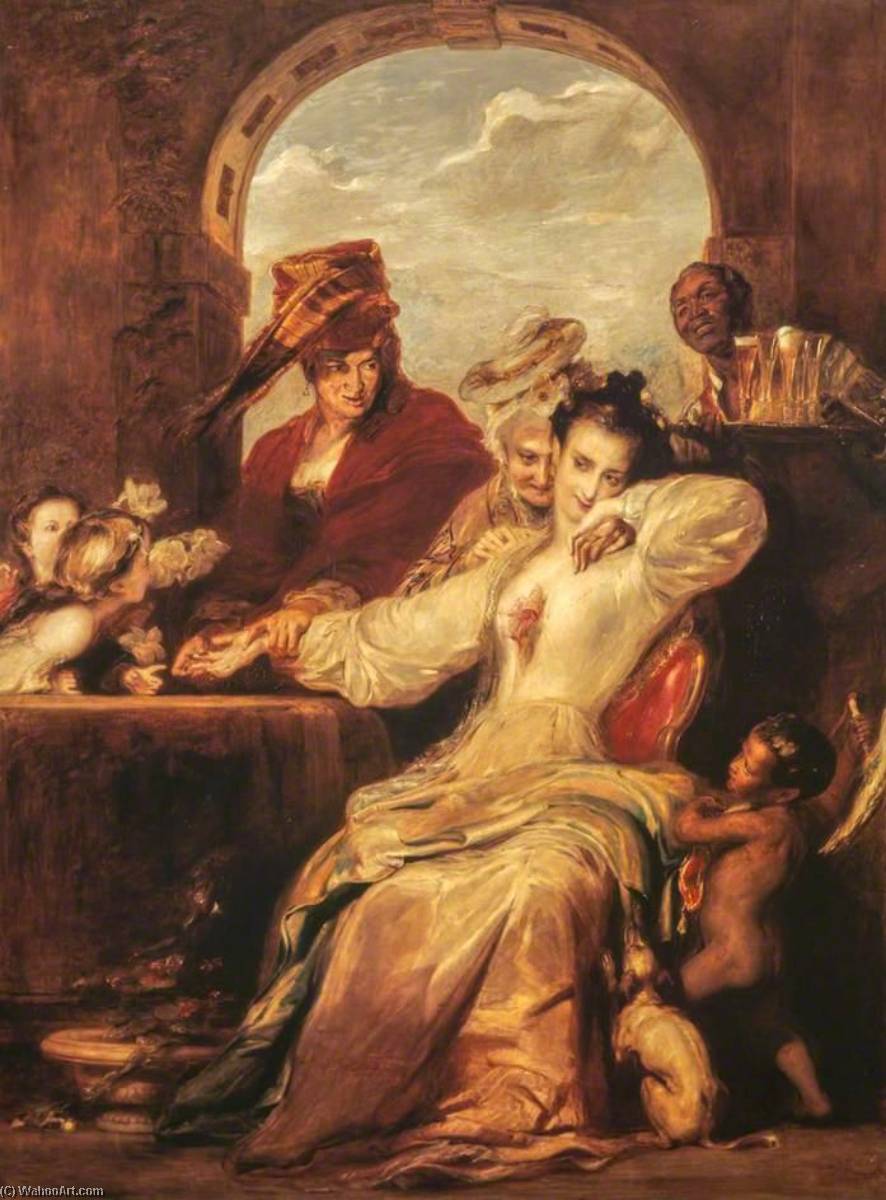
Explore Sir David Wilkie’s "Josephine & the Fortune Teller" (1837). A lavish Rococo-inspired oil painting of aristocratic leisure, rich in detail and symbolism. Discover this captivating artwork!
Otkrijte Ser Dejvida Vilkija (1785-1841), slavnog škotskog slikara poznatog kao 'narodni slikar'. Istražite njegove žanrovske scene, istorijska slika, portrete i umetnost putovanja. Ključna figura britanske umetnosti 19. veka.
Откријте ремек-дела западне umetности у Националној галерији Лондона! Гледајте Ван Гогха, Ремарнпта и још много тога у прелеп музеј на Трга Трафалга. Улаз је бесплатан!
Шкотска уметност, Национална галерија, Единбург, Шкотска, Титијан, Моне, Плејфар, неокласика, фин уметност, ренесанса, импресионизам, шкотски колористи
Национална галерија Шкотске
Преко 1,3 милиона
Национална фин уметност
1859
Josephine and the Fortune Teller: A Rococo Reverie Revisited
The painting “Josephine and the Fortune Teller,” executed by Sir David Wilkie in 1837, transcends mere visual representation; it’s a meticulously crafted tableau that encapsulates the opulent sensibilities of its era while simultaneously hinting at deeper philosophical considerations. Standing at an impressive 211 x 158 cm, this oil on canvas masterpiece resides within the National Gallery, London, where it continues to captivate audiences with its luminous palette and masterful depiction of aristocratic leisure.
A Window into Victorian Society
Wilkie’s work emerged during a period of significant social transformation in Britain—the Victorian era—characterized by rapid industrial growth alongside an enduring fascination for tradition and refinement. The painting reflects this duality, portraying a scene of aristocratic society indulging in entertainment and divination – activities considered frivolous yet undeniably indicative of the prevailing cultural values. It serves as a poignant reminder of a bygone age where appearances mattered greatly and social hierarchies dictated behavior. Observing the figures within the canvas allows us to glimpse into the anxieties and aspirations of Victorian Britain, grappling with questions of morality and societal progress amidst breathtaking beauty.
The Rococo Legacy: Ornamentation and Illusion
Stylistically, “Josephine and the Fortune Teller” firmly establishes itself within the tradition of Rococo art—a movement that flourished in France during Louis XV’s reign and exerted considerable influence across Europe. Wilkie skillfully employs techniques characteristic of this style, prioritizing decorative embellishment and creating an illusionistic atmosphere designed to delight the eye. The lavish drapery, shimmering fabrics, and gilded accents contribute to a sense of grandeur and extravagance—elements deliberately employed to evoke feelings of pleasure and indulgence. Notice how Wilkie utilizes chiaroscuro – dramatic contrasts between light and shadow – to sculpt forms and heighten visual impact, mirroring the Baroque’s penchant for theatricality.
Technical Mastery: Brushwork and Texture
Wilkie's technical prowess is evident in his meticulous brushwork—loose and expressive in areas like the drapery and background, yet controlled enough to delineate facial features with precision. The artist achieves remarkable textural richness through layering pigments and manipulating brushstrokes, resulting in surfaces that appear both luminous and tactile. Close examination reveals subtle variations in tone and color, demonstrating Wilkie’s mastery of tonal gradation—a technique honed during his formative years under John Ramsay. Furthermore, the artist skillfully incorporates atmospheric perspective – blurring distant elements to convey depth – enhancing the painting's immersive quality.
Symbolism Beyond Surface Beauty
Beyond its aesthetic splendor, “Josephine and the Fortune Teller” is laden with symbolic significance. The central female figure—presumably Josephine Bonaparte—is surrounded by admirers and attendants, representing not only wealth and status but also idealized femininity. The inclusion of a dog symbolizes loyalty and fidelity – virtues valued within Victorian society—while the cherubic child embodies innocence and purity. These elements intertwine to suggest themes of domestic harmony and spiritual contemplation amidst the excesses of aristocratic life. Wilkie’s deliberate choices underscore the painting's capacity to communicate complex ideas beyond its immediate visual appeal, inviting viewers to ponder questions of morality and human nature.
Emotional Resonance: A Moment Frozen in Time
Ultimately, “Josephine and the Fortune Teller” succeeds in capturing a fleeting moment of aristocratic indulgence—a scene bathed in warm hues that evokes feelings of warmth, comfort, and perhaps even melancholy. The painting’s luminous palette and masterful composition convey an atmosphere of refined elegance, transporting viewers back to Victorian London. It serves as a testament to Wilkie's ability to transform observation into art—to distill the essence of human experience into a visually arresting image that continues to resonate with audiences today.