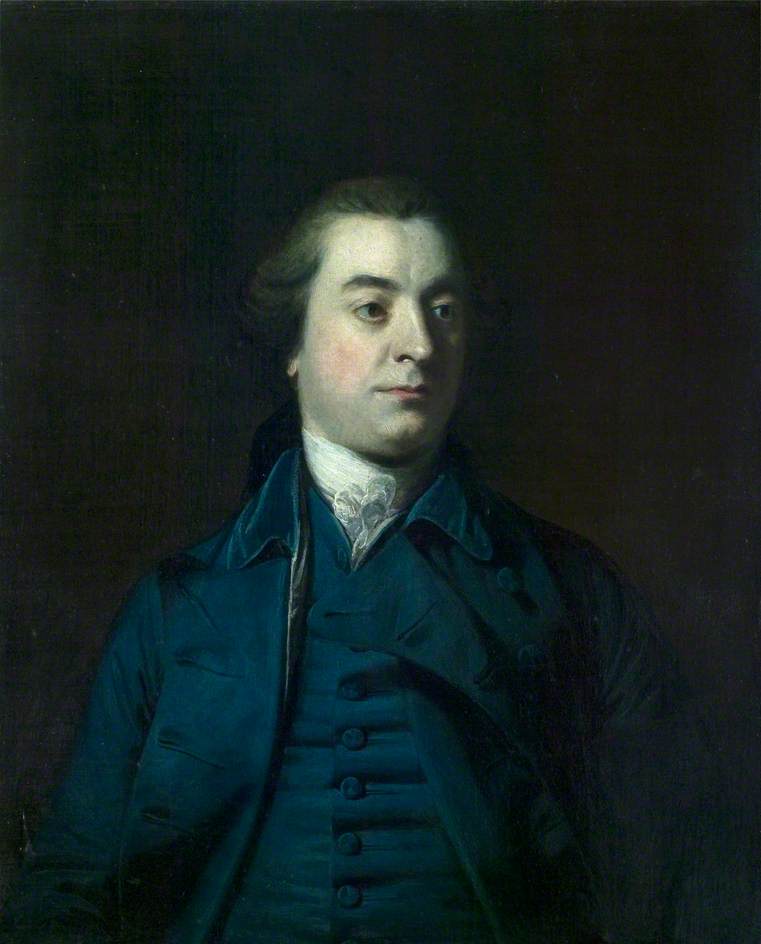
A Vision of Enlightenment Elegance
In the quiet, commanding presence of Thomas Middleton Trollope of Casewick, one finds more than a mere historical record; one encounters the very soul of the eighteenth century. Painted in 1754 by the legendary Sir Joshua Reynolds, this portrait serves as a breathtaking window into the "Grand Style" that would come to define British portraiture. Reynolds does not simply present us with the likeness of a prominent Lincolnshire landowner; he invites us into a dialogue with an era defined by intellectual curiosity and aristocratic poise. The subject, captured in a thoughtful three-quarter pose, gazes outward with a look of profound contemplation, bridging the gap between the viewer and the vanished world of the Enlightenment.
The mastery of Reynolds is immediately evident in the way light dances across the canvas. Utilizing sophisticated oil glazing techniques, the artist achieved a luminous quality in the skin tones that feels almost breathing, contrasted beautifully against the deep, authoritative blue of Trollope’s coat. The subtle gradations of color and the meticulous blending of shadow create a sculptural depth, lending the figure a physical weight and a psychological presence that is nothing short of revolutionary. For the discerning collector or interior designer, this piece offers a sense of grounded permanence, its textured cream background providing a neutral yet rich stage that allows the subject's character to command the room.
The Artistry of Character and Status
Beyond the technical brilliance lies a profound narrative of social identity. This portrait was executed during a pivotal moment in Trollope’s life, coinciding with his marriage to Isabella Thorold, and it functions as a carefully constructed emblem of familial connection and landed prestige. Reynolds, ever the master of the Grand Manner, utilized every brushstroke to elevate the subject beyond the mundane. The restrained pose and the dignified arrangement of the attire are not accidental; they are symbolic of the moral sensibilities and the rational inquiry that characterized the age. There is an understated power in the way the white buttons catch the light, a small detail that contributes to the overall aura of refined wealth.
To possess a reproduction of such a work is to bring a piece of history’s intellectual heart into a contemporary space. The emotional impact of the painting lies in its ability to evoke a sense of calm authority and timeless grace. It is an ideal centerpiece for a library, a study, or a formal salon, where its themes of stability and thoughtful observation can inspire quiet reflection. As a masterpiece of the Royal Academy’s first president, this portrait remains a testament to the era when art sought to capture not just the face of man, but the very essence of his dignity.