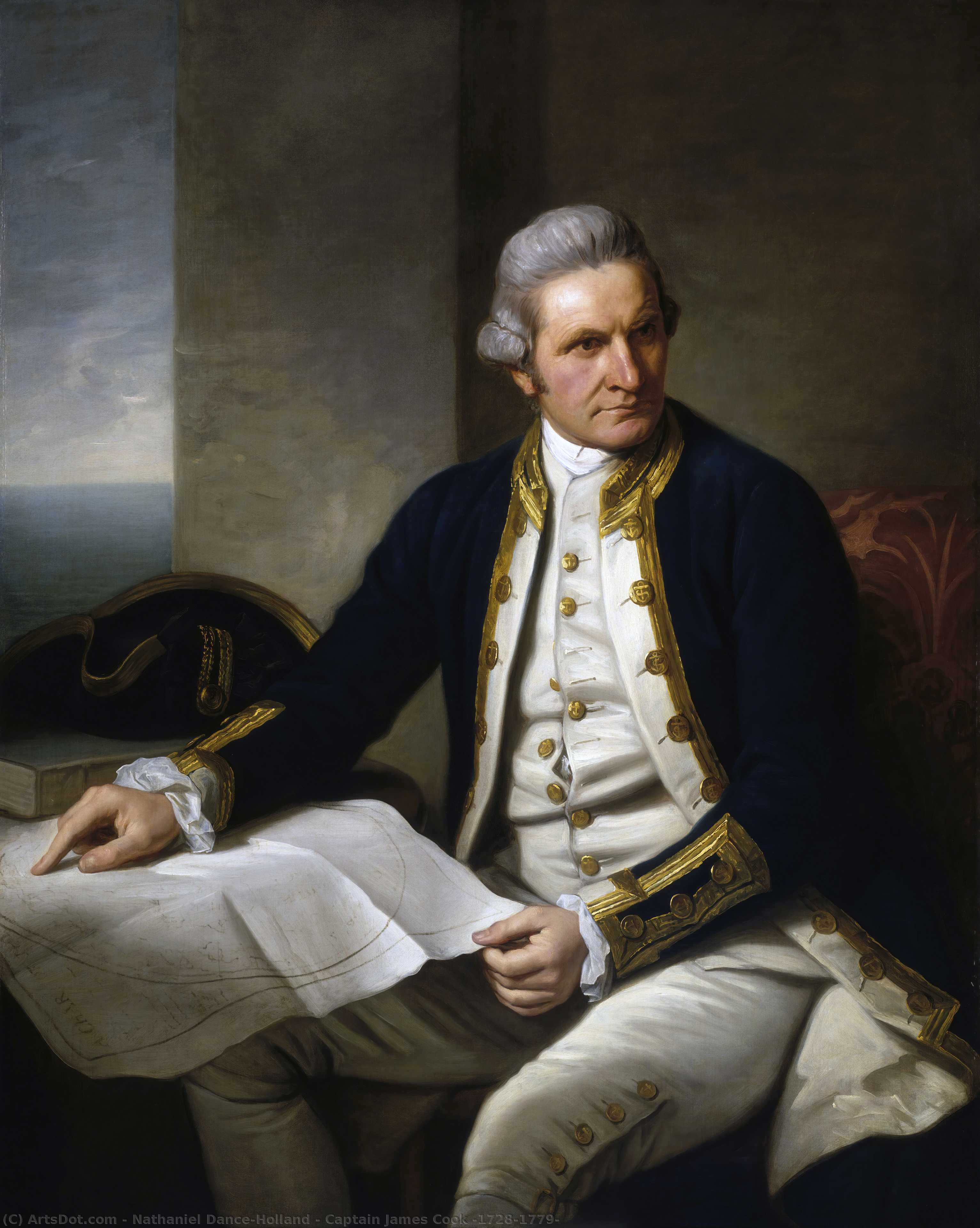
Captain James Cook (1728–1779): A Portrait of Exploration
Sir Nathaniel Dance Holland's Captain James Cook (1728–1779), painted in 1776, is more than just a portrait; it’s a window into the Age of Exploration and a testament to the enduring legacy of one of history's most renowned navigators. This oil on canvas masterpiece, currently residing at the National Maritime Museum (United States), captures Cook at the height of his career, embodying both authority and thoughtful contemplation.
The Subject: A Seasoned Navigator
Captain James Cook stands as a pivotal figure in maritime history. His three voyages to the Pacific Ocean (1769-1779) revolutionized geographical understanding, leading to the mapping of previously unknown lands like New Zealand and contributing significantly to trade route establishment. The portrait reflects this momentous period, portraying Cook not merely as a military officer but as an intellectual and leader responsible for expanding the known world. His stern yet contemplative demeanor speaks volumes about the challenges and responsibilities he faced navigating uncharted waters and interacting with diverse cultures.
Artistic Technique and Composition
Dance Holland masterfully employs oil on canvas to create a realistic and engaging depiction of Cook. The subject is dressed in his distinguished blue naval coat adorned with gold buttons, signifying his high rank within the British Navy. The composition is carefully considered: Cook is positioned centrally, commanding attention. A chair and window form the backdrop, allowing natural light to illuminate him, creating depth and a sense of realism. This use of light highlights the textures of his uniform and subtly emphasizes his features. The artist’s skill lies in capturing not just physical likeness but also conveying Cook's character – a seasoned navigator with an air of quiet determination.
Historical Significance & Symbolism
This portrait transcends its role as a mere representation of an individual; it serves as a powerful symbol of the era. It reflects the United Kingdom’s maritime dominance and the significant contributions made by explorers like Cook to global knowledge. The inclusion of a map or chart in his hands is particularly symbolic, representing Cook's dedication to cartography and exploration. The window in the background subtly hints at the vast oceans he traversed, connecting him to the wider world beyond the confines of the portrait setting. It’s a visual narrative of discovery and ambition.
A Lasting Legacy
Captain James Cook (1728–1779) by Sir Nathaniel Dance Holland remains an iconic image, celebrated for its artistic merit and historical importance. It offers viewers a glimpse into the life of a remarkable explorer and provides valuable insight into the spirit of adventure that defined the 18th century. Owning a reproduction of this masterpiece allows you to bring a piece of history and artistry into your home or office, sparking conversation and inspiring a sense of wonder about the world's vast oceans and the courageous individuals who dared to explore them.