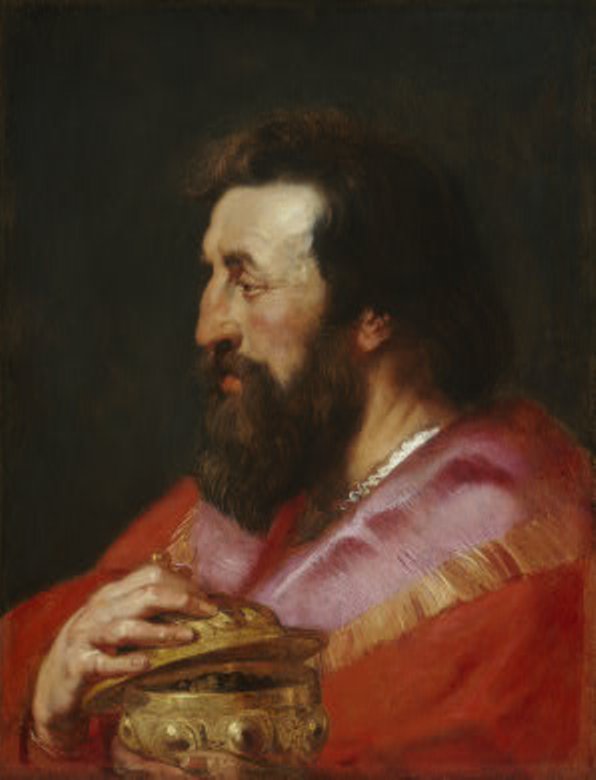
This artwork is a stunning example of Baroque art, characterized by dramatic realism and opulent decoration.
Rubens: Бароковски мајстор познат по динамичним композицијама и живим бојама, као и по иконама као што су 'Склоњење Хреста' и 'Подноштво Хреста'. Истражите његов живот и уметност.
Melchior, The Assyrian King – A Baroque Masterpiece
Peter Paul Rubens’ *Melchior, The Assyrian King* stands as a monumental achievement of the Flemish Baroque, embodying the artistic fervor and intellectual curiosity that characterized the era. Painted in 1618, this oil on canvas portrait transcends mere representation; it's an immersive experience into Rubens’ masterful command of color, composition, and psychological depth—elements quintessential to his distinctive style. The artwork captures not just a likeness but also a profound sense of presence, inviting contemplation about faith, royalty, and the enduring legacy of classical history.
A Portrait Steeped in Symbolism
Rubens meticulously crafted *Melchior* as an homage to Balthasar Moretus the Elder, Rubens’ lifelong friend and patron—a testament to their intellectual partnership and shared appreciation for humanist ideals. The subject himself is depicted with regal dignity, adorned in opulent robes and crowned with a golden laurel wreath – symbols of power and honor deeply rooted in Byzantine iconography and classical tradition. Melchior's gaze directs towards the viewer, establishing an immediate connection that transcends time, fostering a feeling of intimacy amidst grandeur. This deliberate choice underscores Rubens’ intention to portray not simply a king but also a man imbued with moral virtue and spiritual contemplation.
Technique and Composition – Rubensian Dynamism
Rubens employed his signature *tenebrismo*, a dramatic technique characterized by stark contrasts between light and dark, to heighten the emotional impact of the painting. The darker background serves as an anchor for Melchior’s luminous figure, emphasizing his importance and creating a palpable sense of depth. Rubens skillfully utilized pyramidal composition—a compositional device favored by Renaissance artists—to stabilize the image while simultaneously conveying movement and dynamism. Note how the folds of Melchior's robe ripple outwards, mirroring the energy of the scene and reinforcing the impression of regal authority. The artist’s meticulous attention to detail—from the texture of the robes to the subtle shading on Melchior’s face—further elevates the artwork’s realism and expressive power.
Historical Context: Rubens and the Baroque Ideal
Rubens' work aligns perfectly with the broader artistic currents of the Baroque period, which sought to evoke emotion and inspire awe through grand scale and theatrical presentation. Influenced by Caravaggio’s revolutionary approach to painting—particularly his use of dramatic lighting—Rubens pushed boundaries in terms of color palette and expressive intensity. The painting reflects Rubens' fascination with classical history, referencing Assyrian kingship as a symbol of divine rule and moral fortitude. It embodies the Baroque ideal of portraying human figures with palpable emotion and psychological complexity—a departure from the idealized portraits of earlier eras.
Conclusion: An Enduring Legacy
*Melchior, The Assyrian King* remains an unforgettable masterpiece, demonstrating Rubens’ unparalleled ability to synthesize artistic innovation with humanist conviction. Its enduring appeal lies in its masterful execution, profound symbolism, and capacity to transport viewers back to a pivotal moment in European art history. For those seeking to experience the brilliance of Rubens' vision firsthand—or to adorn their homes with a stunning reproduction—ArtsDot.com offers exceptional quality prints that capture the essence of this iconic artwork. Visit https://ArtsDot.com to discover more about Peter Paul Rubens and his captivating oeuvre!