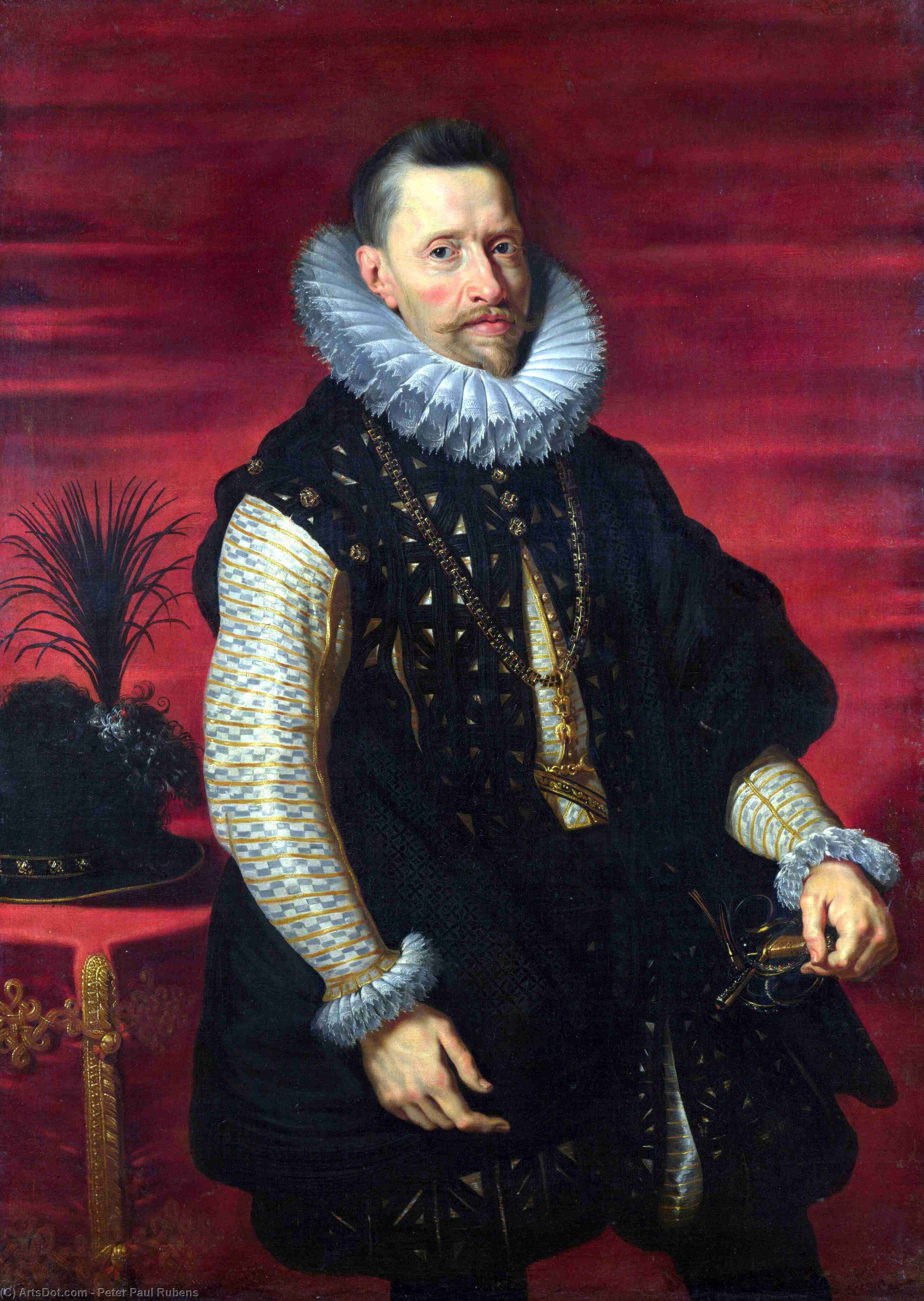
Portrait of the Archduke Albert: A Baroque Masterpiece by Peter Paul Rubens
The Portrait of the Archduke Albert stands as a testament to Peter Paul Rubens’ unparalleled skill and his mastery of the Baroque style. More than simply a likeness, this painting—a cornerstone of the Koninklijk Museum voor Schone Kunsten in Antwerp—is a vibrant embodiment of power, elegance, and the calculated grandeur demanded by European nobility in the 17th century. Rubens doesn't merely depict a man; he constructs an image of authority, radiating confidence and subtly hinting at the complex political landscape within which his subject navigated.
The painting immediately captivates with its rich palette – deep reds dominate the background wall, creating a dramatic stage for the Archduke. These fiery hues, characteristic of Rubens’ work, are juxtaposed against the darker tones of the archduke's attire, drawing the eye and establishing a dynamic visual rhythm. The meticulous rendering of fabrics—the ruffled collar, the velvet coat, the intricate gold trim—is a hallmark of Rubens’ technique. He wasn’t just painting; he was sculpting with color and texture, meticulously layering brushstrokes to achieve an astonishingly realistic effect that seems almost tactile. Notice how the light catches the folds of the fabric, creating a sense of movement and volume rarely achieved by his contemporaries.
Baroque Drama and Royal Portraiture
Rubens’ signature Baroque style is powerfully evident in every detail. The composition itself is dynamic, employing diagonal lines to draw the viewer's eye across the canvas. This isn’t a static portrait; it feels alive with energy. The background, featuring a red wall reminiscent of opulent palace interiors, adds depth and reinforces the Archduke’s status as a figure of considerable wealth and influence. The inclusion of potted plants—a detail often overlooked—suggests an appreciation for nature and perhaps alludes to themes of fertility and prosperity, common motifs in Baroque art.
Historically, this portrait reflects the complex political realities of the time. Albert VII, Archduke of Austria, was a pivotal figure in European diplomacy, holding significant power within the Habsburg Netherlands. His role as viceroy and later sovereign of the region demanded an image that projected strength and legitimacy. Rubens, serving as court painter to both Spain and Austria, skillfully fulfilled this commission, crafting a portrait that simultaneously celebrated the Archduke’s position and subtly reinforced his authority.
Symbolism and Artistic Legacy
Beyond its visual splendor, the painting is rich in symbolic meaning. The Archduke's pose—confident yet composed—communicates leadership and control. The objects he holds – often interpreted as a book or document – symbolize his intellectual pursuits and administrative responsibilities. Furthermore, the portrait’s placement within the Koninklijk Museum voor Schone Kunsten underscores its importance as a key work in the collection of Flemish art. It stands alongside masterpieces by Rubens himself and other prominent artists, offering visitors a profound insight into the artistic and cultural heritage of Antwerp and the Low Countries.
Rubens’ influence extends far beyond this single portrait. As demonstrated by his other works – such as “The Return of the Farm Workers from the Fields” and “Portrait of Isabella Brant” – he was a master of capturing human emotion, dramatic lighting, and intricate detail. His legacy continues to inspire artists today, and reproductions like those offered on ArtsDot.com allow art lovers worldwide to experience the brilliance of this Baroque giant. For those seeking a deeper understanding of Rubens’ life and work, exploring Peter Paul Rubens on ArtsDot.com is highly recommended.
Don't miss the opportunity to view this remarkable painting in person at the Koninklijk Museum voor Schone Kunsten in Antwerp, or explore a high-quality reproduction at ArtsDot.com to bring the drama and grandeur of this Baroque masterpiece into your home.