Introduction
Peter Paul Rubens (1577-1640) was a renowned Flemish artist, known for his exceptional skills in painting and printmaking. Among his most famous works is the captivating double portrait
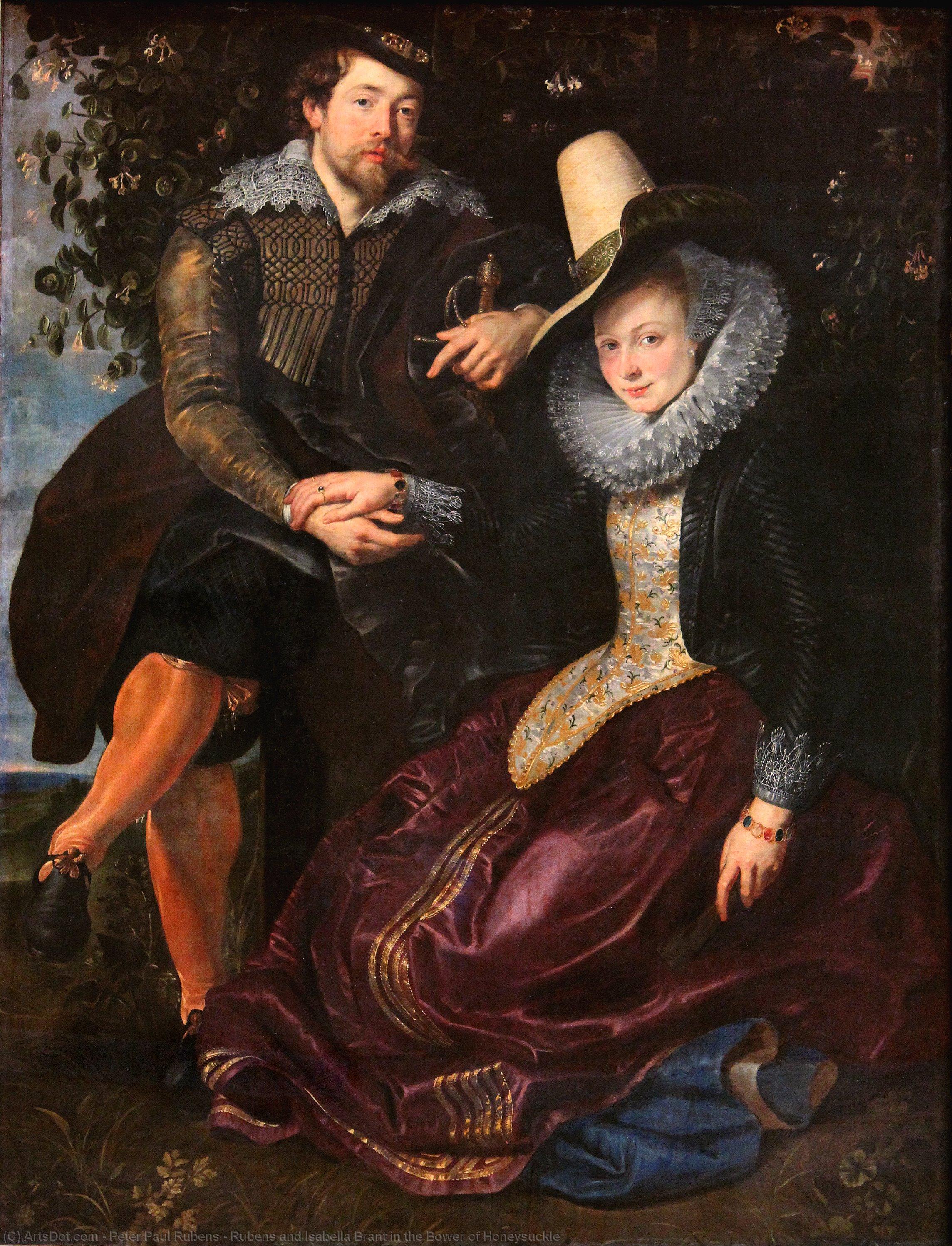
Rubens and Isabella Brant in the Bower of Honeysuckle, which showcases the couple's love and devotion in a beautifully rendered garden setting.
Background and Context
Created around 1609-1610, this masterpiece is an oil on canvas painting measuring 178 x 136.5 cm (Alte Pinakothek, Munich). It was likely painted as a gift for Isabella Brant's father, and it reflects the couple's happiness during their early years of marriage.
Symbolism and Composition
The painting features Rubens and his wife, Isabella Brant, seated in a garden alcove surrounded by honeysuckle, which symbolizes good feeling, devotion, loyalty, happiness, and everlasting love. The couple's clasped right hands represent their steadfast and tender strength, while the stool on which Rubens sits higher than his wife suggests a loving partnership rather than an equal marriage.
Influences and Connections
The painting's composition draws inspiration from Andrea Alciato's Emblematum liber or Emblemata, published in 1531, which features the motto In fidem uxorium (conjugal fidelity). This connection highlights the significance of marital fidelity and devotion in Rubens's work.
Legacy and Significance
Today,
Rubens and Isabella Brant in the Bower of Honeysuckle remains a testament to Peter Paul Rubens's extraordinary talent as an artist and his deep understanding of human emotions. This masterpiece is available for hand-made oil painting reproductions at
ArtsDot, allowing art enthusiasts to appreciate and enjoy this timeless work of art in their own spaces.