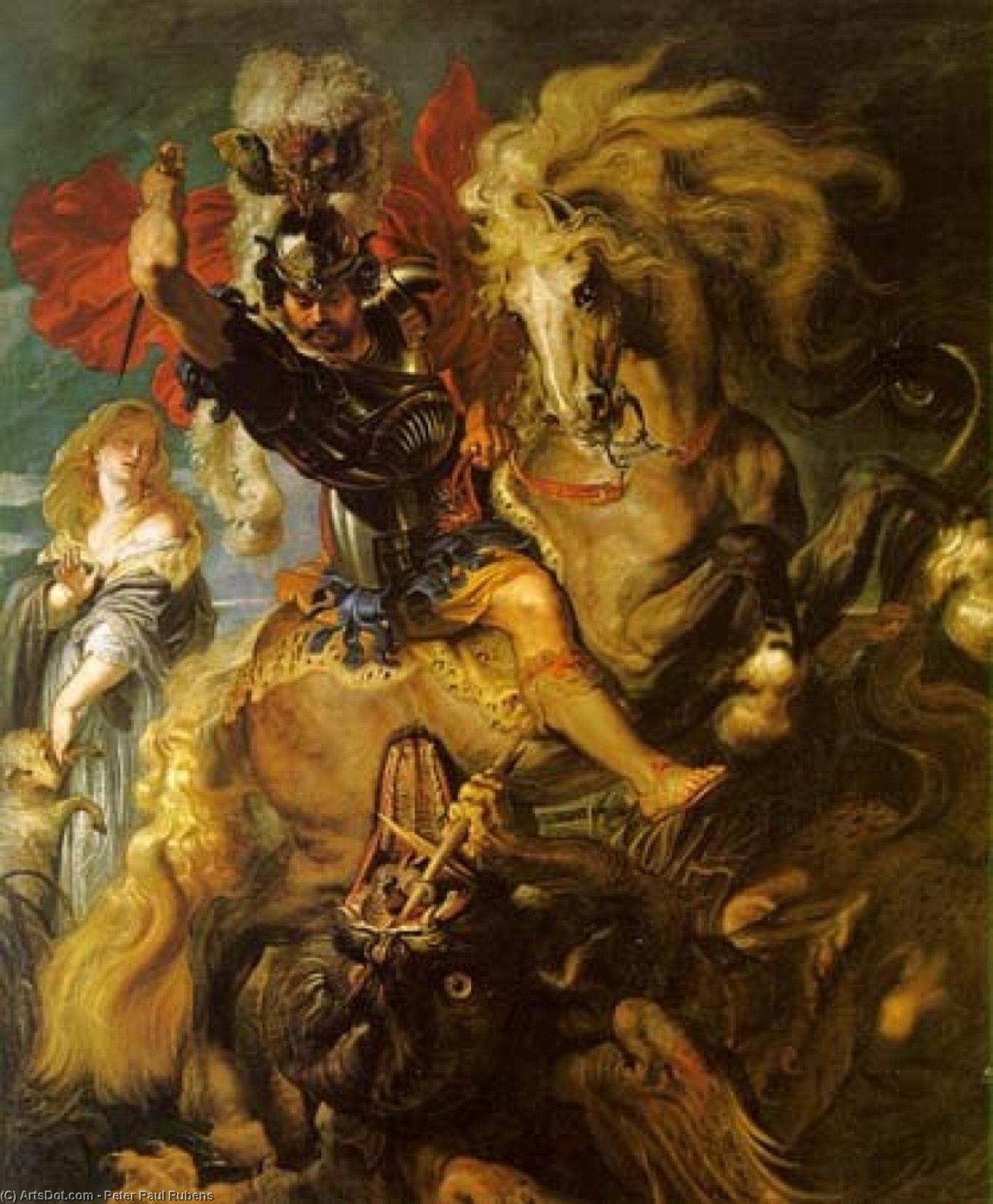
St. George and the Dragon: A Baroque Masterpiece
Peter Paul Rubens’ “St. George and the Dragon” is more than just a painting; it's a vibrant explosion of color, dynamic movement, and profound symbolism – a quintessential example of the artist’s mastery within the heart of the Baroque period. Completed around 1620 and now residing in the Museo del Prado in Madrid, this oil on canvas work captures a legendary battle with breathtaking intensity, transporting viewers to a world where faith, courage, and artistic brilliance collide. Rubens, a pivotal figure in shaping the Baroque style, wasn’t simply depicting a story; he was channeling the era's emphasis on dramatic emotion, heroic figures, and an opulent celebration of life – all rendered with his signature bold brushstrokes and masterful use of light and shadow.
The narrative itself is instantly recognizable: St. George, mounted upon a magnificent warhorse, charges towards a fearsome dragon that dominates the composition. The princess, representing the Church, stands to the left, offering a silent plea for deliverance – a potent symbol of faith’s protection against evil. Beyond the immediate action, the scene unfolds within a carefully constructed landscape: rolling hills and distant mountains provide depth and context, grounding the fantastical elements in a believable world. This isn't merely a battle; it’s a visual allegory, rich with layers of meaning that resonate even today.
The Artistic Context & Rubens’ Influence
Rubens’ journey to Italy between 1600 and 1608 proved transformative. He immersed himself in the works of Renaissance masters like Leonardo da Vinci and Michelangelo, but it was the dramatic realism and *tenebrism* – the use of strong contrasts between light and dark – pioneered by Caravaggio that profoundly influenced his style. This Italian experience fueled Rubens’ development of a highly charged, emotionally resonant approach to painting. “St. George and the Dragon” exemplifies this perfectly; the chiaroscuro technique dramatically accentuates the tension in the scene, drawing the viewer's eye directly to St. George and the impending confrontation.
Furthermore, the painting’s creation coincided with Rubens’ time in Genoa, a city where St. George was venerated as its patron saint. This local connection adds another layer of significance, suggesting that the work was intended not only for personal enjoyment but also to honor the city's religious identity. Rubens’ ability to adapt his style and incorporate regional themes demonstrates his versatility as an artist and his keen understanding of cultural contexts.
Composition & Symbolism: A Visual Language
The composition itself is meticulously planned, designed to maximize visual impact. The diagonal thrust of St. George's horse creates a sense of forward momentum, propelling the viewer into the heart of the action. The dragon, rendered with terrifying detail – scales shimmering in the light, claws outstretched – embodies chaos and evil. The princess’s posture conveys vulnerability and hope, while her position on the left side of the composition reinforces her symbolic role as the defender of faith.
Beyond these immediate figures, the painting is laden with symbolism. The dragon itself represents temptation, sin, and the forces opposing righteousness. St. George's sword symbolizes divine power and the triumph of good over evil. The landscape, with its rolling hills and distant mountains, can be interpreted as representing the challenges faced by the Church in defending faith against adversity. Even the two horses – one ridden by St. George, the other positioned behind him – contribute to the narrative, suggesting a partnership between strength and support.
Artistic Techniques & Historical Significance
Rubens’ mastery of technique is immediately apparent in “St. George and the Dragon.” His use of vibrant colors—rich reds, blues, and golds—creates a dazzling spectacle that captures the viewer's attention. The dynamic brushstrokes contribute to the sense of movement and energy, conveying the intensity of the battle. The painting’s scale – approximately 2.3 meters by 3.1 meters – further enhances its impact, immersing the viewer in the scene.
Historically, this work represents a pivotal moment in Rubens' career, showcasing his evolving style and demonstrating his ability to synthesize classical influences with Baroque dynamism. It’s a testament to his skill as both an artist and a diplomat, reflecting his travels and cultural experiences. The painting’s enduring appeal lies not only in its technical brilliance but also in its timeless themes of courage, faith, and the eternal struggle between good and evil.
For those seeking to own a piece of this Baroque masterpiece, ArtsDot.com offers meticulously crafted oil painting reproductions of “St. George and the Dragon.” These reproductions capture the essence of Rubens’ original work with remarkable fidelity, allowing you to bring this iconic image into your home or office – a vibrant reminder of art's power to inspire and captivate.