A Symphony of Chaos and Compassion
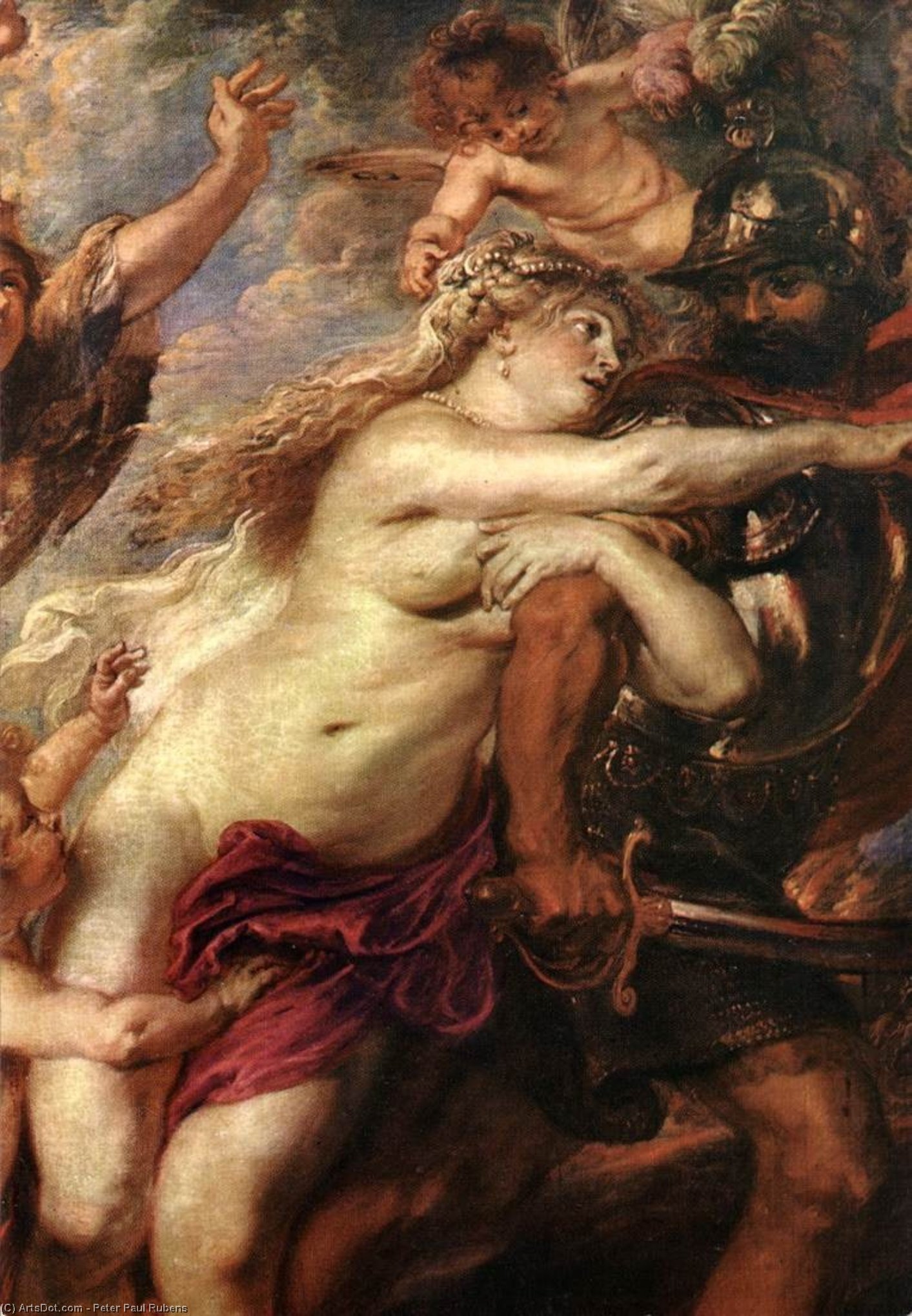
In the heart of the Baroque era, few artists could command the canvas with as much visceral energy and emotional depth as Sir Peter Paul Rubens. His work, "The Consequences of War Detail," serves as a hauntingly beautiful window into a period defined by upheaval and spiritual searching. This intimate fragment of a larger, monumental tableau captures a moment frozen in time, where the brutal reality of human conflict meets the ethereal grace of divine intervention. As one gazes upon the central figure—a woman draped in flowing, luminous robes—there is an immediate sense of vulnerability that pulls the viewer into her struggle. She exists at the epicenter of a whirlwind, surrounded by the shadows of armed soldiers and the sharp glint of swords, yet she is not alone in her suffering.
The composition is a masterclass in tension and balance. Rubens expertly juxtaposes the heavy, grounded presence of war-torn humanity with the weightless, celestial movement of angelic figures hovering above. These heavenly beings offer a profound sense of hope, acting as silent guardians amidst the carnage. At the very base of this dramatic scene, a small baby lies on the ground, a poignant symbol of innocence caught in the crossfire of adult ambitions. For the discerning collector or interior designer, this piece offers more than mere decoration; it provides a focal point of profound narrative depth, capable of anchoring a room with its intense storytelling and classical grandeur.
The Mastery of Light and Flesh
To study Rubens’ technique is to witness the very pulse of the Baroque style. He was a master of chiaroscuro, utilizing the dramatic interplay between deep, velvety shadows and brilliant, piercing light to sculpt his figures with an almost tactile realism. Every muscle, every fold of fabric, and every emotive expression is rendered with breathtaking precision. Through the meticulous layering of translucent glazes, Rubens achieved a rich, opulent pigmentation that allows skin tones to appear as though they possess an inner warmth and vitality. This luminous quality is what makes his work so captivating; the figures do not simply sit upon the panel, they breathe within it.
This technical brilliance serves a higher purpose: to amplify the emotional resonance of the subject matter. The way light catches the edge of a blade or illuminates the tearful eyes of a victim creates a sensory experience that is both overwhelming and deeply moving. For those seeking to incorporate high-quality reproductions into a curated space, the texture and depth of Rubens’ brushwork provide an unparalleled sense of luxury and historical authenticity. It is an art form designed to be felt as much as it is seen, making it an ideal centerpiece for environments that value sophistication and emotional intelligence.
A Legacy of Resilience and Spirit
Beyond its aesthetic splendor, "The Consequences of War Detail" is steeped in the complex historical context of the 17th century. Painted during a period when Europe was grappling with the religious and political tremors of the Counter-Reformation, the work reflects the profound anxieties of the age. Created under the patronage of figures like Cardinal Maurizio Farnese, the painting speaks to the era's spiritual fervor and the search for stability amidst chaos. The woman in the painting becomes a universal symbol of endurance and feminine compassion—a beacon of resilience that remains relevant even in our modern world.
Choosing a reproduction of such a significant work is an invitation to bring a piece of history into the contemporary home. It is a tribute to the human spirit's ability to find grace within turmoil. Whether placed in a grand library, a formal dining room, or a contemplative studio, this artwork serves as a constant reminder of the beauty that can emerge from the most turbulent of circumstances. It is an investment in a legacy of artistic excellence, offering timeless inspiration to anyone who finds beauty in the dramatic, the profound, and the eternal.