A Dance of Destiny: Peter Paul Rubens’ “The Fate Spinning Maries Destiny”
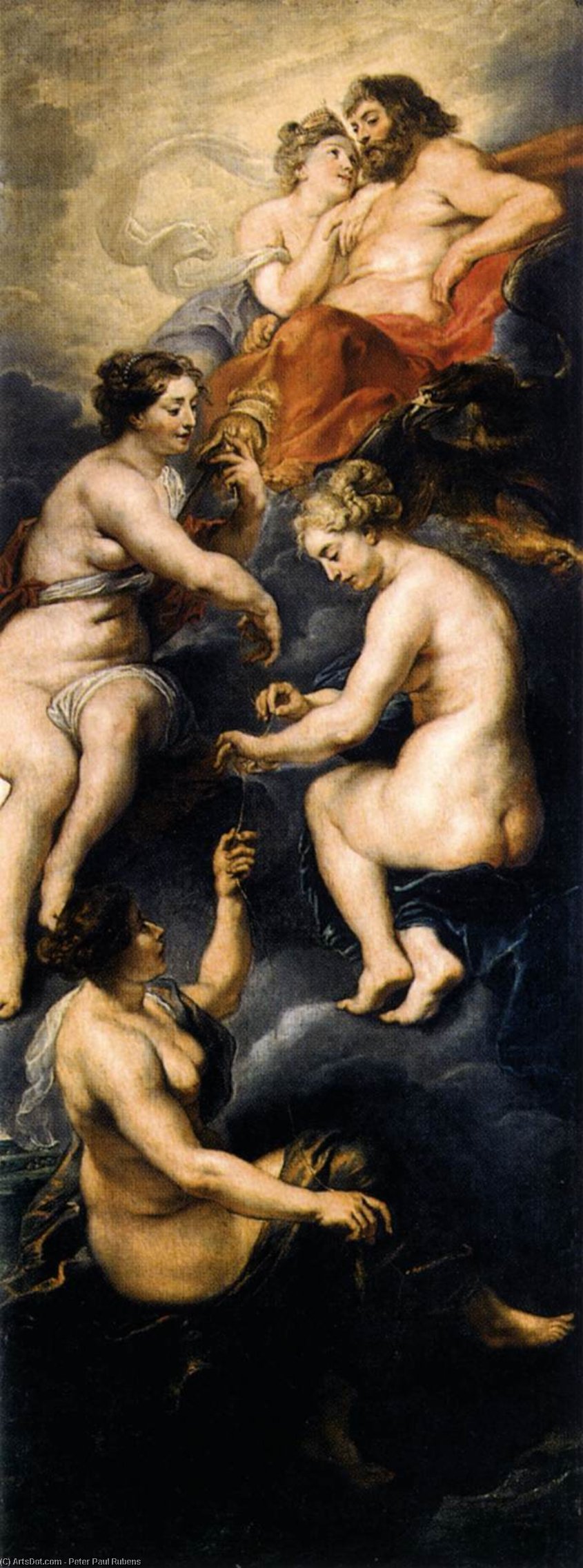
Peter Paul Rubens' "The Fate Spinning Maries Destiny," painted in 1625, isn’t merely a depiction of women; it’s an immersive experience—a swirling vortex of myth, politics, and the inescapable pull of fate. This monumental oil on canvas, currently residing within the hallowed halls of the Musée du Louvre in Paris, pulsates with Baroque dynamism, showcasing Rubens' unparalleled ability to capture both exquisite beauty and profound psychological depth. The painting immediately commands attention, drawing the viewer into a scene brimming with nude figures engaged in an intricate ballet of activity, each gesture and expression laden with symbolic weight.
At its core, the composition revolves around the central image of a spinning wheel – a potent symbol of destiny itself. Marie de’ Medici, Florence's powerful and politically astute ruler, commissioned this work as part of a larger series intended to adorn her lavish palace in Paris. The wheel isn’t simply decorative; it represents the inexorable course of Marie’s life, meticulously spun by the hands of fate. Surrounding this focal point are a constellation of figures: some identifiable as angels or goddesses, others embodying allegorical representations of virtues and vices. The inclusion of a single, striking bird on the left side adds an element of nature—a fleeting moment of beauty amidst the grand narrative – subtly hinting at the fragility of human existence within the larger scheme of destiny.
Baroque Brilliance: Technique and Artistic Style
Rubens’ mastery is immediately evident in every brushstroke. The painting exemplifies the Baroque style's dramatic flair, characterized by intense color palettes, dynamic poses, and a heightened sense of movement. Observe how Rubens masterfully employs chiaroscuro – the interplay of light and shadow – to sculpt the figures and create an atmosphere of theatrical intensity. The rich textures of the fabrics, the glistening skin of the nude forms, and the swirling drapery are all rendered with astonishing detail, achieved through his signature technique of layering thin glazes of paint. This meticulous approach not only creates a visually stunning surface but also contributes to the painting’s remarkable luminosity and depth.
The figures themselves are depicted in moments of intense action and emotion. Their poses are deliberately theatrical, conveying a sense of urgency and drama. Rubens' use of color is particularly striking – vibrant reds, blues, and golds dominate the palette, creating a visually arresting spectacle that reflects the opulence and extravagance associated with Marie de’ Medici’s court. The composition isn’t static; it feels as though it’s perpetually in motion, mirroring the relentless flow of time and the inescapable nature of fate.
Symbolism and Historical Context
Beyond its aesthetic beauty, “The Fate Spinning Maries Destiny” is a complex tapestry of symbolism and historical context. Marie de' Medici was a formidable figure—a diplomat, patron of the arts, and the mother of Louis XIV – whose life was inextricably linked to power and politics. The painting subtly reflects her political ambitions and her desire to establish herself as a powerful and influential ruler. The inclusion of mythological figures further reinforces this theme, suggesting that Marie sought to emulate the divine through her own actions.
Interestingly, Rubens’ work draws parallels with the concept of “Bellona,” the Roman goddess of war, as explored in another of his celebrated paintings. This connection highlights the painting's themes of power, conflict, and the manipulation of destiny. The entire piece serves as a visual testament to the intricate interplay between art, politics, and personal ambition during the 17th century.
Discovering More Masterpieces – A Legacy of Rubens
To delve deeper into the world of Peter Paul Rubens and his extraordinary artistic legacy, we encourage you to explore other remarkable works housed within the Musée du Louvre. Consider visiting the Département Des Peintures for a comprehensive overview of his oeuvre, including “The Virgin and Child in a Garland of Flowers” – another breathtaking example of his Baroque style. You can also find detailed information about his portraiture work, such as "Portrait of Isabella Brandt," and his historical paintings like “The Meeting of Marie de Medici and Henry IV at Lyons.” For further research, we recommend visiting the Wikipedia page dedicated to Peter Paul Rubens: https://en.wikipedia.org/wiki/Peter_Paul_Rubens