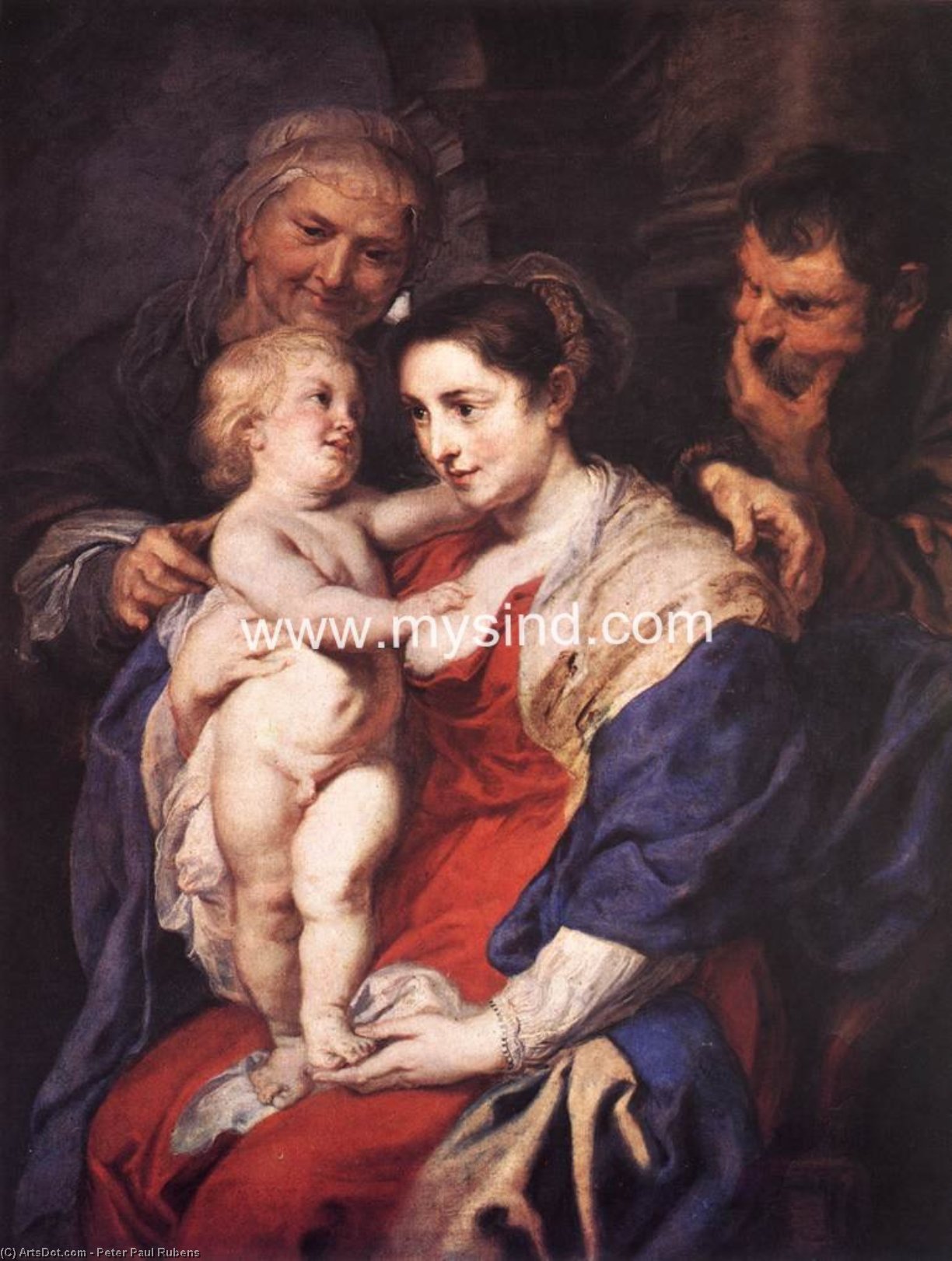
Admire Peter Paul Rubens’ iconic ‘The Holy Family with St. Anne,’ a masterpiece of Baroque art housed at Museo del Prado, Madrid. Explore its rich symbolism and masterful execution.
Rubens: Бароковски мајстор познат по динамичним композицијама и живим бојама, као и по иконама као што су 'Склоњење Хреста' и 'Подноштво Хреста'. Истражите његов живот и уметност.
The Holy Family with St. Anne: A Baroque Tapestry of Faith and Devotion
Peter Paul Rubens’ “The Holy Family with Saint Anne,” completed in 1630, stands as an emblem of the High Renaissance's legacy within the opulent grandeur of the Baroque period. Housed at the Museo del Prado in Madrid, Spain, this monumental oil painting transcends mere representation; it embodies a profound meditation on familial piety and divine grace—a testament to Rubens’ mastery of color, composition, and psychological realism.
Composition and Style: Dynamism Embodied
Rubens eschewed the static formality favored by earlier Mannerists, opting instead for a dynamic arrangement that pulsates with life. The central figures – Mary, Joseph, and Jesus – are positioned within a richly textured landscape bathed in warm hues of ochre and crimson. St. Anne, depicted as an elderly matriarch seated beside her daughter, occupies a prominent position on the right side of the canvas, anchoring the scene with serene dignity. Rubens’ signature use of *tenebrism*, characterized by dramatic contrasts between light and dark, intensifies the emotional impact of the image, highlighting the faces of Mary and Jesus and casting shadows that deepen the sense of intimacy and solemn contemplation. The overall style reflects the Baroque impulse to evoke awe and wonder—a deliberate departure from Renaissance restraint.
Historical Context: Counter-Reformation Influence
Rubens’ artistic vision was deeply rooted in the intellectual currents of his time, specifically the Catholic Counter-Reformation. This movement sought to reaffirm Christian faith amidst the challenges posed by Protestant Reformation, prioritizing emotional expression and didactic symbolism. The depiction of the Holy Family aligns perfectly with this ethos—representing not merely familial affection but also the theological concept of divine providence guiding human destiny. Rubens’ patrons, including Cardinal Maurizio Farnese, recognized the power of art to inspire piety and reinforce moral values.
Artistic Influences: Classical Echoes Amidst Baroque Flourish
Despite its dramatic flair, “The Holy Family” retains subtle references to classical ideals—particularly those championed by Michelangelo—evident in the idealized proportions of the figures and the careful attention to anatomical detail. Rubens’ meticulous observation of human anatomy demonstrates his commitment to scientific realism, a hallmark of Renaissance scholarship that continued to inform Baroque art. Furthermore, Rubens' engagement with Caravaggio’s tenebrism profoundly impacted his artistic style, elevating it beyond mere visual beauty to convey profound spiritual emotion.
Symbolism: Light and Darkness as Divine Revelation
The painting’s symbolism is multilayered and imbued with Christian significance. The radiant light emanating from Jesus symbolizes divine illumination—the promise of salvation offered by Christ. Conversely, the shadows enveloping Mary and St. Anne represent humility and contemplation—acknowledging God's inscrutability and inviting viewers to engage in spiritual reflection. The landscape itself serves as a backdrop for this narrative, symbolizing Paradise—the realm of eternal bliss awaiting believers. Rubens’ masterful use of color reinforces these symbolic associations, conveying warmth and serenity alongside solemn reverence.
Conclusion: A Legacy of Beauty and Faith
“The Holy Family with Saint Anne” remains an enduring masterpiece—a testament to Rubens' unparalleled artistic skill and his ability to capture the essence of Christian faith. Its vibrant colors, dynamic composition, and profound symbolism continue to inspire admiration and contemplation centuries after its creation. For those seeking a stunning reproduction of this iconic artwork, ArtsDot offers meticulously crafted prints that faithfully preserve the painting’s luminous beauty and spiritual depth—allowing you to experience Rubens' vision firsthand.