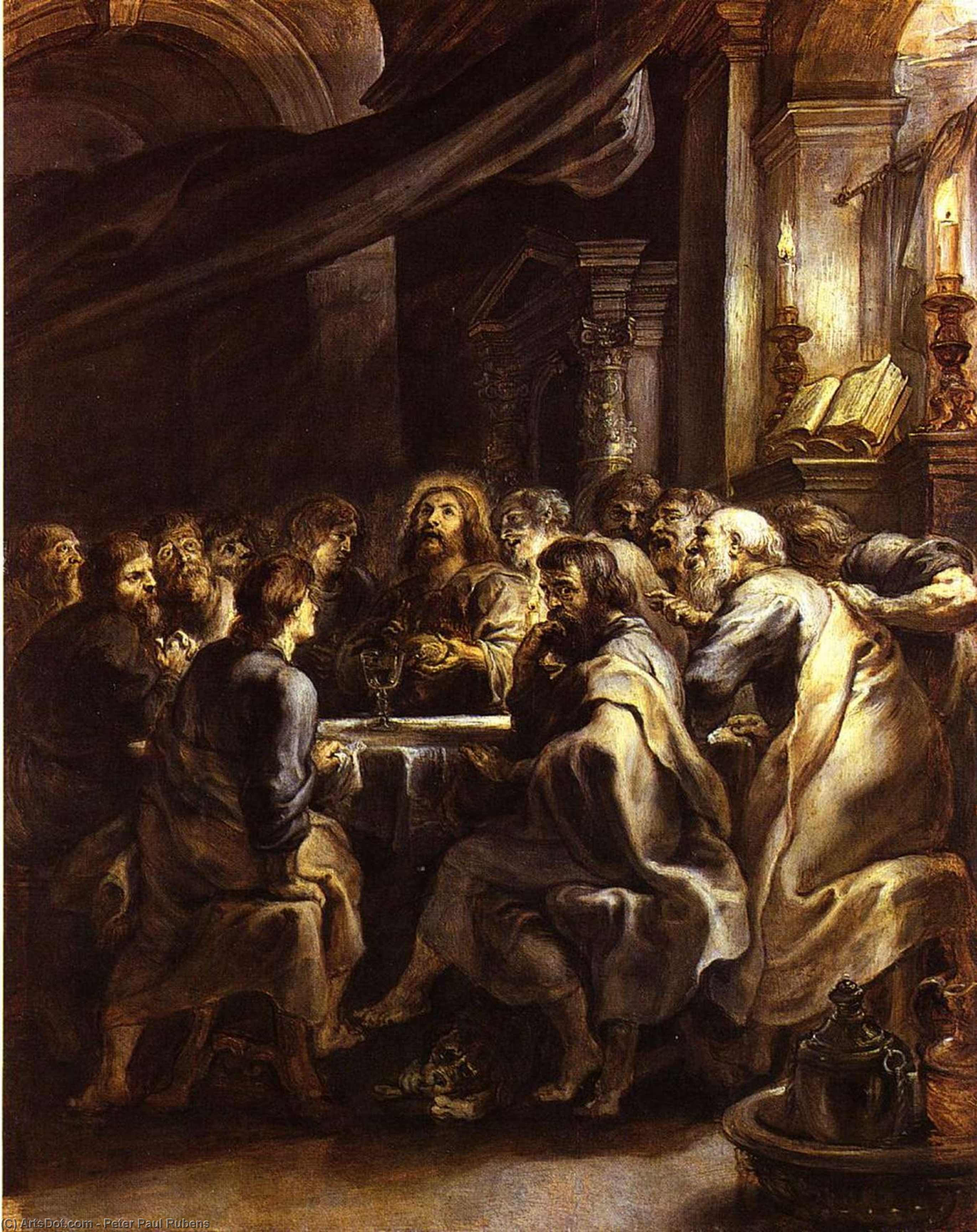
Experience the drama of Peter Paul Rubens’ ‘Last Supper’! A Baroque masterpiece capturing Christ's betrayal with dynamic composition & rich symbolism. Explore this iconic 1632 oil painting.
Rubens: Бароковски мајстор познат по динамичним композицијама и живим бојама, као и по иконама као што су 'Склоњење Хреста' и 'Подноштво Хреста'. Истражите његов живот и уметност.
A Dramatic Tableau of Faith: Peter Paul Rubens’ “The Last Supper”
Peter Paul Rubens' "The Last Supper," painted in 1632, isn’t merely a depiction of a biblical event; it’s a visceral experience—a carefully orchestrated drama rendered with the vibrant energy and emotional intensity that defined the Baroque period. This masterpiece, now housed within the Pinacoteca di Brera in Milan, offers a profound glimpse into Rubens' artistic genius and his masterful understanding of both religious narrative and human psychology. Measuring just 61 x 48 centimeters, its intimate scale belies the monumental impact of the scene it portrays: Jesus Christ sharing his final meal with his twelve apostles, culminating in the betrayal by Judas Iscariot. Rubens’ choice to capture this pivotal moment—not at a grand, ceremonial setting but within the relatively humble confines of a dining room—immediately establishes a sense of immediacy and intimacy, drawing the viewer directly into the unfolding drama.
The painting is a testament to Rubens' command of color and composition. He abandons the cool, restrained palette favored by his Renaissance predecessors in favor of a rich, almost theatrical use of reds, yellows, blues, and greens. The central figure of Jesus dominates the scene, clad in a striking red robe that draws the eye immediately, encircled by a halo of golden light—a visual symbol of his divinity and sacrifice. His posture is serene yet resolute, conveying both vulnerability and unwavering faith. Juxtaposed against this radiant figure is Judas, subtly but powerfully isolated from the group. He’s dressed in a distinctive blue garment, a deliberate choice that immediately marks him as the betrayer—a visual cue that resonates deeply with viewers even today. The apostles themselves are rendered with remarkable dynamism; their gestures and expressions range from shock and disbelief to quiet contemplation, each conveying a distinct emotional response to the unfolding events. Rubens masterfully uses light and shadow (chiaroscuro) to heighten the drama, creating a sense of depth and volume within the composition.
Baroque Innovation: Technique and Influence
Rubens’ “The Last Supper” is deeply rooted in the artistic traditions of his time, yet it also represents a significant departure from earlier depictions of this iconic scene. He was profoundly influenced by Leonardo da Vinci's own "Last Supper" fresco in Milan—a work he meticulously studied and, crucially, etched after. However, Rubens doesn’t simply replicate Da Vinci’s composition; instead, he transforms it with his characteristic dynamism and emotional intensity. He employs a looser, more expressive brushstroke than Da Vinci, creating a sense of movement and immediacy that is entirely consistent with the Baroque aesthetic. Furthermore, Rubens' humanist ideals—a core component of his artistic philosophy—are evident in his portrayal of the apostles as individuals with distinct personalities and emotions. This departure from the more stylized representations of biblical figures prevalent in earlier art reflects a growing interest in humanism during the Renaissance and Baroque periods.
Symbolic Layers: Faith, Betrayal, and the Eucharist
Beyond its dramatic composition and technical brilliance, “The Last Supper” is laden with symbolic meaning. The loaf of bread and cup of wine—the central elements of the Eucharist—are prominently displayed, representing Christ’s sacrifice and the promise of salvation for those who partake in communion. Judas' isolation, as mentioned earlier, serves as a potent visual reminder of betrayal and the consequences of sin. The architectural setting itself is imbued with symbolic significance, suggesting a sacred space while simultaneously grounding the scene in the everyday reality of a dining room. The use of perspective—particularly the receding lines of the table and chairs—creates a sense of depth and draws the viewer into the heart of the drama.
A Legacy Enduring: Reproductions and Artistic Significance
“The Last Supper” remains one of Rubens’ most celebrated works, admired for its dramatic intensity, masterful technique, and profound emotional impact. It exemplifies his ability to seamlessly blend religious narrative with human psychology, creating a work that is both visually stunning and intellectually stimulating. Today, ArtsDot.com offers meticulously crafted oil painting reproductions of this masterpiece, allowing art enthusiasts worldwide to experience the beauty and power of Rubens’ vision firsthand. These reproductions capture not only the visual details of the original but also its emotional essence—a testament to the enduring legacy of one of history's greatest artists. Whether you are a seasoned collector or simply an admirer of Baroque art, a reproduction of “The Last Supper” is a captivating addition to any collection and a window into the heart of Western artistic tradition.