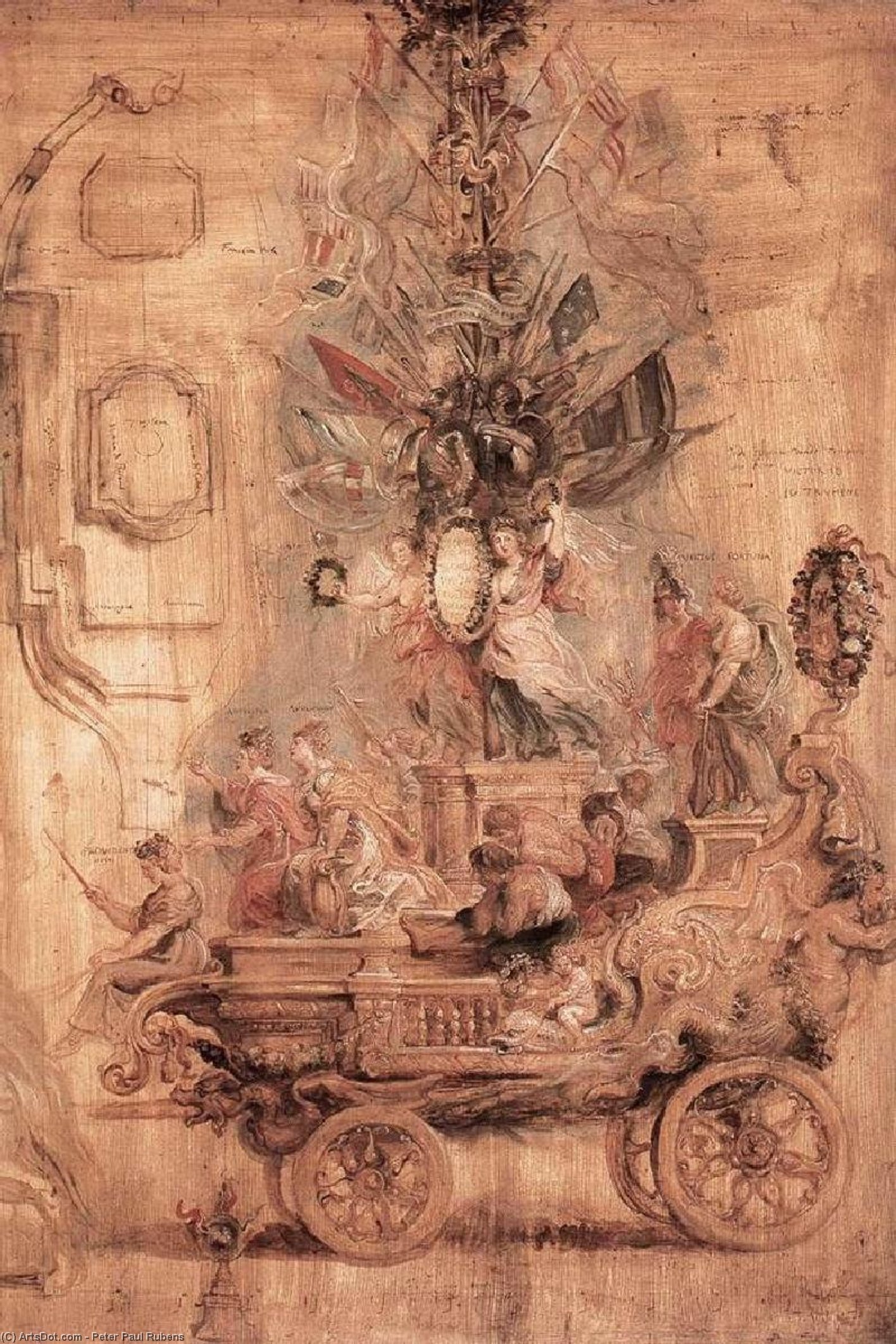
Experience the dynamism of Peter Paul Rubens' 'The Triumphal Car of Kallo' (sketch). A Baroque masterpiece showcasing rich colors, dramatic light & movement – a captivating glimpse into Flemish art history.
Rubens: Бароковски мајстор познат по динамичним композицијама и живим бојама, као и по иконама као што су 'Склоњење Хреста' и 'Подноштво Хреста'. Истражите његов живот и уметност.
The Triumphal Car of Kallo (Sketch): A Window into Rubens’ Dynamic Baroque
Peter Paul Rubens' "The Triumphal Car of Kallo (sketch)" is more than just a preparatory drawing; it’s a vibrant, pulsating embodiment of the Flemish Baroque at its most exhilarating. Created in 1638, this oil-on-canvas study offers an intimate glimpse into the artist’s creative process and reveals the masterful techniques that would later define his monumental works. Measuring a modest 103 x 71 cm, it belies the immense energy and dramatic composition contained within its borders. The sketch isn't merely documentation of a planned commission—it’s a testament to Rubens’ ability to capture movement, emotion, and light with astonishing immediacy. It showcases his characteristic use of loose brushstrokes, layering colors to build depth and texture, and employing a dynamic sense of perspective that pulls the viewer directly into the scene. The drawing itself is executed with charcoal and red chalk on paper, providing a fascinating contrast between the delicate lines and the bold, expressive marks.
Context Within the Flemish Baroque Movement
Rubens’ “Triumphal Car” exists firmly within the context of the flourishing Flemish Baroque art movement—a period characterized by its dramatic intensity, opulent color palettes, and profound emotional engagement. Emerging during the 17th century, this style rejected the restraint of Mannerism in favor of a more theatrical and emotionally charged approach to painting. Artists like Rubens sought to evoke powerful feelings through their work, often drawing inspiration from classical mythology, religious narratives, and contemporary events. The commission for the triumphal car itself reflects the political climate of the time—a celebration of military victory and civic pride. Rubens’ skill lay in his ability to seamlessly blend these diverse influences, creating works that were both intellectually stimulating and deeply affecting. He was a master of capturing the dynamism of life, whether depicting heroic battles or intimate portraits, always imbuing his subjects with a sense of vitality and presence.
The Painting's Composition: A Study in Movement
At first glance, “The Triumphal Car” appears to be a chaotic jumble of figures and vehicles—and that’s precisely the point. Rubens deliberately employed a loose, almost improvisational compositional approach, capturing the frenetic energy of the scene as it unfolded in his mind. The central focus is undeniably the ornate car itself, its two visible wheels anchoring the composition while hinting at the movement beneath. Surrounding this focal point are a multitude of figures—soldiers, dignitaries, and citizens—engaged in various gestures of celebration and admiration. A smaller car is strategically placed to the left, creating visual interest and contributing to the overall sense of dynamism. Above all, a bird soars through the air, adding an element of lightness and freedom to the composition. The sketch reveals how Rubens meticulously considered each element’s placement, striving for a balance between structure and spontaneity.
Artistic Significance: Light, Shadow, and Color
Rubens' mastery of oil paint is immediately apparent in this sketch. He expertly utilizes light and shadow to create a dramatic sense of depth and volume, a hallmark of the Flemish Baroque style. Notice how he builds up layers of color—rich reds, vibrant blues, and earthy browns—to capture the textures of fabrics, armor, and skin. The loose brushwork contributes to the overall impression of movement and energy, while also allowing for subtle gradations of tone that enhance the sense of realism. The sketch demonstrates his ability to quickly translate a complex scene onto paper, capturing not just the visual details but also the underlying mood and atmosphere. It’s a remarkable example of Rubens' intuitive approach to painting—a testament to his extraordinary talent and artistic vision.
Comparison with Other Works: Echoes of Vulcan and Fire
Rubens’ “Triumphal Car” shares thematic resonances with other works in his oeuvre, particularly "Vulcan and Fire." Both paintings feature dynamic compositions centered around powerful figures engaged in dramatic action—a testament to Rubens' fascination with mythology and the elemental forces of nature. Furthermore, the use of intense light and shadow, a technique he honed during his time in Italy studying Caravaggio, is evident in both works. The influence of Michelangelo Merisi (Caravaggio) can be seen in the stark contrasts between light and dark, creating a sense of theatrical drama and highlighting key elements within the composition. The sketch itself provides valuable insight into how Rubens developed these techniques—a process of experimentation and refinement that ultimately shaped his distinctive artistic style.