A Celebration of Dionysus: Exploring Thomas Lawrence’s Vision of Charles Hope
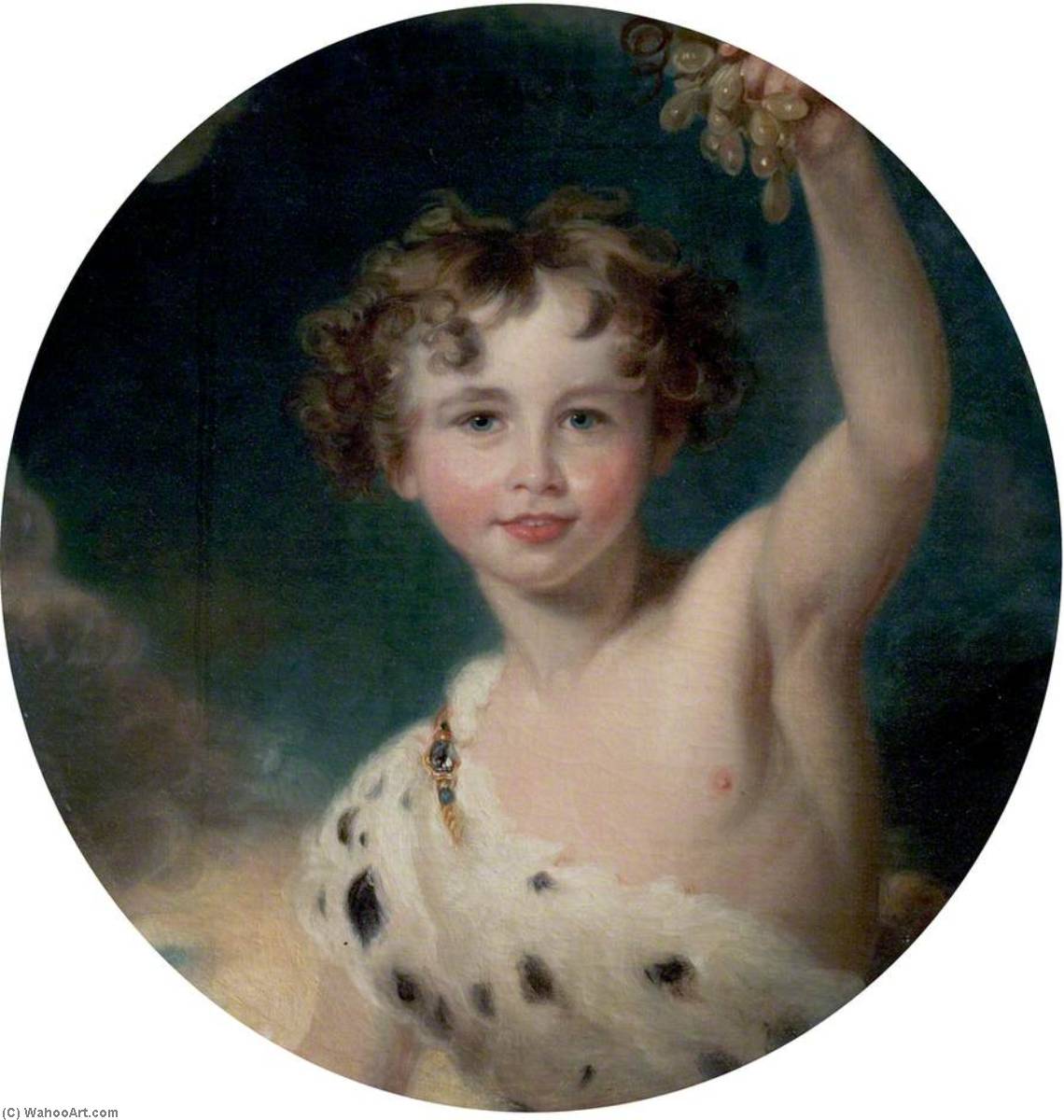
The painting “Charles Hope (1810–1817), as Bacchus” by Sir Thomas Lawrence, executed in 1816, stands as a testament to the Romantic fascination with mythology and aristocratic portraiture. More than just a likeness of a young man – Charles Hope, heir to the Earlship of Warwick – it’s an ambitious reimagining of classical iconography, transforming Hope into Dionysus, the Greek god of wine, ecstasy, and revelry. Lawrence's masterful technique—primarily pastel on canvas—allowed for unparalleled subtlety in capturing light and texture, a hallmark of his distinctive style that cemented his reputation as one of Britain’s foremost artists during the Regency era.
Lawrence meticulously studied classical sculpture and literature to infuse his work with symbolic resonance. The toga draped around Hope’s shoulders echoes Roman ceremonial garb, grounding the fantastical element of Dionysian divinity within recognizable visual traditions. Crucially, he positioned Hope amidst a swirling cloudscape—a deliberate departure from the static formality typical of portraiture—suggesting an inner turmoil juxtaposed with outward exuberance. This dynamic backdrop underscores the painting's exploration of themes beyond mere representation; it delves into the complexities of human emotion and aspiration.
The artist’s use of pastel is particularly noteworthy. Unlike oil paint, which relies on layering pigments to achieve depth and luminosity, pastel employs finely powdered pigment adhered to canvas with gum arabic. This medium offers unparalleled control over tonal gradations—Lawrence achieved breathtaking effects of luminescence and atmospheric haze—resulting in a luminous surface that captures the ephemeral beauty of fleeting moments. The artist’s painstaking attention to detail extends to the depiction of Hope's face, where subtle shading conveys an expression of contemplative joy rather than overt theatricality.
Historically, Lawrence’s painting reflects the broader cultural currents of its time. The Romantic movement championed emotion and imagination as antidotes to Enlightenment rationalism, inspiring artists to explore psychological landscapes alongside visual representations. Furthermore, aristocratic portraiture served as a crucial mechanism for asserting social status and legitimizing hereditary privilege—Lawrence skillfully employed artistic conventions to convey Hope’s noble lineage and intellectual pursuits.
Ultimately, “Charles Hope (1810–1817), as Bacchus” transcends its formal constraints to evoke a profound emotional response. The painting captures not merely the appearance of a young man but also his inner spirit—a yearning for freedom, an embrace of passion, and a communion with the divine. It remains a captivating masterpiece, inviting viewers to contemplate the enduring power of art to illuminate the human condition and celebrate the sublime beauty of existence.
- Artist: Sir Thomas Lawrence
- Year Executed: 1816
- Medium: Pastel on Canvas
- Dimensions: 60 x 60 cm
Provenance: The University of Nottingham Collection.