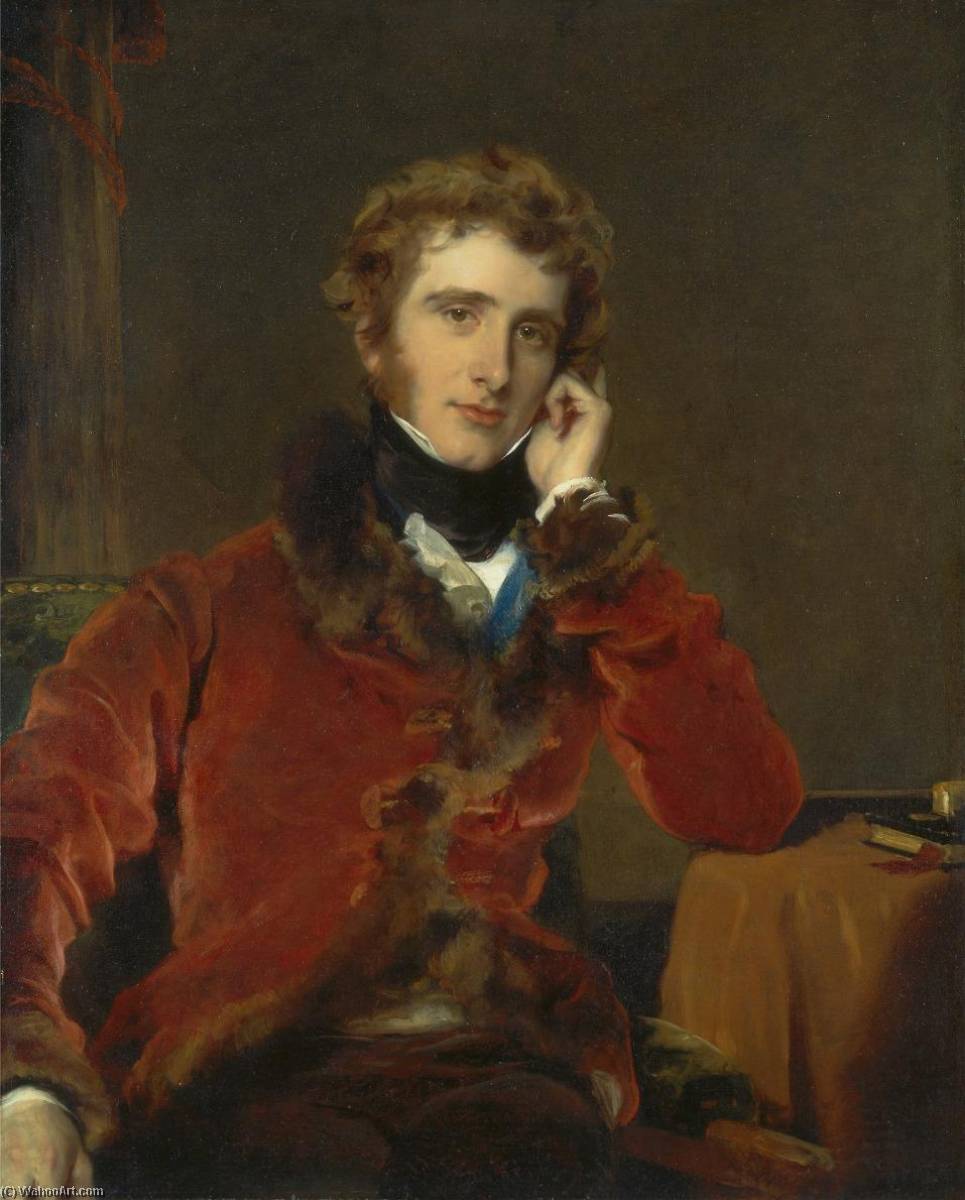
Admire Sir Thomas Lawrence’s 1824 portrait of George James Welbore Agar Ellis, 1st Lord Dover. A neoclassical masterpiece showcasing rich detail & dramatic lighting.
Ser Tomas Lorens: Majstor portreta regentskog doba, poznat po eleganciji i šarmu britanske aristokratije. Slikao kraljevske porodice, plemiće i uticao na romantizam svojom virtuoznom tehnikom.
Otkrijte bogatstvo britanske umetnosti u Yale Centru! Od Hogarta do Turnera, istražite remek-dela u zgradi koju je dizajnirao Louis Kahn – centru za istraživanje i živopisne izložbe.
A Brushstroke of Regency Splendor: The Life and Art of Sir Thomas Lawrence
Sir Thomas Lawrence’s 1824 portrait of George James Welbore Agar Ellis, later 1st Lord Dover stands as a testament to the artistic fervor of the Regency era. More than just a likeness, it embodies the spirit of its time—a celebration of intellect, wealth, and aristocratic refinement—captured with meticulous detail and bathed in dramatic chiaroscuro lighting. Lawrence’s early life was characterized by itinerant wanderings, fostering an independence that would permeate his entire artistic career. From Bristol to Bath, he honed his skills sketching portraits amidst convivial inns, demonstrating a remarkable talent recognized without formal instruction. This innate ability combined with keen observation propelled him toward success, establishing him as a respected artist and entrepreneur simultaneously.
The portrait itself exemplifies Neoclassical portraiture, prioritizing realism and stylistic elegance. Lawrence skillfully employed oil paint on canvas, utilizing layering of glazes to achieve depth and luminosity—a technique common in the period—that lends an ethereal quality to the depiction. The composition centers on Ellis’s face and upper body, framed by a luxurious velvet jacket adorned with a fur collar, reflecting the opulent tastes of the aristocracy. Lines delineate contours with precision, mirroring the formal conventions of the era while simultaneously conveying texture and form. Shadows cast from the left illuminate Ellis's visage, emphasizing his gaze and highlighting the rich fabric of his attire.
Symbolism permeates every aspect of the artwork. The velvet jacket represents status and affluence—a visual declaration of Ellis’s social standing—while the fur collar signifies nobility and prestige. Furthermore, Ellis’s contemplative expression suggests introspection and intellectual curiosity, aligning with Enlightenment ideals prevalent during Lawrence's lifetime. The artist’s masterful handling of light and shadow contributes to an emotional impact that transcends mere representation; it evokes a sense of dignified composure and conveys the profound seriousness of the subject matter.
The subtle gradations in tone and atmospheric haze create depth, transporting viewers back to 1824 London—a city undergoing rapid transformation amidst industrial progress and social upheaval. Lawrence’s meticulous attention to detail—from the delicate rendering of Ellis's skin to the intricate patterns of the velvet—underscores his commitment to artistic excellence. This portrait isn’t merely a depiction; it’s an immersive experience, inviting contemplation on beauty, intellect, and the enduring legacy of Regency art. It remains a captivating masterpiece for collectors and interior designers alike, embodying the timeless allure of Neoclassical elegance.