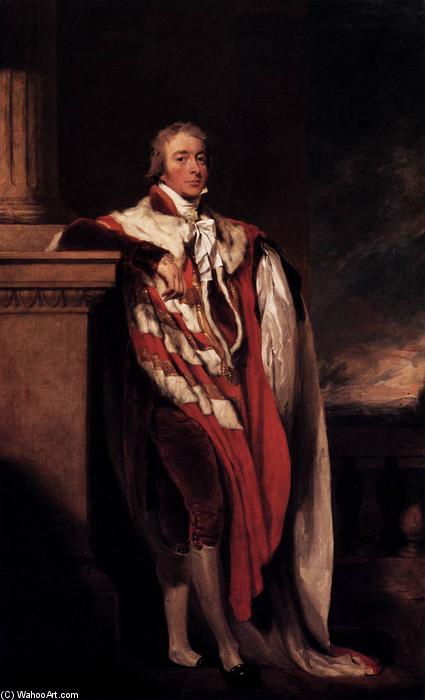
Ser Tomas Lorens: Majstor portreta regentskog doba, poznat po eleganciji i šarmu britanske aristokratije. Slikao kraljevske porodice, plemiće i uticao na romantizam svojom virtuoznom tehnikom.
Otkrijte Museo Nacional del Prado u Madridu! Istražite remek-dela Velaquez, Goy i El Greca, obuhvatajući vekove evropske umetnosti. Obavezan kulturni spomenik!
A Portrait of Nobility: Sir Thomas Lawrence’s John Fane, Tenth Count of Westmorland
Sir Thomas Lawrence's depiction of John Fane, Tenth Earl of Westmoreland, stands as a quintessential emblem of Regency England—a testament to artistic skill and the opulent grandeur of the era. Executed in 1823, this monumental oil painting resides within the Museo del Prado’s esteemed collection in Madrid, Spain, measuring an impressive 247 x 147 cm. More than just a likeness, Lawrence's masterpiece delves into the psychological portraiture characteristic of his time, capturing not merely physical appearance but also conveying the Earl’s status and commanding presence.
Subject Matter and Composition
The painting portrays John Fane in a three-quarter pose against a dark, brooding sky—a deliberate choice that immediately draws the viewer's eye to the figure itself. He leans casually against a column, his arm draped gracefully over it, projecting an aura of confidence and repose. Lawrence meticulously rendered Fane’s attire: a scarlet robe embellished with shimmering white fur, symbolizing wealth and aristocratic lineage, paired with a crisp white shirt featuring a ruffled collar—a fashionable detail indicative of the period's stylistic sensibilities. The artist skillfully utilizes light and shadow to sculpt Fane’s form, emphasizing volume and creating a dramatic interplay between illumination and darkness that underscores his importance within the composition.
Technique and Artistic Style
Lawrence’s mastery is evident in his meticulous attention to detail—from the subtle textures of the fur to the nuanced expressions on Fane's face. Employing a technique rooted in chiaroscuro, he skillfully manipulates light to heighten realism and create depth, mirroring the prevailing artistic conventions of the Romantic movement. The brushstrokes are smooth yet purposeful, conveying both precision and an expressive quality that captures the sitter’s character—a hallmark of Lawrence’s oeuvre and indicative of his commitment to portraying subjects with psychological insight.
Historical Context and Symbolism
Painted during the reign of George IV, this portrait reflects the broader cultural landscape of Regency England – a period defined by aristocratic patronage and an obsession with appearances. The dark sky serves as a symbolic backdrop, contrasting sharply with Fane’s warm clothing colors and suggesting introspection alongside outward grandeur. The column behind him symbolizes stability and authority—visual cues that reinforce the Earl's position within society and underscore the painting’s narrative significance. Lawrence’s work aligns perfectly with the artistic ideals of his time, prioritizing accuracy and conveying emotion through masterful manipulation of light and color.
Emotional Impact and Legacy
Ultimately, John Fane, Tenth Count of Westmorland transcends mere representation; it embodies the spirit of its era—a celebration of aristocratic privilege and refined taste. Lawrence’s portrait captures not only Fane's physical form but also his inner life, inviting viewers to contemplate themes of power, status, and dignity. It remains a captivating example of Regency art history, continuing to inspire admiration for its technical brilliance and enduring emotional resonance.