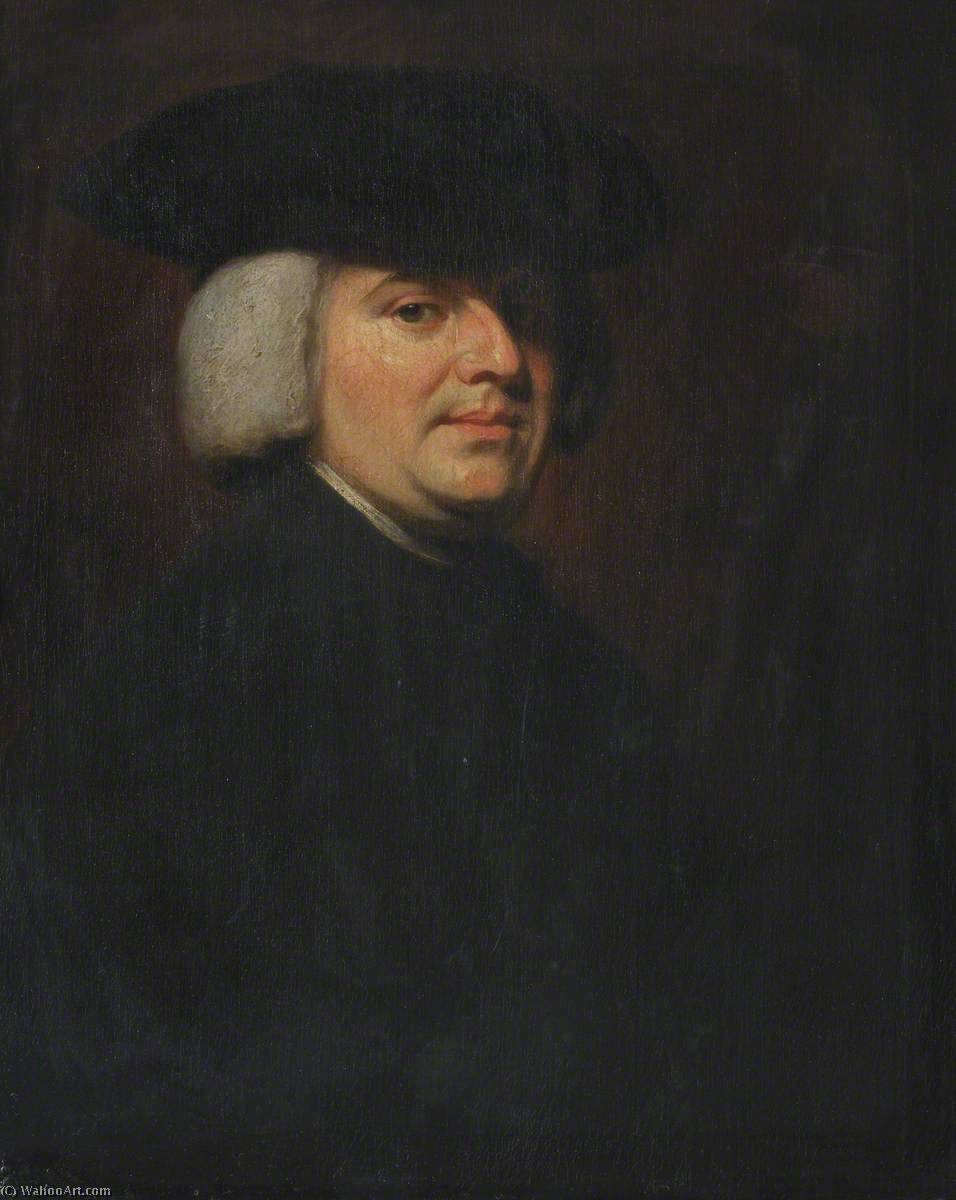
A Portrait of Enlightenment Thought: William Beechey's Reverie on Paley
The canvas holds an arresting stillness—a contemplative gaze directed outwards from the face of Sir William Beechey, rendered in meticulous detail by the celebrated portraitist. Painted in 1809, this piece transcends mere likeness; it embodies the intellectual fervor of its era and speaks to enduring questions about faith and reason. Executed in a style characteristic of Beechey’s oeuvre—primarily small-scale full-length portraits imbued with an understated elegance—the painting captures Paley at a moment of profound reflection.
- Style: Romantic Portraiture – Beechey's approach eschews the rigid formalism favored by earlier generations, prioritizing emotional nuance and psychological depth. He skillfully employs chiaroscuro, manipulating light and shadow to sculpt Paley’s features and convey a sense of inner solemnity.
- Technique: Oil on Canvas – Beechey utilized oil paints on canvas, allowing for layering and blending that achieved remarkable tonal richness and textural subtlety. The brushstrokes are delicate yet confident, capturing the contours of Paley's face with precision while hinting at a deeper emotional landscape.
The subject matter itself is significant. William Paley (1743–1805), a clergyman and philosopher, was a staunch defender of natural theology—the belief that God created the universe according to discernible laws. Beechey’s depiction reflects this intellectual preoccupation, portraying Paley not merely as an individual but as a symbol of Enlightenment ideals: observation, rational inquiry, and moral responsibility. The artist deliberately positioned Paley against a simple brick wall, minimizing distracting background elements and focusing attention squarely on the sitter's countenance. This compositional choice underscores the importance of introspection and contemplation—themes central to Paley’s philosophical arguments.
Symbolism:
The White Wig: Traditionally associated with scholarly distinction and piety, the wig symbolizes Paley’s intellectual pursuits and adherence to religious principles.
The Black Hat: Contrasting sharply with the wig, the hat represents authority and dignity—qualities inherent in Paley's role as a clergyman and respected figure within the scientific community.
Beechey’s masterful handling of light contributes powerfully to the painting’s emotional impact. The soft illumination casts gentle shadows across Paley’s face, creating an atmosphere of quiet contemplation and conveying a sense of inner peace. This subtle luminosity invites viewers to engage in their own reflections on faith, reason, and the beauty of the natural world—a legacy that continues to resonate today. It's a portrait not just of a man, but of an idea – a testament to Beechey’s ability to distill complex philosophical concepts into a visually arresting image.