A Gathering of Dignity: The Soul of Hommage à Manet
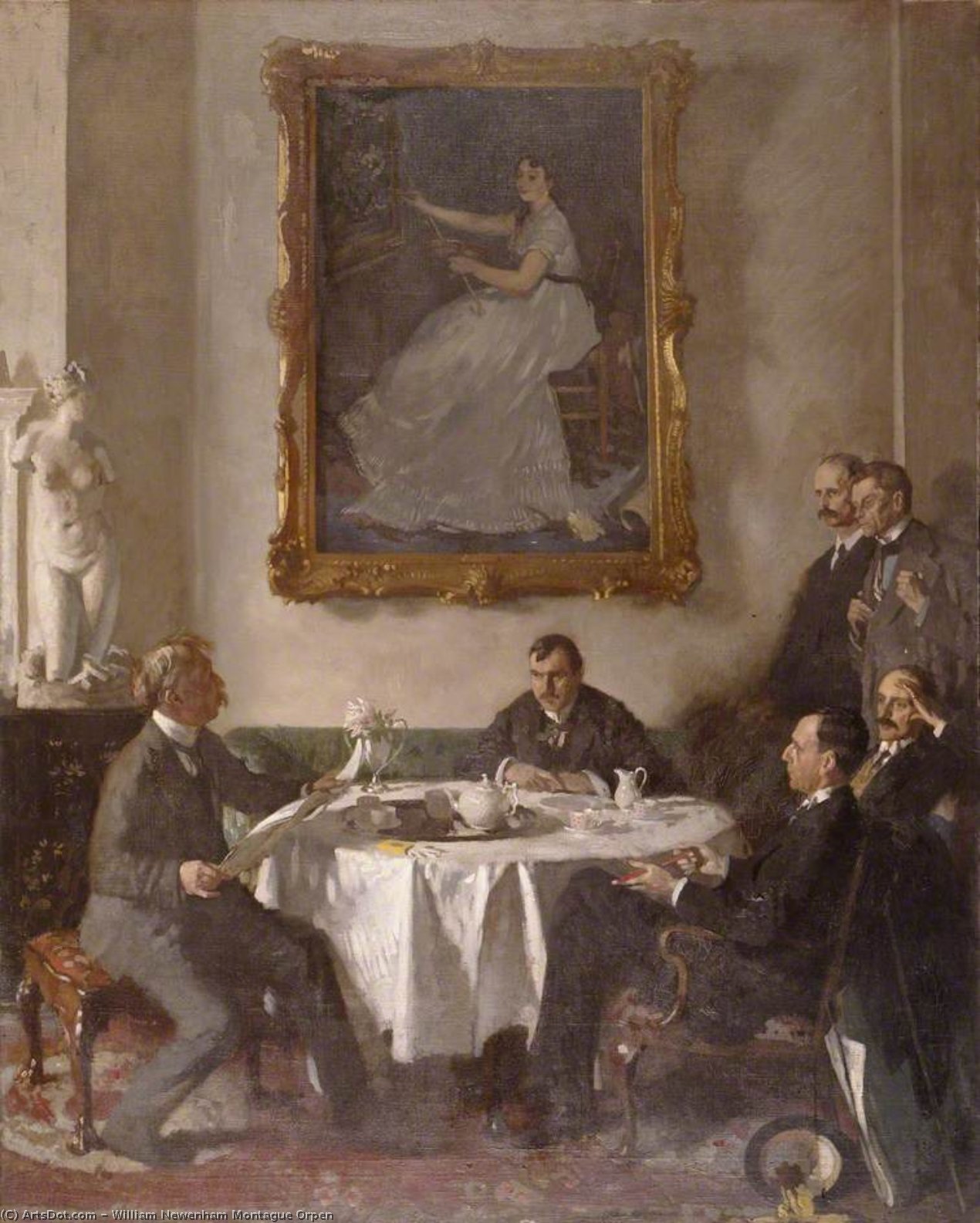
In the quiet, amber-hued atmosphere of Sir William Newenham Montague Orpen’s 1909 masterpiece, Hommage à Manet, we are invited to witness more than just a social gathering; we are pulled into a profound meditation on legacy and identity. This evocative group portrait captures a moment of refined repose among members of the Royal Yacht Squadron, yet beneath the surface of this Edwardian assembly lies a complex dialogue between the artist and his predecessors. Orpen, a master of capturing the psychological weight of his subjects, uses this composition to bridge the gap between the burgeoning modernity of the early 20th century and the enduring brilliance of Impressionist ideals.
The painting functions as a layered narrative of prestige and contemplation. As the eye wanders across the table, it encounters faces rendered with astonishing accuracy—most notably the likeness of the legendary explorer Sir Ernest Shackleton. These are not merely static figures; there is a palpable sense of movement in their conversation, a subtle tension held within the way wine glasses catch the light and how hands rest upon the tablecloth. The scene breathes with the quiet energy of an elite class navigating a world in flux, caught in a singular moment of stillness before the rapid industrialization of the era reshaped the social fabric forever.
Mastery of Light and Textural Depth
Technically, Hommage à Manet is a triumph of oil on canvas, showcasing Orpen’s ability to manipulate tonal subtlety to create atmosphere. The artist employs a sophisticated layering of brushstrokes that lends a remarkable textural richness to the work. One can almost feel the heavy weight of the men's formal drapery and the smooth, cool surface of the porcelain on the table. By drawing inspiration from the light-drenched palettes of Monet, Orpen achieves a luminous quality that prevents the darker, more masculine hues of the foreground from feeling somber. Instead, the light seems to dance across the scene, imbuing the gathering with a sense of serene, dignified repose.
This interplay of light and shadow serves a dual purpose: it provides a realistic depiction of an indoor evening setting while simultaneously elevating the subjects to a level of mythic importance. The subtle gradations of color—from the deep, velvety blacks of formal attire to the soft, glowing highlights on skin and glass—create a visual rhythm that guides the viewer through the composition. For the collector or interior designer, this mastery of light makes the piece an extraordinary focal point, capable of adding both warmth and intellectual depth to a sophisticated living space.
Symbolism and the Silent Counterpoint
Beyond the immediate impression of a social portrait, Orpen embeds profound symbolic elements within the frame. A striking feature is the presence of a statue of a woman positioned in the background, her pale complexion and serene gaze acting as a silent, ethereal counterpoint to the masculine energy dominating the foreground. This deliberate inclusion invites the viewer to contemplate themes of femininity, idealized virtue, and the permanence of art against the fleeting nature of human social interaction. The statue stands as a ghostly sentinel, a reminder of the classical beauty that informs the very foundation of Orpen's artistic lineage.
Ultimately, Hommage à Manet is an emotional journey through the concept of homage itself. It is a tribute not only to Édouard Manet but to the very act of looking and remembering. The painting resonates with a sense of nostalgia and respect for tradition, making it a captivating acquisition for those who appreciate art that tells a story of continuity. Whether viewed as a historical document of Edwardian society or as a deeply personal artistic statement, this work remains a timeless testament to the power of portraiture to capture the enduring essence of the human spirit.