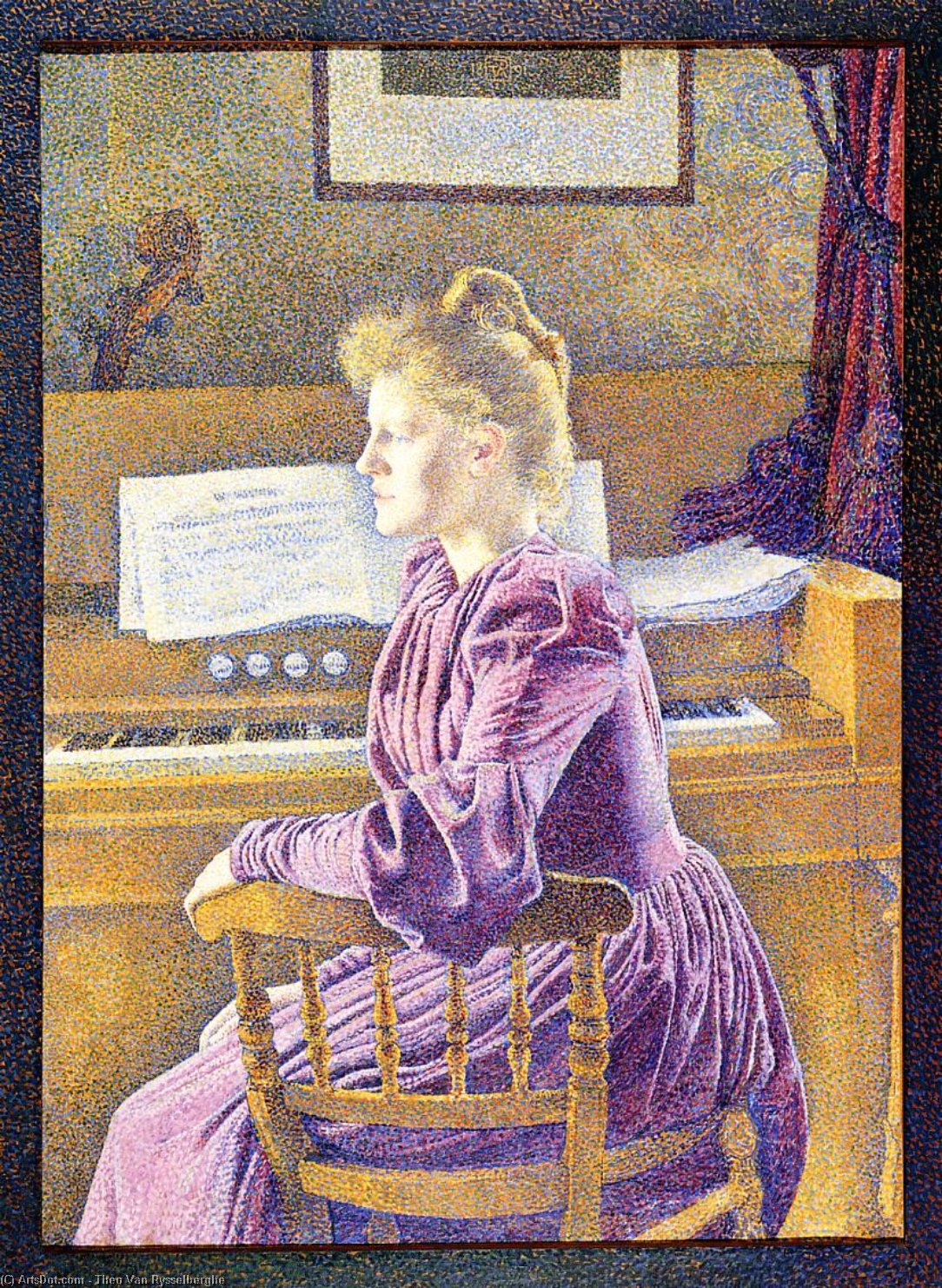
Experience Theo van Rysselberghe's luminous Neo-Impressionist masterpiece, ‘Maria Sethe at the Harmonium,’ capturing serene beauty with meticulous pointillism and a cozy domestic atmosphere.
Otkrijte vibrantne neoimpresionističke slike Théo van Rysselberghea! Istražite pejzaže, portrete i marokanske scene – ključna figura grupe Les XX koja spaja svetlost i boju. Pionir modernog slikarstva.
Истражите фламандски шедеври у Краљевском музеју за личну уметност Анверпуру! Откријте Рубенса, Ван Ејка и други у овом дивном неокласичном музеју изливања уметности – чар Белега рата чека вас.
Анверпурски музеј, фламандска уметност, Рубенс, Ван Ејк, слике, скулптирање, керамика, архитектура, KMSKA, Анверпушки леополдов трг
Бележија
Др. Сам Верстокт
Анверпур
Краљевски музеј за личну уметност
Maria Sèthe at the Harmonium - A Neo-Impressionist Portrait of Quiet Reflection
The painting Maria Sèthe at the Harmonium by Theo van Rysselberghe stands as a testament to the burgeoning fascination with light and color that characterized the late 1890s European art scene. Created in 1891, this oil on canvas masterpiece—measuring 118 x 84 cm—currently resides at the Koninklijk Museum voor Schone Kunsten (Antwerp, Belgium)—captures a moment of serene contemplation within a domestic interior. It’s more than just a depiction; it's an exploration of mood and atmosphere achieved through Van Rysselberghe’s groundbreaking technique: Pointillism.
The Technique of Light – Pointillism Embodied
Theo van Rysselberghe, a Belgian artist deeply influenced by Impressionism yet decisively forging his own path, pioneered the use of Pointillism—a method championed by Georges Seurat and Paul Signac—to revolutionize painting. Unlike blending colors on canvas, Pointillist painters apply tiny dots of pure pigment alongside each other, allowing the viewer’s eye to optically blend them together. This seemingly simple process demands immense precision and patience, resulting in an astonishingly luminous surface that mimics the way sunlight scatters across surfaces. In Maria Sèthe at the Harmonium, Van Rysselberghe meticulously renders the woman's dress with countless dots of muted hues—primarily ochre and mauve—creating a subtle shimmer that conveys warmth and sophistication. The harmonium itself is similarly treated, emphasizing its tonal qualities rather than attempting to represent it realistically.
A Domestic Scene Steeped in Symbolism
The setting of Maria Sèthe at the Harmonium contributes significantly to the painting’s symbolic resonance. The room exudes a comforting ambiance—characterized by a chair positioned near the instrument and several books adorning shelves—suggesting an intellectual pursuit alongside domestic tranquility. A vase containing flowers adds a touch of vibrancy against the muted backdrop, symbolizing beauty and freshness amidst quiet contemplation. More profoundly, the woman seated at the harmonium embodies introspection and artistic expression. The posture—slightly bowed, gaze upward—communicates a sense of absorption in music and thought—a common motif in Neo-Impressionist art reflecting an interest in psychological states.
Historical Context – Les XX and the Pursuit of Modern Aesthetics
Maria Sèthe at the Harmonium emerged during the formative years of “Les XX” (“The Twenty”), a Belgian avant-garde group that challenged traditional artistic conventions and championed new aesthetic ideals. Founded in 1893, Les XX sought to liberate painting from academic constraints—embracing Impressionism’s focus on capturing fleeting moments of light and color while simultaneously experimenting with innovative techniques like Pointillism. Theo van Rysselberghe's work exemplifies this spirit of experimentation—demonstrating a willingness to push boundaries and redefine what constituted “beauty” in the modern era. It stands as an enduring reminder that art can serve not only as representation but also as exploration of emotion and perception.
Emotional Impact – Tranquility and Contemplation Captured
Ultimately, Maria Sèthe at the Harmonium succeeds in conveying a palpable sense of tranquility and contemplation. The painting’s subdued palette—combined with its meticulous attention to detail—creates an immersive experience for the viewer—inviting them into the woman's inner world. It speaks to a desire for stillness amidst the bustle of daily life—a yearning for moments of quiet reflection and artistic inspiration. Like many Neo-Impressionist paintings, it prioritizes feeling over factual accuracy—capturing the essence of human emotion through masterful manipulation of color and light—leaving an indelible impression on anyone who encounters its luminous surface.