In the Grove: A Meditation on Light and Loss
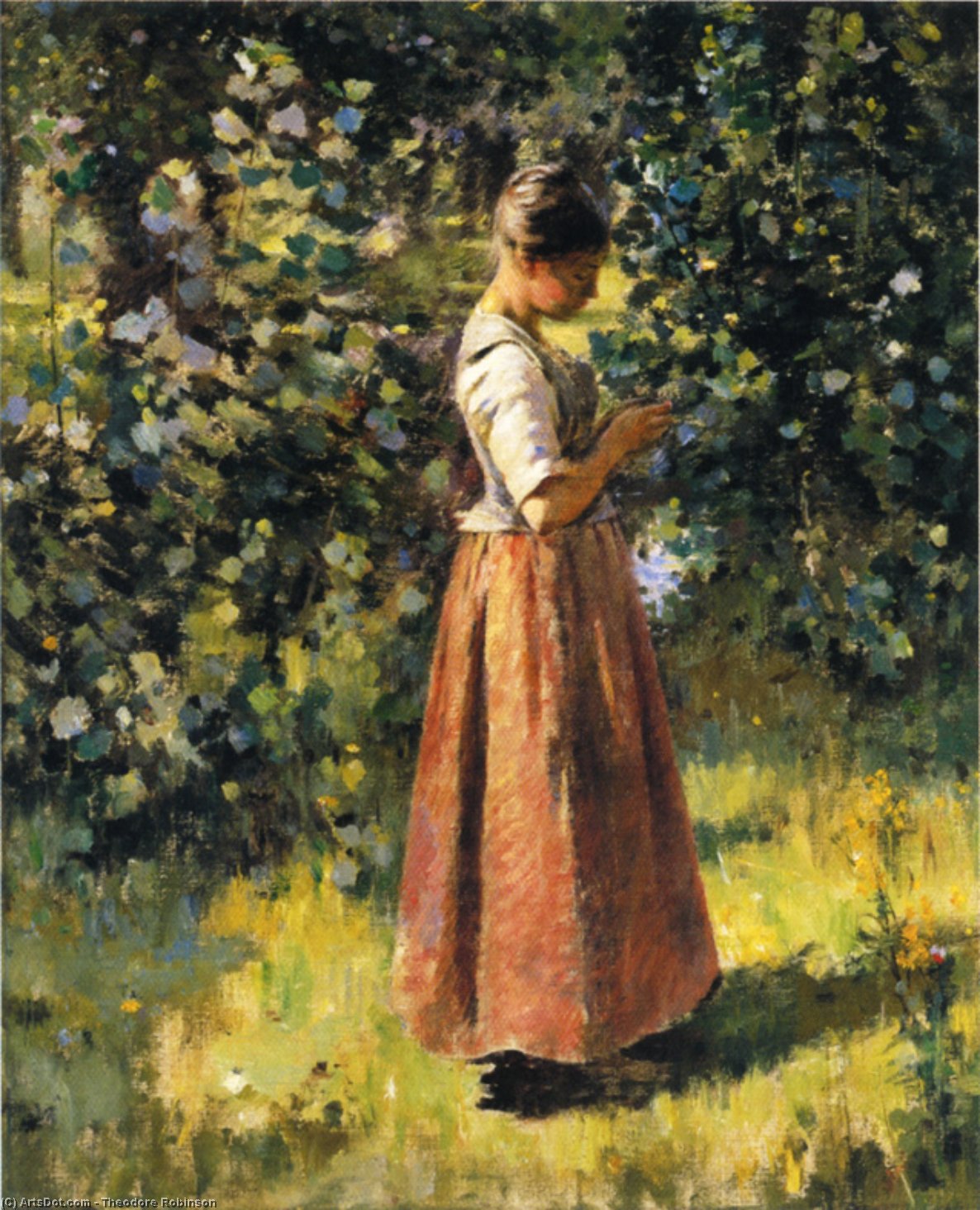
The painting “In the Grove” by Theodore Robinson stands as a cornerstone of American Impressionism—a testament to his ability to distill the profound beauty of nature into emotionally resonant visual form. Completed in 1888, it resides within the Baltimore Museum of Art’s collection, offering viewers an intimate glimpse into Robinson's artistic vision and capturing a moment frozen in time.
Robinson’s stylistic approach was deeply rooted in European Impressionism, yet he imbued his canvases with distinctly American sensibilities. Influenced by luminists like Frederic Church and George Caleb Bingham, he sought to depict landscapes not merely as representations of scenery but as expressions of spiritual contemplation. This is evident in “In the Grove,” where Robinson employs a broken color palette—characteristic of Monet’s Giverny series—to capture the dappled sunlight filtering through dense foliage.
- Technique: Robinson utilized oil paints on canvas, applying thin layers of pigment to build up texture and luminosity. His brushstrokes are loose and expressive, prioritizing tonal variation over precise detail, mirroring the fleeting effects of natural light.
- Composition: The painting’s central figure—a woman standing amidst towering trees—is positioned slightly off-center, creating a sense of balance and inviting the viewer's gaze to wander across the expansive vista. Robinson skillfully employs atmospheric perspective, diminishing colors and tonal values in the distant background to convey depth and heighten the feeling of serenity.
- Color Palette: Dominant hues include muted greens, browns, and ochres—colors that evoke the earthy tones of woodland environments. However, a striking crimson dress worn by the woman introduces a vibrant accent, symbolizing passion or perhaps hinting at an underlying melancholy.
Beyond its aesthetic qualities, “In the Grove” resonates with deeper symbolic meanings. The grove itself represents seclusion and contemplation—a refuge from the anxieties of urban life—while the woman embodies resilience and grace amidst adversity. Robinson’s masterful depiction of light—particularly the way it illuminates the foliage and casts shadows across the scene—suggests a yearning for transcendence, capturing the sublime beauty of nature as a source of spiritual solace.
Considered alongside similar works by Monet and Van Gogh – notably “Red Vineyard” – “In the Grove” exemplifies the Impressionist preoccupation with capturing fleeting moments of sensory experience. Its enduring appeal lies in its ability to transport viewers to a tranquil landscape, prompting reflection on themes of beauty, loss, and the interconnectedness of humanity and nature. Reproductions of this iconic painting are available at ArtsDot.com, allowing art enthusiasts to appreciate Robinson’s legacy for generations to come.