A Portrait of Quiet Dignity
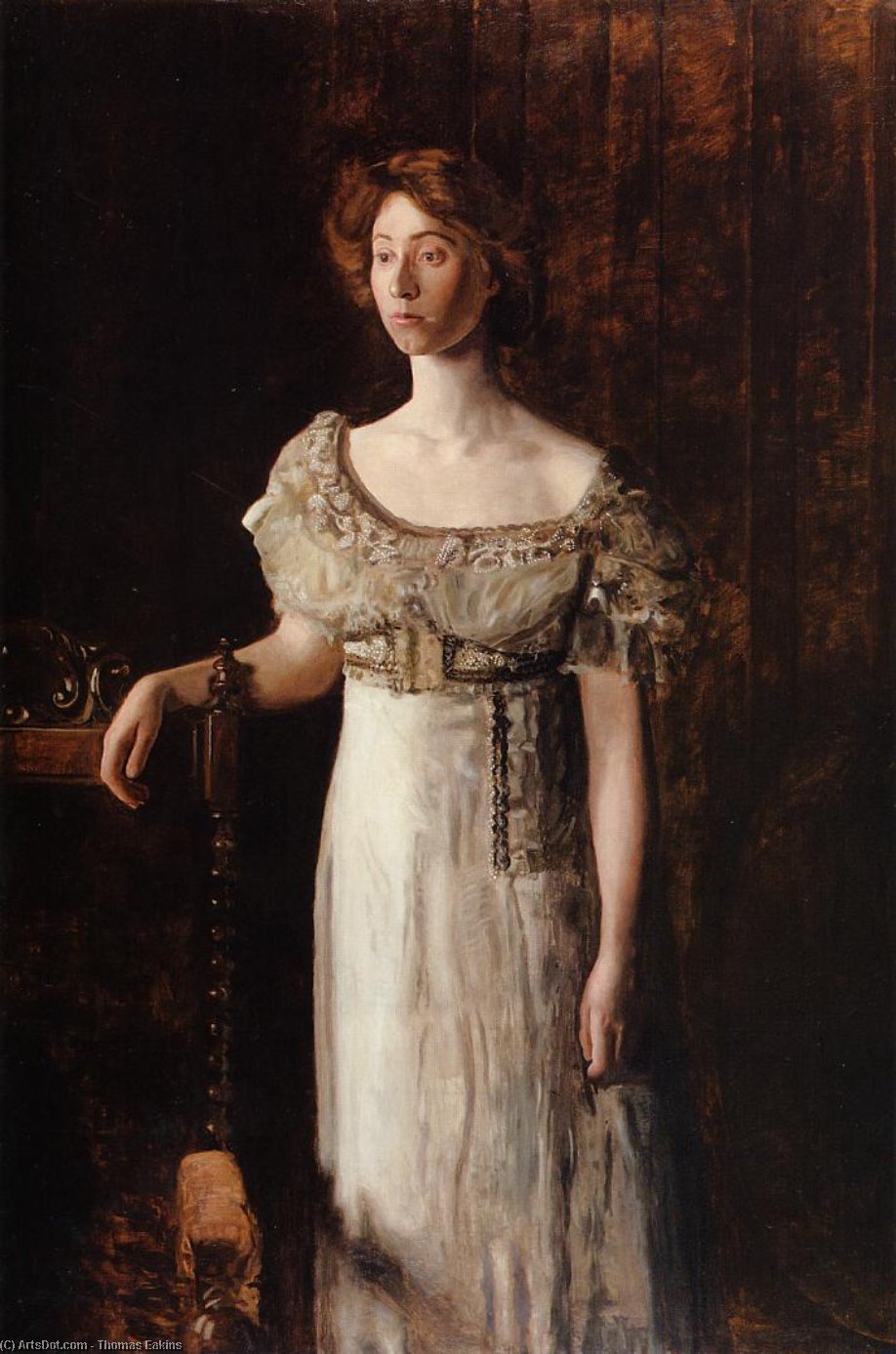
In the quiet corners of art history, few works capture the stillness of a moment as profoundly as Thomas Eakins’ 1908 masterpiece, “The Old-Fashioned Dress.” Also known as the Portrait of Helen Montanverde Parker, this painting is far more than a mere depiction of a seated woman; it is an intimate window into a bygone era of grace and composure. Eakins, a titan of American realism, possessed a rare ability to look past the surface of his subjects to find the psychological weight beneath. In this portrait, we encounter Helen Parker not just as a figure in a room, but as an embodiment of Victorian values—dignified, serene, and deeply rooted in her surroundings.
The composition invites the viewer into a space of contemplative silence. Seated gracefully with her hands resting calmly upon a chair, Parker’s posture exudes a sense of poised stability. The artist meticulously arranges the elements of the room—the heavy presence of the chair and couch—to create an atmosphere of formal stillness. This is not a scene of movement or drama, but one of profound presence. For the collector or interior designer, this piece offers a sophisticated anchor for a room, providing a sense of historical weight and intellectual depth that commands attention without ever feeling intrusive.
The Artistry of Unflinching Realism
To understand the emotional impact of this work, one must appreciate Eakins’s revolutionary approach to technique. Eschewing the fleeting, light-drenched brushstrokes of the Impressionists, Eakins embraced a rigorous, almost scientific realism. He approached the canvas with the precision of an anatomist, ensuring that every fold of the "old-fashioned" fabric and every subtle shadow in the room felt tangibly real. The texture of the white shirt and the long skirt is rendered with such care that one can almost sense the weight of the cloth.
The color palette is masterfully restrained, utilizing earthy tones and soft highlights to direct the eye toward the subject’s face and hands. This focus on detail serves a greater symbolic purpose. The inclusion of two clocks within the scene acts as a subtle memento mori, a gentle reminder of the relentless passage of time. Amidst the stillness of the portrait, these ticking instruments suggest that while the moment captured is eternal, the world outside continues its march forward. It is this tension between the permanent and the ephemeral that gives the painting its haunting, evocative power.
An Inspiration for the Modern Interior
For those seeking to curate a space that speaks of heritage, intellect, and timeless elegance, "The Old-Fashioned Dress" serves as an incomparable inspiration. The painting’s ability to harmonize formal structure with emotional warmth makes it a versatile choice for high-end reproductions in various settings. Whether placed in a sunlit library, a stately study, or a contemporary living area, the work brings with it a narrative of stability and grace.
Owning a reproduction of such a significant piece allows a decorator to introduce a sense of "quiet luxury"—a trend that favors substance and history over fleeting ornamentation. The painting does not merely decorate a wall; it enriches the very atmosphere of a home, inviting guests to pause, reflect, and engage with the profound beauty of American realism. It is an investment in a mood, a piece of history, and a tribute to the enduring power of the human spirit captured in paint.