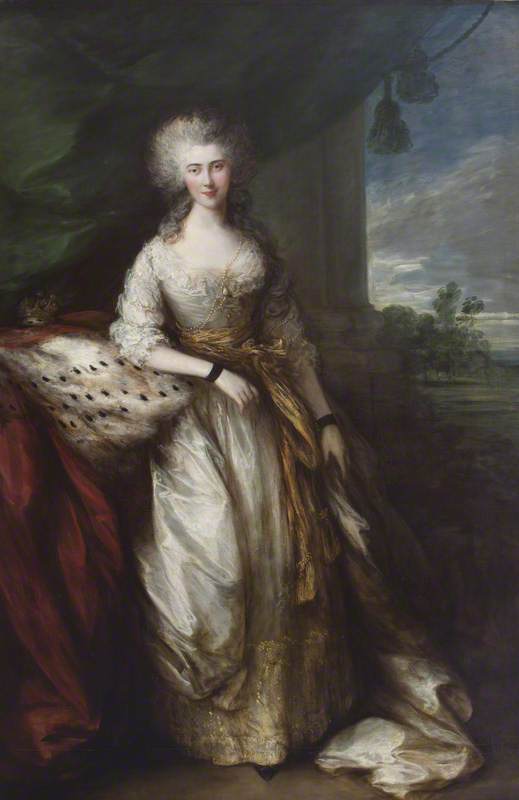
A Vision of Grace: The Timeless Elegance of Caroline Conolly
In the soft, luminous glow of 1784, Thomas Gainsborough captured more than just a likeness; he immortalized an essence. His portrait of Caroline Conolly, Countess of Buckinghamshire, is a masterclass in the art of character, where every brushstroke serves to unveil the quiet dignity of a noblewoman. As one gazes upon this canvas, held within the historic halls of Blickling Hall, there is an immediate sense of being transported to an era of refined composure. The Countess is depicted seated with an effortless grace, her presence commanding yet gentle, bathed in a light that seems to emanate from unseen windows, casting a dreamlike atmosphere over the entire scene.
The painting is a symphony of texture and tone. Clad in a pristine white dress that catches the light, accented by a shimmering gold sash at her waist, Caroline Conolly embodies the peak of eighteenth-century sophistication. Her hair, elegantly swept back into a classic bun, frames a face that reflects both the responsibility of her station and a profound inner peace. For the discerning collector or interior designer, this piece offers a focal point of unparalleled serenity, bringing a sense of historical weight and luminous beauty to any curated space.
The Mastery of Gainsborough’s Technique
To understand the emotional depth of this portrait, one must look toward the hand of the master himself. Gainsborough was far from a traditionalist bound by Neoclassical rigidity; instead, he embraced a Romantic idealism that sought to capture the very soul of his subjects. His technique, often characterized by a light palette and fluid, easy strokes, allows the viewer to feel the movement of air and the softness of fabric. While he was a pioneer in landscape painting, it is in his portraiture that we see his ability to blend human emotion with atmospheric brilliance.
The artist utilized subtle tonal gradations that create an incredible sense of depth. Through meticulous observation, Gainsborough achieved a painterly texture that makes the silk of the Countess's gown and the polished wood of the surrounding furniture feel almost tactile. This mastery of light and shadow—a hallmark of his mature style—ensures that the portrait remains dynamic, inviting the eye to wander through the layers of soft shadows and brilliant highlights that define the room’s interior.
Symbolism and the Art of Interior Narrative
Beyond the central figure, the composition is rich with symbolic whispers of the Georgian era. The setting is not merely a backdrop but a carefully constructed narrative of stability and social refinement. The two chairs flanking the Countess are more than furniture; they stand as sentinels of tradition and the enduring strength of the aristocracy. Similarly, the presence of the dining table in the mid-ground hints at the sophisticated social engagements and the role of the Countess as a pillar of her community and family.
For those looking to integrate such a masterpiece into a modern or classical interior, this artwork provides a profound sense of continuity. It bridges the gap between the burgeoning Victorian anxieties regarding decorum and the timeless pursuit of beauty. Owning a high-quality reproduction of this work is an invitation to surround oneself with history, offering a window into a world where elegance was not merely a fashion, but a way of life. It is a piece that does not just decorate a wall; it breathes life, culture, and a sense of enduring nobility into the home.