The Embodiment of Rococo Grace: An Encounter with Lady Ligonier
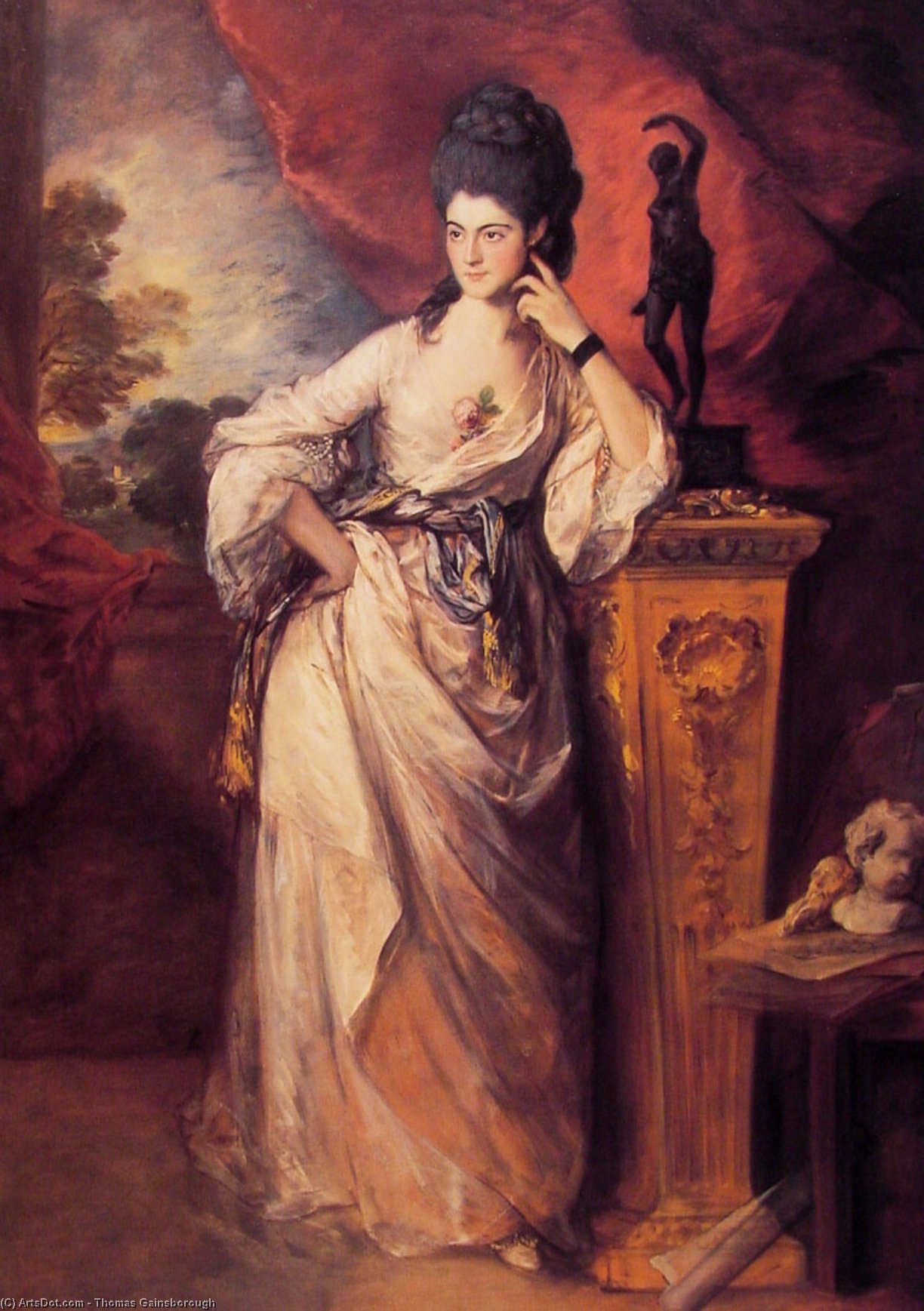
To gaze upon Thomas Gainsborough's Lady Ligonier is to step directly into the luminous, delicate world of the late eighteenth century. This magnificent portrait, executed in 1770, transcends a mere likeness; it is an aria painted in oil on canvas. The subject, Lady Ligonier, is captured in a moment of exquisite repose, radiating an air of effortless sophistication that defined the Rococo sensibility. Gainsborough masterfully renders her figure—the cascade of her white dress seeming to catch every stray beam of light, contrasting beautifully with the subtle richness of the background elements. It is a vision of aristocratic elegance, where every fold of fabric and strand of hair speaks of refined taste and gentle power.
Technique and The Art of Light
Gainsborough’s technical prowess in this piece is nothing short of breathtaking. Working with oil on canvas, he achieved a luminosity that seems almost ethereal. Observe the delicate handling of color; the palette favors soft pastels and pearlescent whites, hallmarks of the Rococo movement which prized lightness over dramatic shadow. The pearl necklace around her neck serves not only as an adornment but as a focal point for Gainsborough’s skill in rendering reflective surfaces. Furthermore, the inclusion of symbolic objects—the visible clock on the wall, the carefully placed vase, and the open book—grounds the portrait in a tangible domestic setting, suggesting a life rich with culture and measured time. These details are painted with such meticulous care that they invite the viewer to lean closer, searching for secrets within the composition.
Rococo Sensibility and Symbolism
The style itself is a deep dive into Rococo ideals: an emphasis on intimacy, natural grace, and decorative beauty. The flower nestled in her hair is a classic motif, often symbolizing fleeting beauty or burgeoning affection. Gainsborough does not merely paint a woman; he captures the very spirit of leisure and cultivated femininity characteristic of the era. The overall atmosphere is one of serene contemplation—a perfect balance between the formality required by portraiture and the airy spontaneity favored by Rococo aesthetics. It speaks to an age that celebrated beauty for its own sake, wrapping elegance around every visible surface.
Bringing Eighteenth-Century Splendor Home
For those who wish to infuse their drawing rooms or galleries with this unparalleled historical grandeur, a reproduction of Lady Ligonier offers an extraordinary opportunity. Owning such a piece is not simply decorating; it is curating a narrative of timeless artistry. The soft glow and intricate detail that Gainsborough achieved in 1770 can be faithfully translated into a hand-painted reproduction, allowing the depth and texture of the original oil on canvas to resonate within your modern space. It serves as a breathtaking conversation piece, an immediate elevation of any interior design scheme by invoking the sublime artistry of a British master.