A Snapshot of Urban Rhythm: Exploring Umberto Boccioni’s “The Morning”
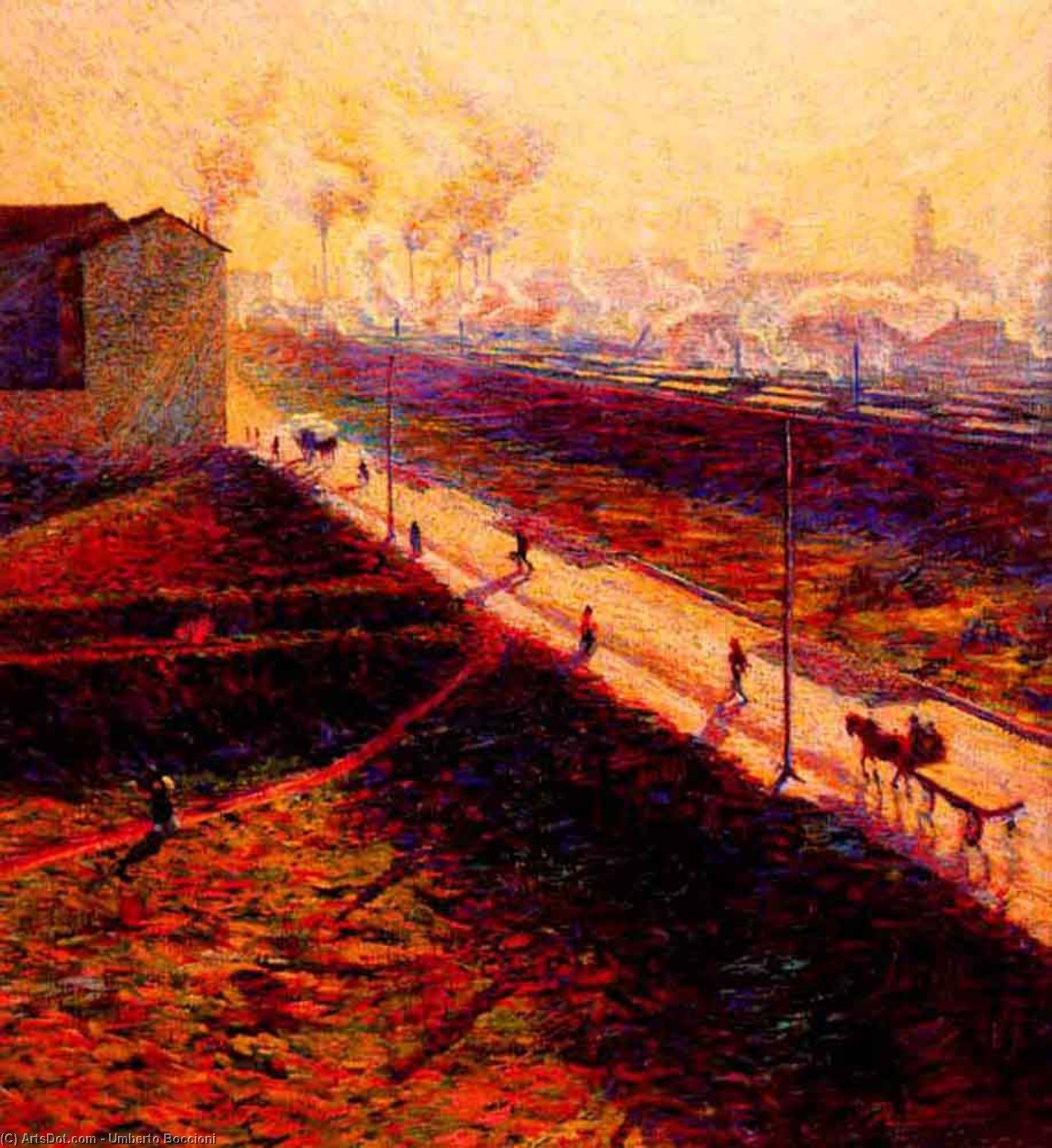
“The Morning,” painted in 1909 by Italian Futurist artist Umberto Boccioni, isn't merely a depiction of a cityscape at dusk; it’s an ambitious attempt to encapsulate the very spirit of modernity—a movement that fundamentally questioned artistic traditions and championed the relentless pace of industrialization.
- Subject Matter: The painting captures a bustling city street scene, populated by pedestrians and punctuated by the presence of a horse. This deliberate choice reflects Futurists’ fascination with urban environments and their desire to portray dynamism rather than static beauty.
- Style: Boccioni's work firmly establishes itself within the Futurist aesthetic—characterized by fragmentation, geometric abstraction, and an emphasis on movement. Unlike Impressionism or Post-Impressionism which prioritize capturing fleeting moments of light and color, Futurists aimed to represent the sensation of speed and energy.
- Technique: Boccioni employed a technique known as “Dynamism of Movement,” pioneered by Marinetti himself. This involved layering multiple canvases together—a process that created an illusion of depth and movement—resulting in a textured surface that conveys the palpable vibration of urban life. The artist utilized oil paints on canvas, applying them with bold brushstrokes to achieve maximum impact.
Historical Context: Futurism’s Rebellion Against Tradition
Futurism emerged in Italy during the early 1900s as a reaction against academic art and bourgeois values. Spearheaded by Marinetti, it proclaimed “speed,” “violence,” and “technology” as virtues—a radical departure from prevailing artistic sensibilities. Artists like Boccioni sought to express the anxieties and exhilarations of the rapidly changing world, fueled by advancements in transportation, communication, and manufacturing.
Symbolism Beyond Representation: Capturing Essence
While “The Morning” eschews detailed realism, it’s rich in symbolic significance. The horse represents tradition—a counterpoint to the Futurist embrace of innovation. Its presence serves as a reminder of the past while simultaneously highlighting the dynamism of the present. Furthermore, the positioning of figures within the composition contributes to the overall sense of movement and instability, mirroring the turbulent energy of the era.
Emotional Impact: A Feeling of Transient Beauty
Ultimately, “The Morning” succeeds in conveying a profound emotional response—a fleeting glimpse of beauty amidst chaos. The warm hues of sunset illuminate the cityscape, creating an atmosphere of tranquility that contrasts sharply with the hurried pace of human activity. Boccioni’s masterful technique captures not just what is seen but how it feels—a testament to his ability to translate complex ideas into visually arresting art.