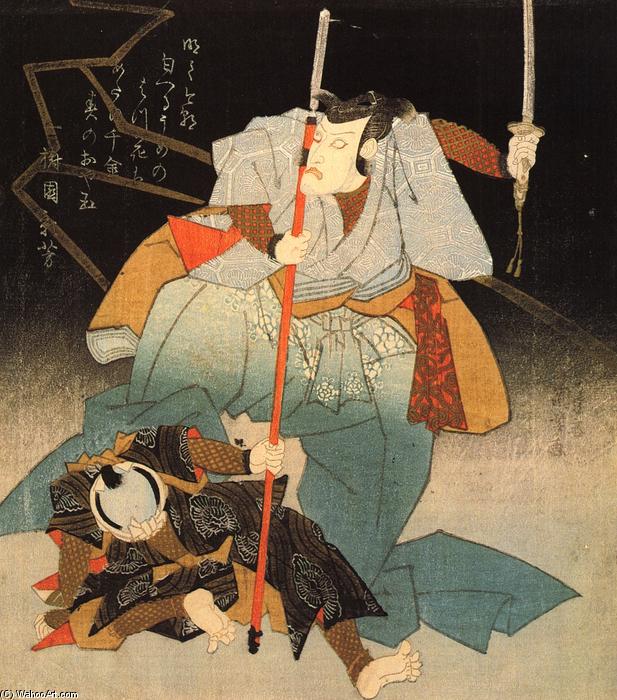
A Symphony of Darkness and Light: Exploring Utagawa Kuniyoshi’s “Samurai and the Conquered”
The Edo period in Japan – a time of unparalleled stability, artistic flourishing, and rigidly defined social hierarchies – birthed an extraordinary visual culture known as *ukiyo-e*. Among its countless masterpieces, Utagawa Kuniyoshi's "Samurai and the Conquered" stands apart not merely for its technical brilliance but also for its profound exploration of themes that resonate across centuries. Printed in 1853 during a period of increasing Western influence, this monumental woodblock print encapsulates the anxieties and aspirations of a nation grappling with change while simultaneously upholding traditions rooted in honor and resilience.
- Subject Matter: The painting depicts a samurai warrior confronting a woman dressed in kimono, symbolizing the clash between masculine strength and feminine vulnerability – a recurring motif within Kuniyoshi’s oeuvre. The narrative unfolds against a backdrop of turbulent skies illuminated by shimmering stars, mirroring the internal struggles faced by individuals navigating uncertain times.
- Style: Kuniyoshi's style is undeniably dramatic, characterized by bold compositions and dynamic lines that convey movement and emotion. He skillfully employs *tachibana* – a technique involving multiple blocks of wood—to achieve unparalleled tonal gradation, creating an illusion of depth and atmosphere that draws the viewer into the scene.
Technique: Mastering Woodblock Printing – A Cornerstone of Edo Art
The creation of “Samurai and the Conquered” exemplifies the meticulous craftsmanship inherent in *ukiyo-e*. The process began with transferring a detailed sketch onto tracing paper, followed by carving intricate designs into wooden blocks—typically maple—using specialized knives. Each block was painstakingly inked with pigment mixed with varnish, ensuring consistent color distribution across the surface. Multiple blocks were then assembled and pressed together under immense pressure, layering colors to build up the final image. This painstaking process demanded considerable skill and patience, reflecting the dedication of Edo artists to achieving artistic perfection.
- Color Palette: Kuniyoshi’s masterful use of color is particularly noteworthy. Dominant hues include deep blacks—representing darkness and solemnity—contrasting sharply with radiant whites and yellows—symbolizing illumination and hope. The subtle gradations achieved through *tachibana* imbue the print with an ethereal quality, enhancing its emotional impact.
- Composition: Kuniyoshi’s compositional choices contribute significantly to the painting's narrative power. He arranges figures strategically within a confined space, emphasizing their interaction and conveying a sense of urgency. The upward gaze of the woman and the downward posture of the samurai underscore the disparity in status and reinforce the central theme of confrontation.
Symbolism: Echoes of Honor, Resilience, and Uncertainty
Beyond its aesthetic qualities, “Samurai and the Conquered” is laden with symbolic meaning. The samurai’s unwavering gaze embodies courage and determination—qualities revered in Edo society—while his bowed head signifies humility and acceptance of fate. The woman's kimono pattern—often depicting chrysanthemums—represents longevity and purity—symbols associated with femininity and virtue. However, the turbulent sky serves as a potent reminder that even the strongest warriors cannot control external forces; it encapsulates the pervasive anxiety surrounding Japan’s vulnerability to Western encroachment.
Ultimately, Kuniyoshi's “Samurai and the Conquered” transcends its historical context, offering viewers a timeless meditation on themes of power, vulnerability, and resilience. Its enduring appeal lies in its ability to capture the complexities of human experience—a feat accomplished through masterful technique, evocative symbolism, and an unwavering commitment to artistic excellence.