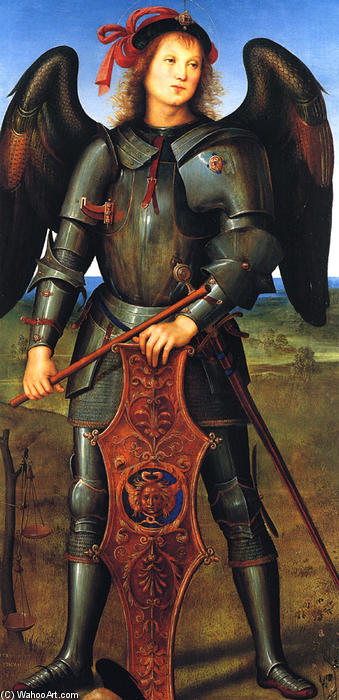
The painting "St. Michael" is a masterpiece created by the renowned Italian artist
Vannucci Pietro (Le Perugin) in 1499. This stunning work of art is a panel from the Polytych of Certosa di Pavia, measuring 126 x 58 cm, and is currently housed at the
National Gallery in London, United Kingdom.
Artistic Style and Composition
The painting showcases
Vannucci Pietro (Le Perugin)'s exceptional skill in capturing the essence of his subjects. The depiction of St. Michael, the archangel, is both powerful and elegant, with intricate details that highlight the artist's mastery of oil on panel. The composition is characterized by a sense of harmony and balance, with the central figure of St. Michael dominating the scene.
Key Features of the painting include:
- The use of vibrant colors to convey a sense of energy and movement
- The intricate details on the armor and the shield held by St. Michael
- The presence of birds in the painting, which add a touch of symbolism and depth to the artwork
Artist's Background and Influences
Vannucci Pietro (Le Perugin) was a prominent figure in the Italian Renaissance, known for his contributions to the development of the
High Renaissance style. His work was influenced by other notable artists of the time, including
Pietro Perugino (Pietro Vannucci). To learn more about the artist and his works, visit
ArtsDot.com.
Handmade oil paintings reproductions of "St. Michael" are available at
ArtsDot.com, allowing art enthusiasts to own a piece of history and appreciate the beauty of this masterpiece up close.
For more information on the artist and his works, including
Pietro Perugino (Pietro Vannucci)'s "Pietà" and "St. Mary Magdalene", visit
ArtsDot.com. The
National Gallery in London, where the original painting is housed, also provides valuable insights into the artwork and its significance.