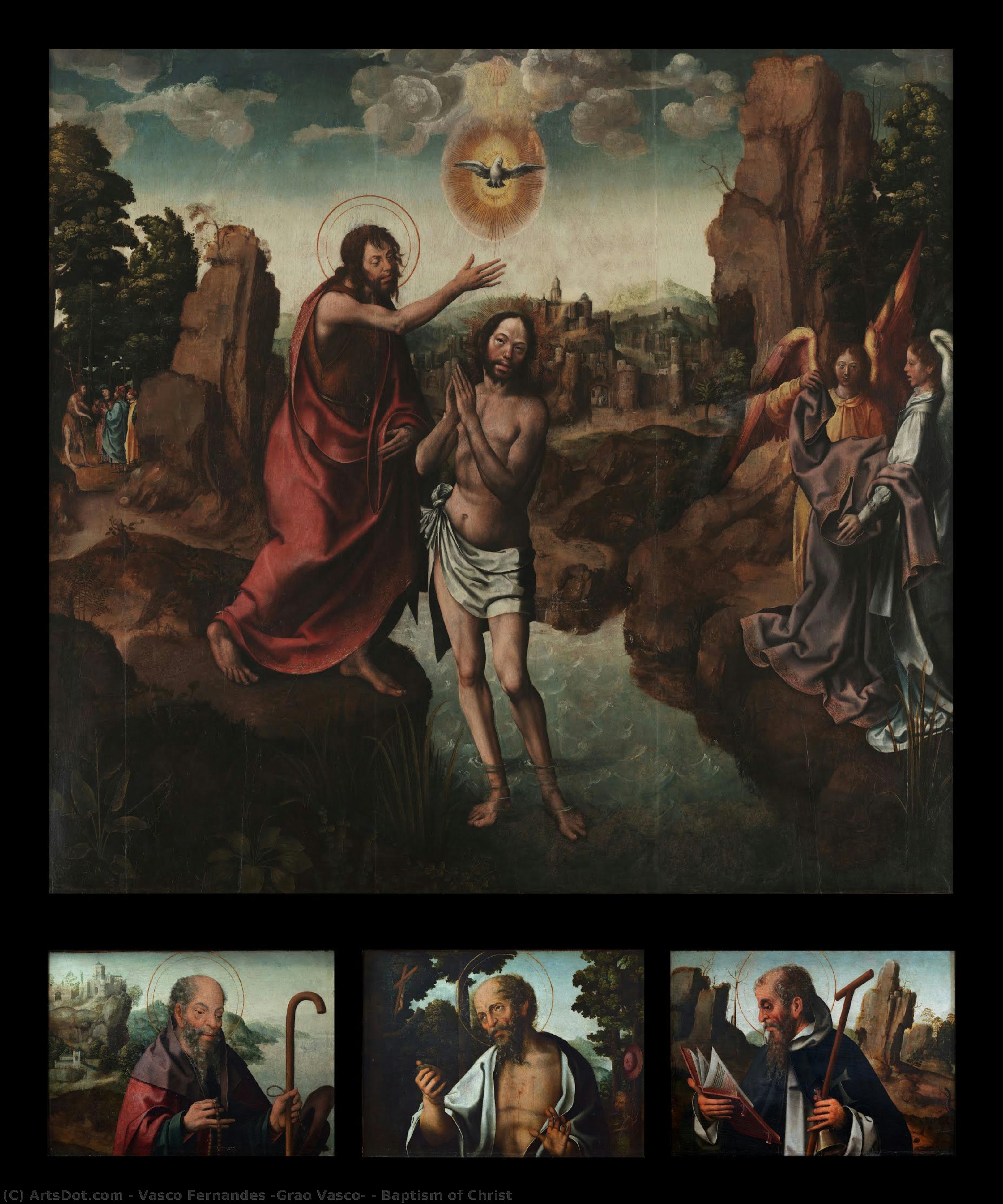
Witness Vasco Fernandes’ ‘Baptism of Christ’ (1530). A dramatic Renaissance altarpiece featuring dynamic composition, luminous detail & spiritual pathos. Explore this masterpiece!
Istražite renesansčka remek-dela Grão Vascoa u Nacionalnom muzeju u Viseu! Otkrijte zadivljujuće oltarske slike i umetnička dela iz istorijskog seminara Portugala, koja prikazuju veru i umetničku briljantnost.
Baptism of Christ - Vasco Fernandes: A Renaissance Masterpiece Illuminated
This altarpiece, attributed to Vasco Fernandes (Grão Vasco), stands as a testament to the flourishing artistic spirit of Portugal during the reign of Manuel I—a period marked by fervent religious devotion and an embrace of European stylistic influences. Painted around 1530, it resides within Viseu Cathedral’s chapel dedicated to St. John the Baptist, serving as a focal point for liturgical worship and embodying the grandeur of Renaissance art.
Composition and Technique: Dynamic Balance and Flemish Influence
Fernandes skillfully employed a dynamic compositional strategy rooted in Northern European principles—specifically those championed by artists like Jan van Eyck—to convey profound spiritual significance. The scene unfolds around two monumental figures dominating the foreground: Christ and St. John the Baptist, positioned against a backdrop of rugged rock formations and distant architectural elements. A meticulously crafted landscape establishes depth through linear perspective, guiding the viewer’s gaze towards the central axis where Christ is centrally placed. Diagonal lines intersect throughout the artwork—one originating from St. John's outstretched hand and converging on Christ’s torso—creating visual tension and reinforcing the narrative’s dynamism. The artist’s masterful use of oil paint—a technique favored by Flemish masters—allowed for layering pigments, achieving luminous tonal gradations, and capturing subtle nuances of texture. Visible brushstrokes contribute to a palpable sense of materiality, grounding the ethereal depiction of divine grace in earthly reality.
Symbolism: Dove, Landscape, and Spiritual Transformation
The artwork is replete with symbolic elements that enrich its theological message. Above Christ and St. John stands a dove—a traditional emblem of the Holy Spirit—representing divine blessing and illumination. The landscape itself serves as more than mere scenic backdrop; it symbolizes purification and rebirth, mirroring the baptismal rite’s transformative power. Furthermore, the artist's deliberate attention to detail—particularly in portraying the drapery of Christ and St. John—demonstrates a profound understanding of humanist aesthetics. The folds of fabric are modeled with remarkable precision, capturing the interplay of light and shadow to convey volume and realism. These artistic choices underscore the overarching theme of spiritual ascension and divine grace.
Emotional Impact: Awe and Reverence
“Baptism of Christ” transcends mere visual representation; it evokes a powerful emotional response rooted in contemplation and reverence. The artist’s masterful manipulation of chiaroscuro—the dramatic contrast between light and dark—intensifies the scene's solemn atmosphere, highlighting Christ’s radiant visage and emphasizing St. John’s earnest devotion. The faces of both figures are rendered with palpable pathos, conveying an expression of humility and spiritual ecstasy. Overall, the artwork inspires a feeling of awe and wonder, prompting viewers to reflect on themes of faith, redemption, and divine grace—a legacy that continues to resonate within the cathedral walls and captivate art historians today.
Provenance and Legacy
Originally housed in Viseu Cathedral, “Baptism of Christ” exemplifies Grão Vasco’s signature style—characterized by meticulous detail, expressive brushwork, and a harmonious blend of Flemish influences. Its enduring beauty and artistic merit solidify Vasco Fernandes' position as one of Portugal’s foremost Renaissance painters, securing his place within the canon of European art history.