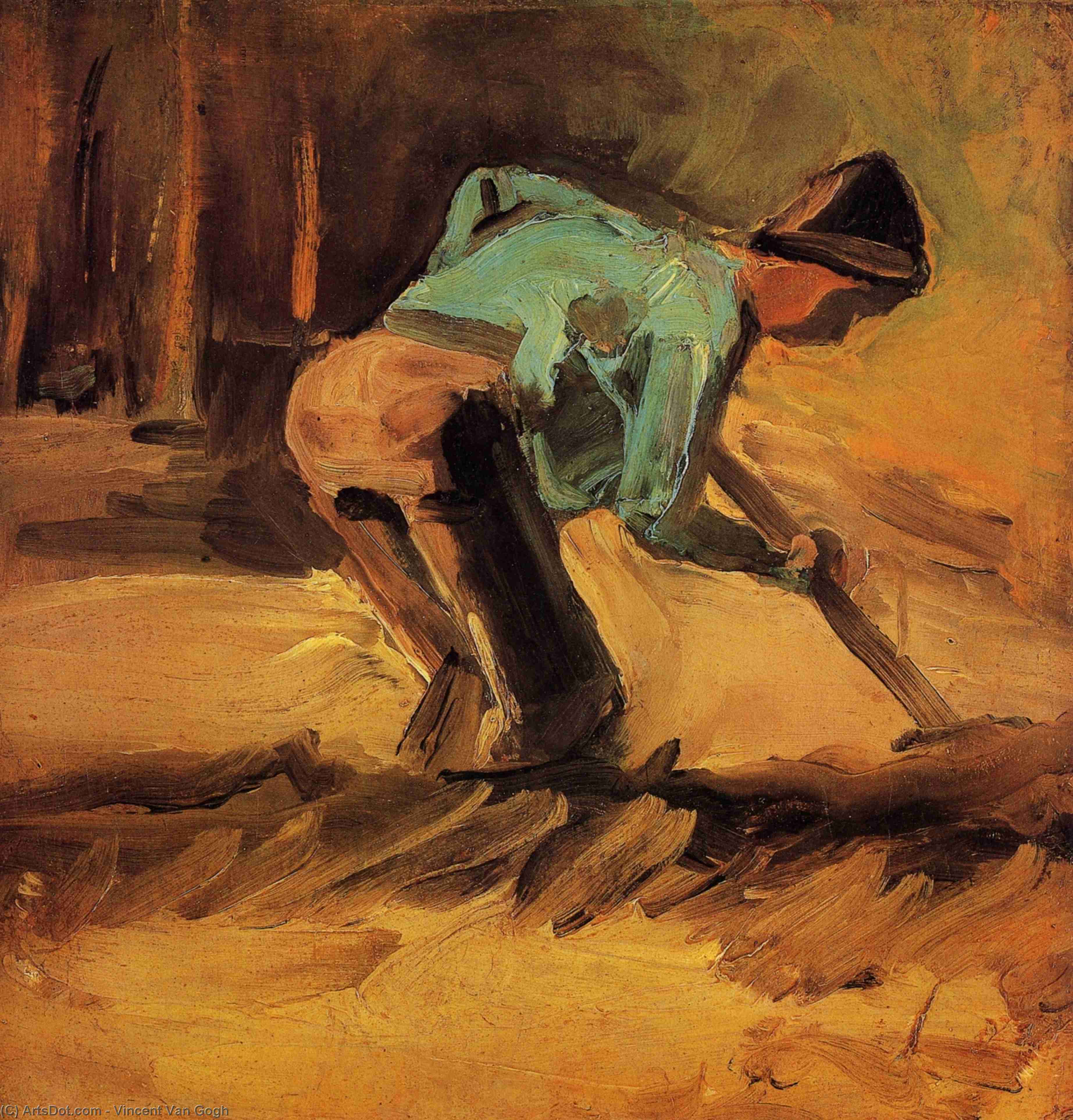
Man Stooping with Stick or Spade: A Glimpse into Rural Labor
Vincent van Gogh's "Man Stooping with Stick or Spade," created in 1882, offers a poignant and realistic portrayal of rural life and the dignity of labor. This oil on canvas painting, part of Van Gogh’s early period, showcases his developing skill in capturing everyday scenes with an emerging sense of emotional depth. It's a work that resonates with themes of perseverance, connection to the land, and the quiet strength found in manual work.
Composition and Artistic Technique
The painting depicts a man bent over, deeply engaged in what appears to be digging or tending to the earth. He holds either a spade or a stick, suggesting a task requiring physical exertion. Van Gogh’s use of oil on canvas allows for rich textures and subtle color variations that bring the scene to life. The man's blue clothing provides a focal point against the earthy tones of the background, while two birds – one on the left and another towards the right – add a touch of natural detail and movement. A simple chair positioned near the top-left corner hints at a workspace or a moment of respite for the laborer. Van Gogh’s brushstrokes are visible, contributing to the painting's overall sense of realism and immediacy.
Realism and the Celebration of Labor
“Man Stooping with Stick or Spade” exemplifies Van Gogh’s commitment to Realism, a prominent artistic movement in the 19th century. This style prioritized depicting everyday life and labor accurately, moving away from idealized representations prevalent in earlier art forms. Van Gogh was deeply moved by the lives of working-class people, and this painting reflects his desire to portray their struggles and resilience with honesty and respect. It aligns with other works from this period, such as "View of the Sea at Scheveningen," "Iron Mill in The Hague," "Cottage with Trees," and “Beach at Scheveningen in Calm Weather,” all of which explore themes of rural life and manual labor.
Symbolism and Emotional Impact
Beyond its realistic depiction, the painting carries symbolic weight. The stooped posture of the man suggests both physical exhaustion and a deep connection to the land he works. The birds in the background could symbolize freedom or hope amidst the toil. Van Gogh’s choice of colors – the muted earth tones contrasted with the vibrant blue of the man's clothing – evokes a sense of quiet determination and understated beauty. The painting invites viewers to contemplate the value of hard work, the importance of human connection to nature, and the dignity inherent in even the most arduous tasks. It is a testament to Van Gogh’s growing ability to imbue his realistic portrayals with profound emotional resonance.
Van Gogh's Early Artistic Development
This painting represents an important stage in Vincent van Gogh’s artistic journey. Created during his time in The Hague, it demonstrates his early exploration of oil painting techniques and his developing interest in portraying the lives of ordinary people. While still influenced by earlier masters like Millet, Van Gogh was beginning to forge his own unique style – one characterized by a directness of observation and an emerging emotional intensity that would later define his iconic works. "Man Stooping with Stick or Spade" serves as a valuable window into the formative years of one of art history's most celebrated figures.