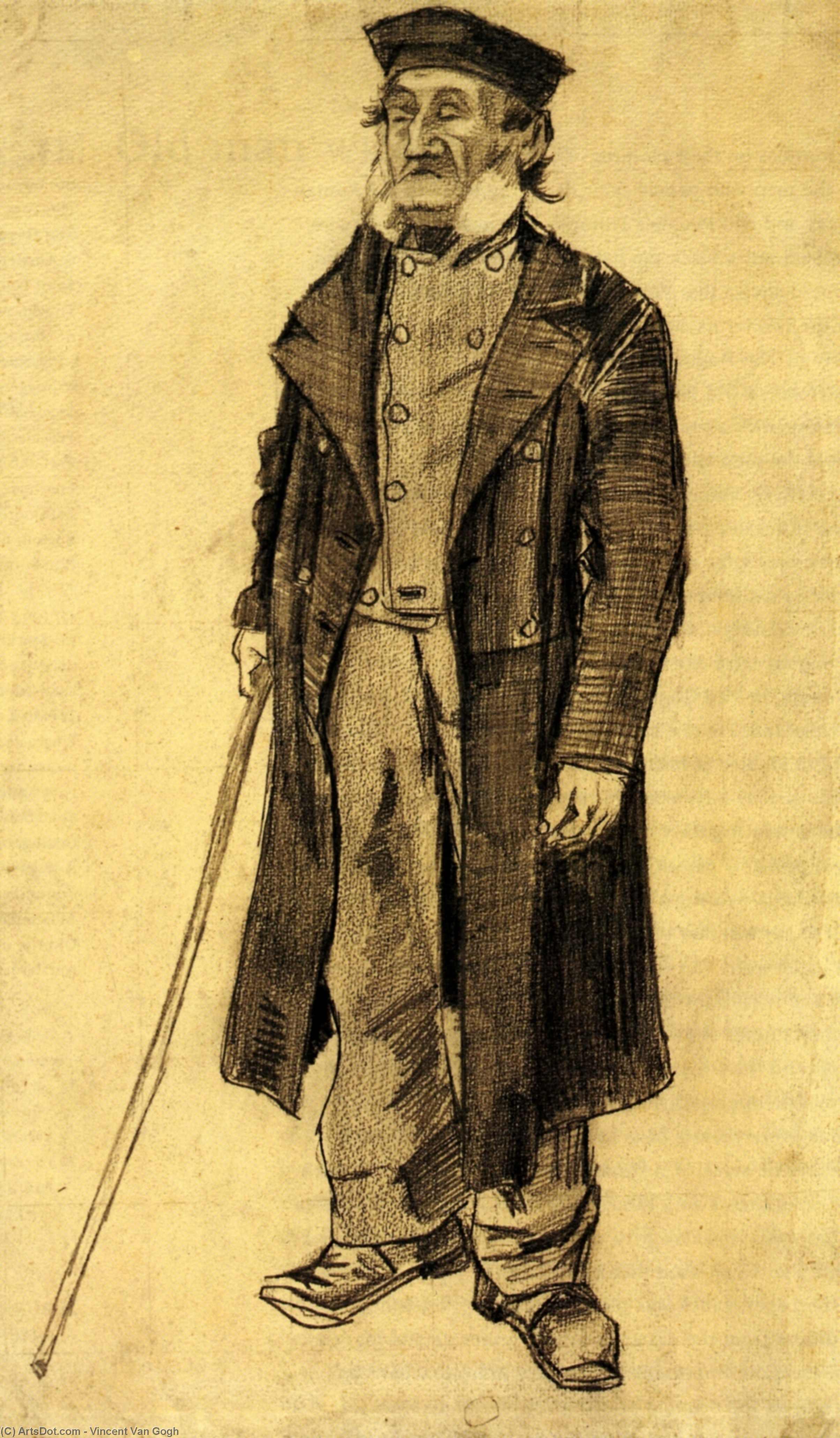
Discover Vincent van Gogh’s poignant ‘Old Man with a Stick’ (1882), a deceptively simple study of rural life and human dignity. Explore bold lines, subtle shading, and Van Gogh's early realism in this masterful pencil drawing.
Old Man with a Stick: A Study in Quiet Dignity
Vincent van Gogh’s “Old Man with a Stick,” created in 1882 during his formative years as an artist, stands as a deceptively simple yet profoundly resonant depiction of rural life and human resilience. Executed in pencil on paper, this drawing embodies Van Gogh's early exploration of realism—a stylistic choice that would become synonymous with his artistic legacy—and reveals a remarkable sensitivity to capturing the essence of everyday experience. Unlike his later canvases ablaze with vibrant color, “Old Man with a Stick” presents a muted palette, prioritizing tonal variation and meticulous detail to convey a palpable sense of melancholy and contemplation.
Style and Technique: Bold Lines and Subtle Shading
Van Gogh’s technique is characterized by confident, expressive lines that delineate the figure's form with precision. However, these bold strokes are skillfully balanced by delicate shading—a hallmark of his artistic approach—which imbues the drawing with depth and dimensionality. The artist employs hatching and cross-hatching techniques to sculpt the contours of the old man’s face and torso, creating a textured surface that mimics the roughness of weathered skin. This masterful manipulation of light and shadow contributes significantly to the artwork's emotional impact, conveying not only physical appearance but also psychological state—a quiet dignity tinged with sadness.
Subject Matter: Observing Humanity in Its Simplicity
The subject matter itself is unassuming: an elderly man walking along a path, leaning heavily on a cane. Yet, Van Gogh elevates this commonplace scene into something extraordinary through his careful observation and artistic interpretation. The inclusion of two figures in the background—presumably companions—adds to the narrative dimension of the drawing, suggesting a connection between individuals within their environment. This depiction aligns with Van Gogh’s broader interest in portraying ordinary people—a deliberate departure from academic conventions that favored idealized portraits—and underscores his belief in capturing the beauty and significance found in everyday life.
Historical Context: Early Impressionism's Influence
“Old Man with a Stick” reflects the burgeoning influence of Impressionism on Van Gogh’s artistic sensibilities. While he wouldn’t fully embrace Impressionistic techniques until later in his career, the drawing demonstrates an awareness of capturing fleeting moments and conveying atmospheric conditions—a core principle of Impressionist painting. The subdued lighting and muted colors echo the aesthetic concerns prevalent during this period, signaling Van Gogh's willingness to experiment with new approaches while retaining a steadfast commitment to realism.
Symbolism: Resilience Amidst Decline
Beyond its visual qualities, “Old Man with a Stick” carries symbolic weight. The cane represents not merely physical support but also endurance—a testament to the human spirit’s ability to persevere despite hardship and age. The old man's posture exudes quiet dignity, conveying acceptance of life’s inevitable decline while maintaining inner strength. This portrayal speaks to themes of vulnerability and resilience, inviting viewers to contemplate the beauty inherent in aging and the importance of preserving dignity in the face of adversity—a timeless message that resonates powerfully even today.
- Artist: Vincent Willem van Gogh
- Year Created: 1882
- Medium: Pencil on Paper
- Location: Kunstmuseum Winterthur, Switzerland
Discover a Stunning Reproduction: Explore high-quality reproductions of “Old Man with a Stick” at
ArtsDot.com. Bring Vincent van Gogh’s poignant vision into your home and experience the enduring beauty of this iconic artwork.