Subject and Composition: A Glimpse into Eugene Bach's World
The artwork,
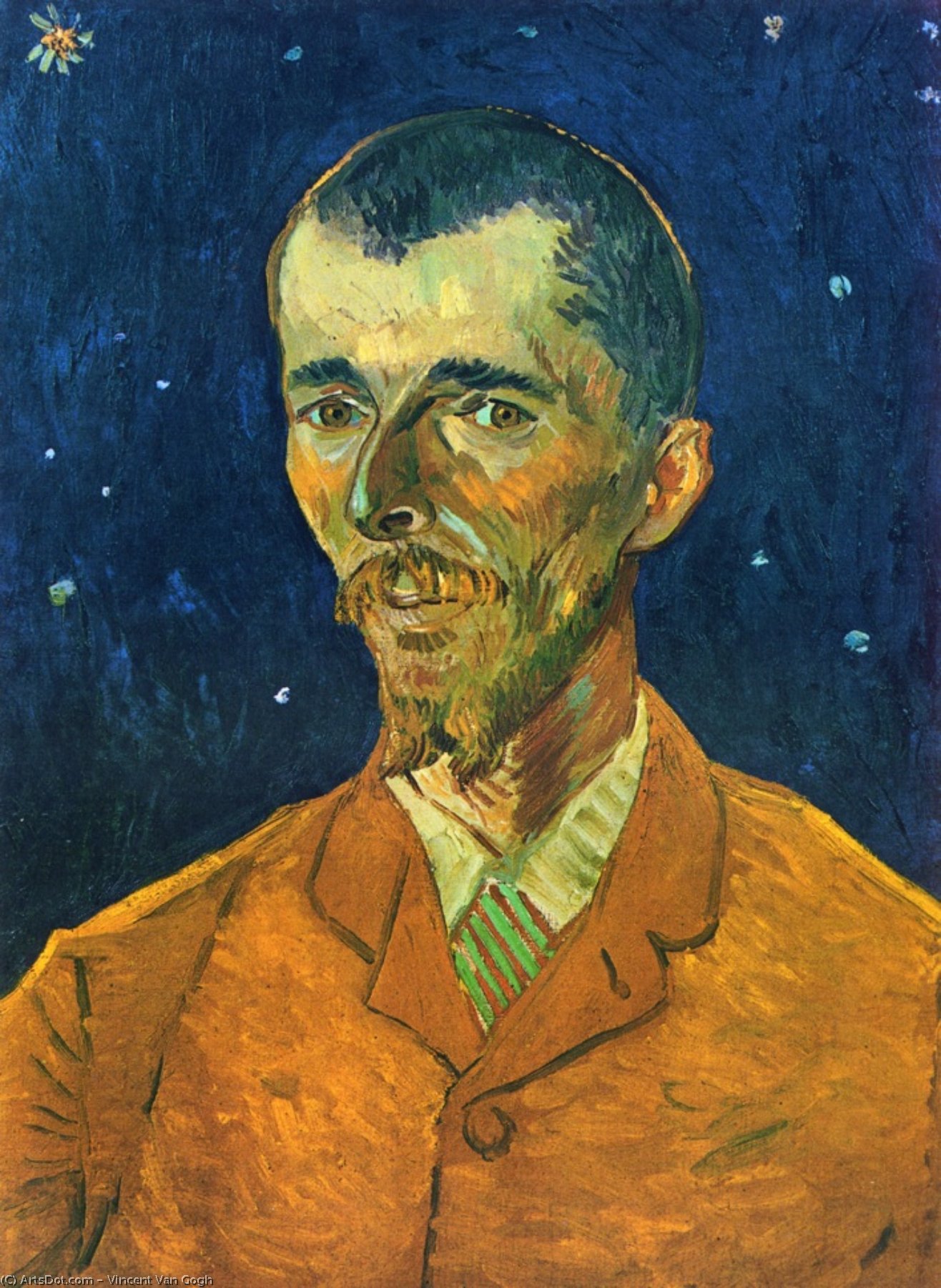
Portrait of Eugene Bach, presents a captivating depiction of the Belgian poet and artist, Eugene Bach. Created by Vincent van Gogh in 1888, the portrait focuses intently on Bach's face and upper body, capturing his likeness with remarkable detail. Bach is portrayed wearing an orange shirt and tie, suggesting a degree of formality or social standing. His beard adds to his distinguished appearance, while his gaze directly engages the viewer, creating a sense of intimacy and connection. The composition is relatively simple, drawing attention solely to the subject against a backdrop of a vibrant blue sky dotted with stars. This deliberate focus emphasizes Bach's personality and presence within the artwork.
Post-Impressionist Style and Technique
Van Gogh’s signature Post-Impressionistic style shines through in every brushstroke of this portrait. The painting is an oil on canvas, measuring approximately 60 x 45 cm. The artist employs bold, visible brushstrokes – a hallmark of his technique – to build texture and convey emotion. These strokes are not blended smoothly but rather remain distinct, creating a dynamic surface that reflects the energy and intensity of Van Gogh's artistic vision. The use of color is equally striking; the vibrant orange shirt contrasts beautifully with the deep blues and yellows of the background sky, enhancing the overall visual impact. The impasto technique—applying paint thickly—adds depth and dimension to the portrait, giving it a tactile quality that invites closer inspection.
Historical Context: Arles and Artistic Collaboration
This portrait was painted during Van Gogh's time in Arles, France, a period marked by intense artistic exploration and collaboration. He had recently invited Paul Gauguin to join him in establishing an artist’s colony, hoping to create a community of like-minded individuals dedicated to pushing the boundaries of art. Eugene Bach was part of this circle of artists and intellectuals who gathered around Van Gogh during his time in Arles. The painting reflects the spirit of experimentation and mutual support that characterized this artistic environment. It's important to note that Van Gogh’s mental health was also a significant factor during this period, adding another layer of complexity to his work and relationships.
Symbolism and Emotional Impact
Beyond its aesthetic qualities,
Portrait of Eugene Bach evokes a range of emotions in the viewer. The direct gaze of the subject conveys a sense of introspection and perhaps even vulnerability. The vibrant colors, particularly the orange shirt against the blue sky, suggest vitality and energy, while also hinting at Van Gogh’s own emotional turbulence. The starry background could symbolize hope or spiritual longing, common themes in Van Gogh's work. Ultimately, the painting is not merely a likeness of Eugene Bach but a powerful expression of human emotion and artistic vision, capturing a moment in time with remarkable intensity and sensitivity.
The Musée d'Orsay and Artistic Legacy
Currently housed at the prestigious
Musée d'Orsay in Paris, France, this portrait stands as a testament to Van Gogh’s enduring legacy and the importance of Post-Impressionism in art history. The Musée d'Orsay is renowned for its extensive collection of French art from 1848 to 1914, providing a rich context for understanding Van Gogh’s work within the broader artistic landscape of his time. The painting continues to inspire and captivate audiences worldwide, solidifying its place as a masterpiece of modern art.