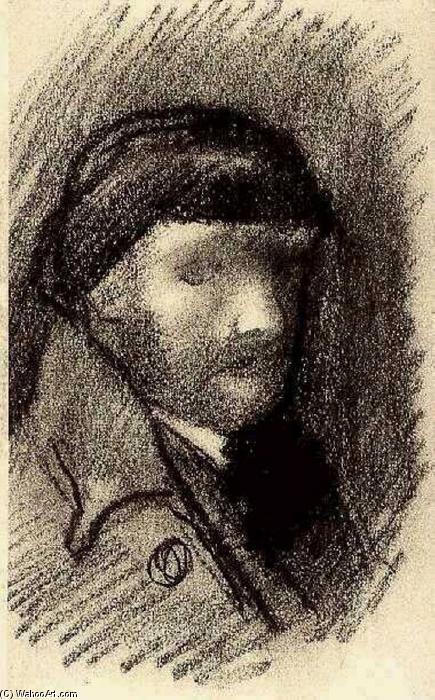
A Window into Soulful Observation: Examining Vincent van Gogh’s “Self-Portrait with Cap”
Vincent Willem van Gogh's "Self-Portrait with Cap," painted in 1886 during his Parisian sojourn, transcends mere representation; it embodies the very essence of Post-Impressionist introspection and artistic fervor. Captured in stark black and white photography—a medium that lends an immediacy and textural honesty to its subject—the image depicts a man seated before a muted backdrop, gazing downwards with closed eyes, conveying a profound sense of contemplation. This portrait isn’t simply a likeness; it's a carefully constructed visual statement reflecting Van Gogh’s evolving artistic vision and psychological state during this pivotal period.
- Subject Matter: The central figure is undeniably self-representation—a deliberate act of confronting the artist’s inner world. His posture exudes quiet solemnity, suggesting an inward gaze focused on internal reflection rather than outward observation.
- Style & Technique: Executed in chalk on paper, “Self-Portrait with Cap” exemplifies Van Gogh's signature style—characterized by bold brushstrokes and expressive impasto. The textured surface of the painting captures light and shadow with remarkable sensitivity, creating a palpable sense of depth and dynamism despite its monochrome palette.
The photograph’s composition subtly reinforces this mood. Notice how the downward gaze directs our attention inward, mirroring Van Gogh's preoccupation with his own emotions and experiences. The artist’s facial features—a prominent beard and mustache—lend him an aged appearance, hinting at a lifetime of contemplation and artistic struggle. He wears a simple grey felt hat, adding a touch of understated elegance to his attire – a detail that speaks volumes about Van Gogh's desire for self-presentation as well as conveying a sense of dignified composure.
Historical Context: Parisian Impressionism’s Influence
Painted against the backdrop of Paris during the height of Impressionist influence, “Self-Portrait with Cap” represents a fascinating dialogue between artistic movements. While Van Gogh embraced Impressionistic techniques—particularly in capturing fleeting moments of light and color—he simultaneously rejected its detached objectivity, prioritizing emotional expression above all else. The photograph’s tonal range reflects this stylistic tension, demonstrating how Van Gogh skillfully blended Impressionistic principles with his own intensely personal vision.
- Symbolism: The closed eyes symbolize introspection and spiritual contemplation—a recurring motif in Van Gogh's oeuvre. They invite viewers to consider the artist’s inner life and grapple with questions of identity and purpose.
- Emotional Impact: “Self-Portrait with Cap” resonates powerfully with audiences today due to its unflinching honesty and vulnerability. It captures a moment of profound stillness—a glimpse into Van Gogh's soul—that transcends time and continues to inspire artists and art lovers alike.
Decorative Potential & Artistic Resonance
A high-quality reproduction of “Self-Portrait with Cap” would serve as a striking centerpiece for interior design projects, particularly those seeking to evoke a sense of calm sophistication. Its monochrome palette lends itself beautifully to minimalist aesthetics, while the textured surface adds visual interest and tactile richness. Consider framing it in a sleek silver frame to accentuate its tonal qualities—a gesture that honors Van Gogh’s legacy and elevates this evocative portrait into an enduring symbol of artistic contemplation.