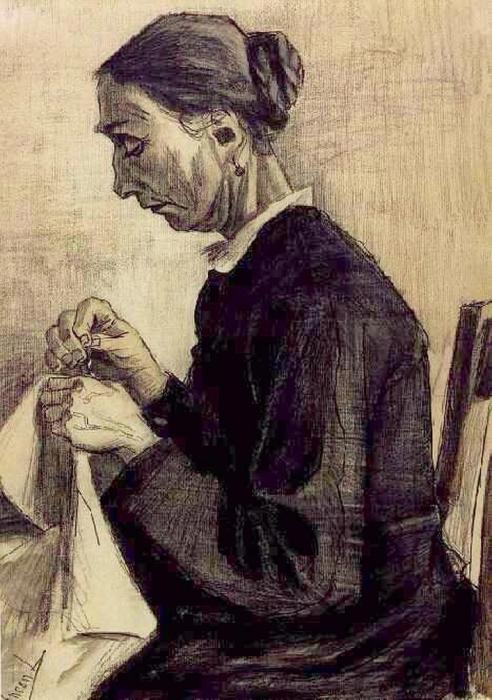
A Quiet Moment Captured in Monochrome
In the delicate lines of Sien, Sewing, Half-Figure, we are invited into a private, meditative space that transcends the mere depiction of a domestic task. This evocative drawing from 1883 captures a woman lost in the rhythmic, quiet labor of her craft. Seated with a focused grace, her silhouette is defined by the soft interplay of light and shadow, a testament to the artist's ability to find profound beauty in the mundane. The composition, centered around the seated figure, draws the eye naturally toward her hands and the cloth she manipulates, creating an intimate connection between the viewer and the subject’s silent concentration.
The scene is composed with a masterful sense of balance, where the presence of two chairs—one positioned behind her and another smaller one to the right—adds a layer of depth and environmental context. This arrangement suggests a lived-in space, a room filled with the quiet echoes of daily life. The inclusion of a piece of cloth near the bottom left corner serves as a subtle anchor, grounding the composition and leading the gaze upward toward the woman’s poised form. There is a palpable stillness in the air, an atmosphere of peace that makes this work an ideal centerpiece for any collection seeking to evoke tranquility and contemplative thought.
The Mastery of Line and Texture
Executed with a sophisticated command of monochrome tones, the artwork utilizes the stark contrast of black and white to build form and emotion. The technique relies on subtle gradations of shade to define the folds of her dress and the gentle curve of her ponytail, lending a sculptural quality to the figure. Unlike the heavy, impasto textures often associated with the era's more famous oil paintings, this work finds its strength in the precision of line and the delicate weight of shadow. The artist employs a rhythmic approach to sketching that mimics the very motion of sewing, creating a visual texture that feels both tactile and fluid.
For the discerning collector or interior designer, the aesthetic appeal of this piece lies in its timeless versatility. Its monochromatic palette allows it to integrate seamlessly into diverse decor styles, from the minimalist elegance of modern galleries to the rich, layered textures of classical study rooms. The drawing does not demand attention through loud colors but rather earns it through a sophisticated subtlety that rewards prolonged observation. It is a work that breathes life into a room, offering a window into a moment of pure, uninterrupted focus.
A Symbol of Resilience and Focus
Beyond its technical brilliance, Sien, Sewing, Half-Figure serves as a poignant symbol of the human capacity for presence. In an era of constant distraction, the image of a figure so deeply immersed in a singular, tactile task resonates with a modern longing for mindfulness. The woman’s furrowed brow and downward gaze are not signs of distress, but rather markers of a profound engagement with her reality. This piece captures the essence of "flow"—that rare state where the self and the task become one.
To possess a reproduction of this work is to bring a sense of enduring stability into one's environment. It stands as an emblem of the beauty found in persistence and the dignity of quiet labor. Whether displayed in a sunlit morning room or a moody, dimly lit library, the artwork acts as a silent companion, reminding all who view it of the profound strength found in stillness and the artistry inherent in every focused moment of our lives.