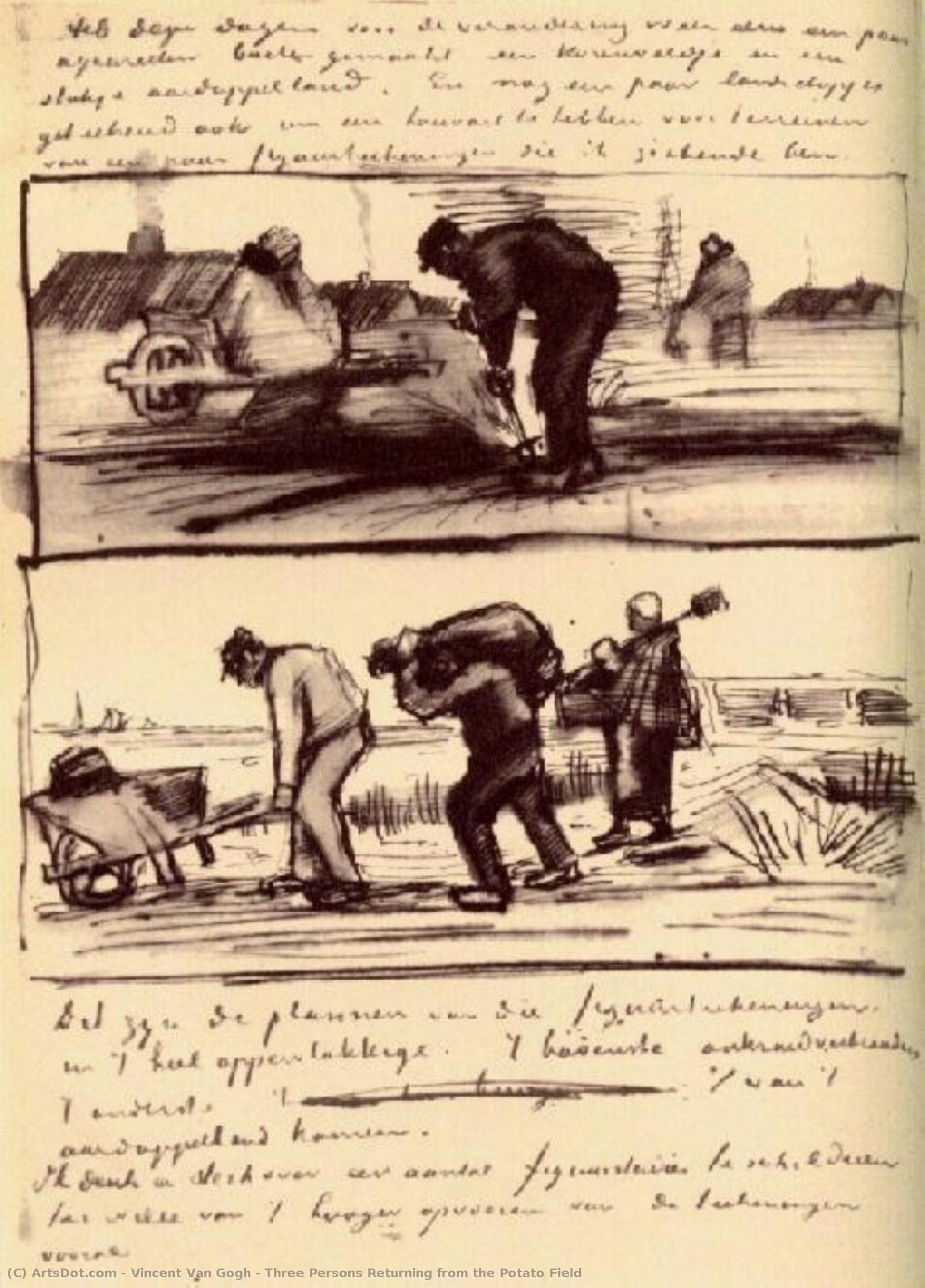
Discover Vincent van Gogh's 'Three Persons Returning from the Potato Field' (1883), a dynamic sketch capturing rural labor with expressive line work and raw emotion. Perfect for art collectors and enthusiasts.
Van Gog, holandski postimpresionista, poznat po delima poput 'Zvezdane noći' i 'Suncokreta'. Njegova ekspresivna tehnika i intenzivne boje revolucionarisale su umetnost i uticale na moderne pokrete.
Otkrijte svet Van Goga u Amsterdamu! Muzej čuva najveću kolekciju njegovih dela, od 'Sunčevih zrakova' do intimnih portreta. Putovanje kroz život i umetnost genija!
Captivating Depiction of Rural Labor
This powerful artwork vividly captures a moment of everyday life, showcasing three individuals engaged in manual labor, likely in a rural or working-class setting. The scene exudes a sense of community, resilience, and dignity, emphasizing the physical effort and collective perseverance of ordinary people. Through its dynamic composition, viewers are invited to reflect on the timeless themes of labor and human endurance, making it a compelling addition to any art collection or interior space seeking meaningful storytelling.
Impressionistic and Expressionistic Style
Executed with loose, spontaneous strokes, this piece exemplifies a blend of Impressionism and Expressionism. The rapid, gestural lines convey movement and emotion, capturing the raw energy of the scene. The sketch-like quality, characterized by bold, confident marks, emphasizes immediacy and spontaneity—hallmarks of a quick study or preparatory work. The monochromatic palette, relying on shades of black, gray, and white, directs focus toward form, texture, and the emotional resonance of manual labor, rather than color.
Technical Mastery and Technique
Created using simple drawing tools such as ink or charcoal, the artwork showcases a mastery of line and shading. The contrast between dark silhouettes and lighter backgrounds enhances depth and highlights the physical effort of the figures. The textured, rough strokes evoke a sense of vitality and urgency, inviting viewers to feel the effort and resilience embedded in each line. This technique not only captures a fleeting moment but also imbues the scene with a raw, emotional intensity that resonates deeply.
Historical Context and Artistic Significance
Produced in 1883, this sketch reflects the artist’s interest in everyday life and the human condition, themes central to the Post-Impressionist movement. During this period, many artists sought to depict the dignity of ordinary people and their labor, moving away from traditional, idealized subjects. The scene may be inspired by rural or working-class environments, emphasizing the importance of community and collective effort during a time of social change. Its raw execution and focus on human effort align with the broader artistic pursuit of capturing authentic, unpolished moments.
Symbolism and Emotional Impact
Beyond its literal subject matter, the artwork symbolizes perseverance, community, and the dignity of manual labor. The physical effort depicted evokes feelings of resilience and hope, inspiring viewers to appreciate the strength inherent in everyday work. The energetic lines and stark contrasts evoke a sense of immediacy and emotional honesty, making it a powerful piece that resonates on a personal level. It invites contemplation on the shared human experience and the enduring spirit of collective effort.
A Timeless Addition to Any Space
Whether displayed in a private collection, a gallery, or an interior design setting, this artwork offers a compelling narrative that elevates any environment. Its raw, expressive aesthetic complements both modern and traditional decor, adding depth and emotional richness. As a high-quality reproduction, it provides art lovers and collectors with an authentic glimpse into the artist’s exploration of human labor and community, making it a meaningful and inspiring centerpiece.