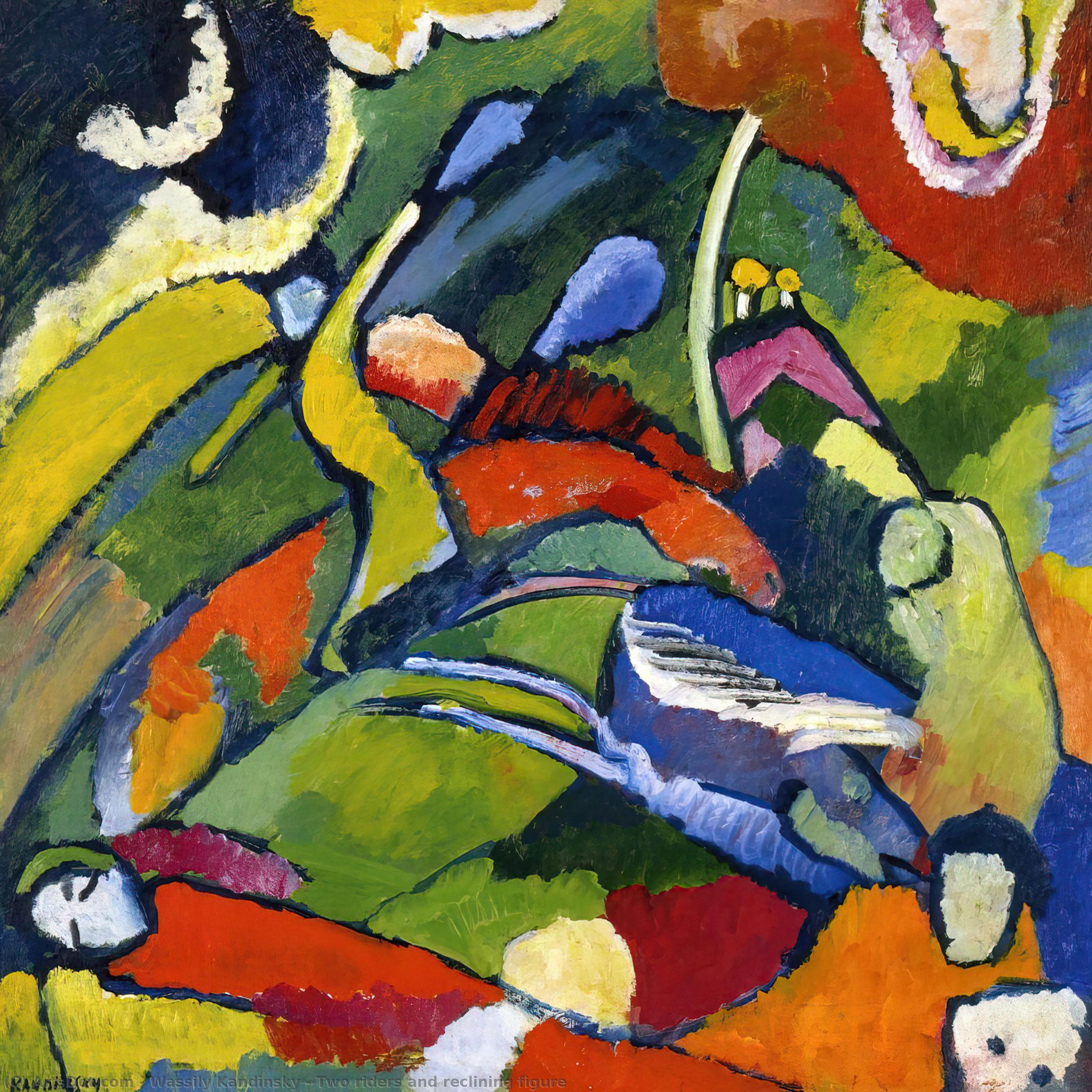
Two Riders and Reclining Figure: A Dynamic Expression of Freedom
Wassily Kandinsky's "Two Riders and Reclining Figure" is a captivating expressionist painting that embodies the spirit of adventure and freedom. Created around 1910, this artwork stands as a testament to Kandinsky’s pioneering role in abstract art, showcasing his innovative use of color and form to evoke profound emotions.
Composition and Symbolism
The composition is strikingly dynamic. Two figures, depicted as riders atop a bird-like creature with expansive wings, dominate the scene. Their close proximity suggests a shared experience—a sense of exhilaration and unified movement through an imagined landscape. The vibrant wings convey a powerful feeling of flight and liberation. In contrast to this energetic motion, a reclining figure rests on the right side of the canvas. This element introduces a visual balance, creating a compelling interplay between dynamism and tranquility within the artwork. The symbolism remains open to interpretation, but many scholars believe the riders represent spiritual seekers or forces navigating an inner world, while the reclining figure could symbolize rest, contemplation, or perhaps even earthly grounding.
Artistic Style: Expressionism in Motion
Kandinsky’s artistic style is distinctly expressionist. He masterfully employs vibrant colors—bold reds, blues, greens, and yellows—to create a visually arresting experience. The shapes are abstract yet suggestive, evoking emotions rather than depicting concrete objects. This approach aligns with Kandinsky's belief that color and form possess inherent emotional power, capable of directly influencing the viewer’s feelings. The brushstrokes appear energetic and fluid, further contributing to the sense of movement and dynamism characteristic of the piece. The painting isn't about representing reality; it's about conveying an inner state—a feeling of freedom and boundless possibility.
Historical Context and Kandinsky's Evolution
"Two Riders and Reclining Figure" emerged during a pivotal period in Kandinsky’s artistic development, coinciding with his exploration of spiritual themes and the burgeoning abstract art movement. It reflects his involvement with groups like Der Blaue Reiter (The Blue Rider), which championed artists who sought to express inner realities through non-representational forms. This painting is part of a larger body of work that includes pieces such as "Pareja a caballo," "Movement I," and "Horses, Gabriele Münter Foundation, Städtische Galerie." These works demonstrate Kandinsky's progressive shift away from representational art towards a more purely abstract expression, influencing the trajectory of modern art significantly. The painting’s creation also occurred alongside Kandinsky’s writing on color theory and spirituality in art, further solidifying his position as a leading figure in the development of abstraction.
Emotional Impact and Legacy
“Two Riders and Reclining Figure” is more than just an aesthetically pleasing artwork; it's an emotional journey. The vibrant colors and dynamic composition evoke feelings of freedom, adventure, and perhaps even a touch of mystery. It invites viewers to contemplate the relationship between movement, rest, and the inner world. Kandinsky’s masterpiece continues to inspire art enthusiasts and collectors alike, serving as a powerful reminder of the transformative potential of abstract art. Many of Kandinsky's works are preserved in renowned museums such as The Museum City Gallery in Lenbachhaus, Munich, Germany, ensuring that his legacy endures for generations to come.