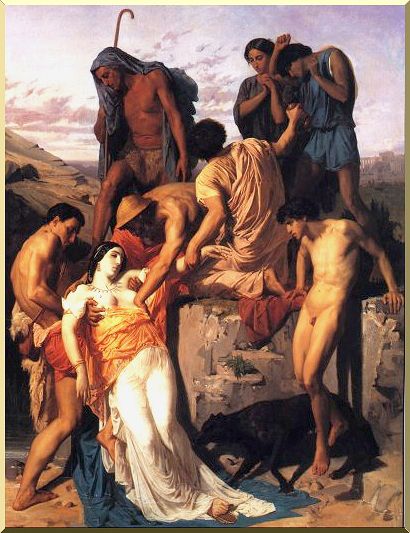
Zenobia Found by Shepherds on the Banks of the Araxes: A Captivating Oil Painting
Historical Context and Symbolism
William Adolphe Bouguereau’s Zenobia Found by Shepherds on the Banks of the Araxes is a captivating oil painting inspired by a true story from Tacitus' Histories. The scene depicts Zenobia, the queen of Palmyra, discovered by shepherds along the banks of the Araxes river. Created in 1850, this work reflects Bouguereau’s skill in portraying human emotion and his meticulous attention to detail within a historical narrative.
The painting draws upon a dramatic moment: Zenobia's desperate situation after fleeing with her husband Rhadamistus, only to be abandoned and left for dead. The story itself is rich with themes of power, betrayal, vulnerability, and resilience. Bouguereau masterfully translates this narrative into a visual representation that evokes empathy and contemplation.
Artistic Significance and Style
Zenobia Found by Shepherds on the Banks of the Araxes exemplifies Bouguereau’s signature realistic style. The painting showcases intricate details, from the textures of the clothing to the expressions etched upon the faces of the shepherds and Zenobia herself. Bouguereau's use of light and shadow adds depth and dimension, drawing the viewer into the scene and creating a sense of intimacy.
The composition is carefully constructed, with the figures arranged in a dynamic yet balanced manner. The diagonal movement created by the shepherds leaning over Zenobia guides the eye through the painting, emphasizing her fragility and their concern. Bouguereau’s technique utilizes visible brushstrokes to build up texture and volume, contributing to the overall realism of the work.
Emotional Impact and Interpretation
The emotional impact of this painting is profound. Zenobia's posture conveys exhaustion and despair, while the shepherds’ expressions reveal a mixture of concern and awe. The scene evokes feelings of vulnerability, compassion, and hope amidst adversity.
Symbolically, the water represents both death and potential renewal – Zenobia has been cast adrift but is now being rescued. The surrounding landscape, with its distant city skyline, hints at a lost world and the complexities of power and fate. Bouguereau’s masterful rendering of human emotion elevates this historical scene into a timeless exploration of the human condition.
Availability and Reproductions
The original painting resides within the esteemed Musée d'Orsay in Paris, France. However, for those seeking to experience the beauty and emotional depth of Bouguereau’s work firsthand, high-quality handmade oil painting reproductions are readily available at ArtsDot.com.
These meticulously crafted reproductions capture the nuances of the original artwork, allowing art enthusiasts to appreciate Bouguereau's genius in their own homes or collections. For further exploration of William Adolphe Bouguereau and his artistic legacy, visit ArtsDot.com.