A Window into Rural Serenity
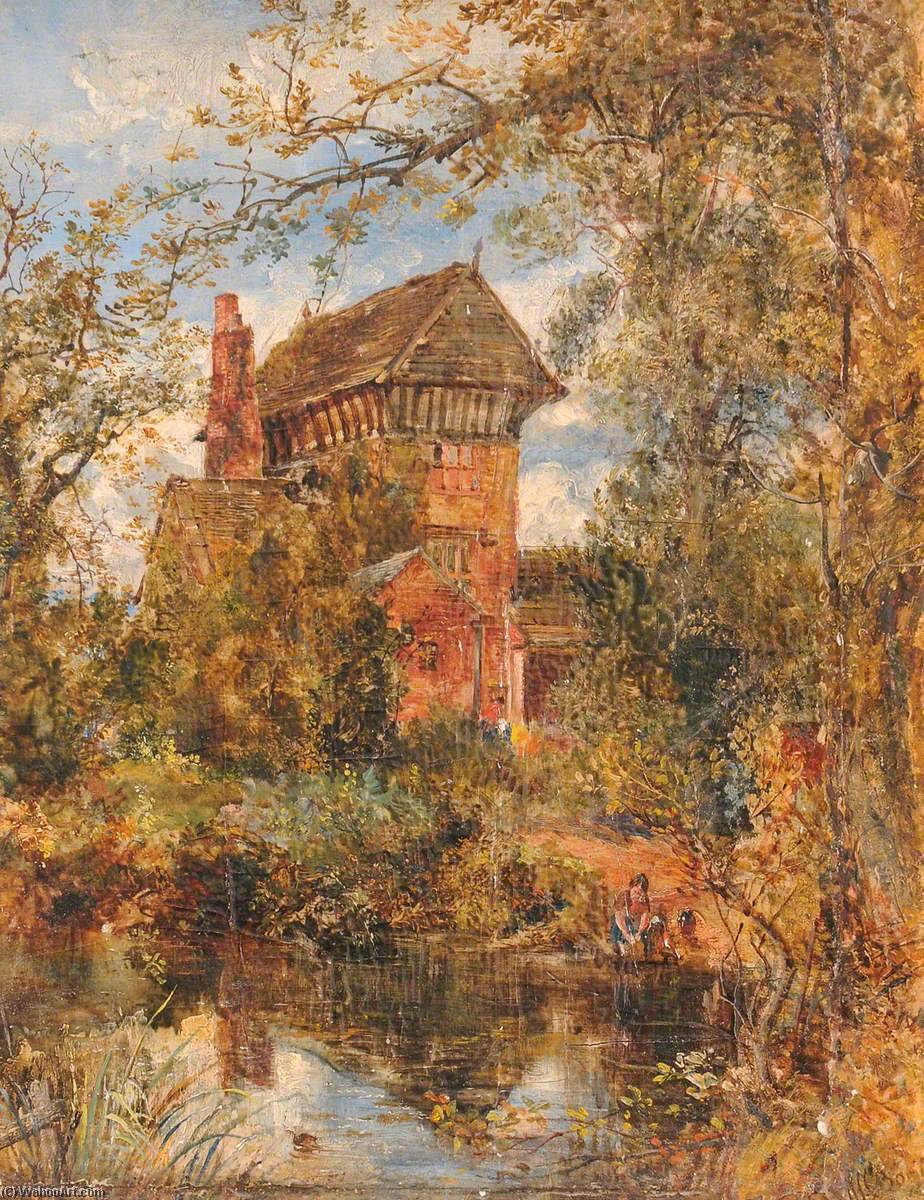
In the quiet corners of the English countryside, there exist moments of profound stillness that seem to defy the passage of time. William Joseph Julius Caesar Bond, a master of the Liverpool School, captures such a moment in his evocative 1900 masterpiece, Old Hut, Hale, Lancashire. This intimate landscape invites the viewer into a world where the boundaries between man-made structures and the natural environment blur into a singular, harmonious vision. The painting centers on a weathered brick building, nestled beside a tranquil body of water that acts as a mirror to the soul of the landscape. Through his brush, Bond does not merely depict a location; he evokes an atmosphere of romantic nostalgia, transporting us to a bygone era of pastoral peace and rhythmic seasonal change.
The technique employed in this work is a testament to Bond’s command over the medium of oil. Eschewing the cold precision of photographic realism, the artist embraces a loose, expressive brushwork that breathes life into every surface. One can almost feel the tactile quality of the impasto, particularly where the thick paint captures the rugged texture of the brickwork and the lush, tangled foliage of the surrounding trees. This heavy application of paint creates a sense of movement, as if the leaves are trembling in a light breeze and the water is subtly rippling under an overcast sky. The lighting is masterfully diffused, casting a soft, melancholic glow that avoids harsh shadows, instead bathing the scene in a dreamlike, hazy luminosity that is characteristic of late 19th-century Romanticism.
Symbolism and Emotional Resonance
Beyond its physical beauty, Old Hut, Hale, Lancashire carries a deep emotional weight that resonates with the modern observer. The central structure, an old hut, serves as a poignant symbol of endurance and sanctuary. In an age of rapid industrialization and change, such a building represents a steadfast connection to the earth and a retreat from the complexities of urban life. The water, reflecting the sky and the trees, introduces a layer of introspection; it is a medium of reflection both literal and metaphorical, inviting the viewer to pause and contemplate their own place within the natural order. The color palette—a rich tapestry of deep reds, earthy browns, verdant greens, and warm yellows—complements this sense of groundedness and warmth.
For the discerning collector or interior designer, this painting offers more than just aesthetic appeal; it provides a focal point of tranquility. Its soft, atmospheric perspective and organic lines make it an ideal addition to spaces designed for contemplation and relaxation. Whether placed in a sunlit study or a sophisticated living area, the artwork brings with it a sense of historical depth and a quiet, enduring elegance. To possess a reproduction of this work is to hold a piece of the English pastoral tradition, allowing the timeless charm of Lancashire’s landscape to grace one's private sanctuary.