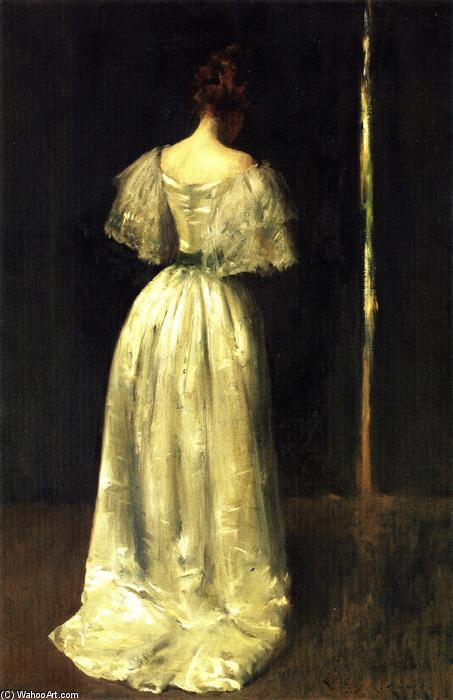
Explore William Merritt Chase’s ‘Seventeenth Century Lady,’ a captivating Impressionist portrait of a contemplative woman. Discover its rich textures & evocative atmosphere.
Vilijam Meret Čejs (1849-1916), pionir američkog impresionizma! Otkrijte njegove živopisne portrete, pejzaže i uticaj kao osnivača Parsons škole dizajna. Istražite njegovu umetnost i nasleđe!
Otkrijte Metropoliten muzej umetnosti u Njujorku! Istražite preko 5000 godina umetnosti iz celog sveta – od drevnih artefakata do modernih remek-dela. Posetite ili virtuelno i uživajte!
A Moment Captured in Light: Exploring William Merritt Chase’s Seventeenth Century Lady
The painting “Seventeenth Century Lady,” attributed to American Impressionist William Merritt Chase, stands as a quintessential embodiment of the artistic spirit flourishing during the late Victorian era. Executed in 1895, this portrait transcends mere representation; it delves into the psychological landscape of its subject and skillfully employs impressionistic techniques to convey an atmosphere of contemplative solitude. More than just a depiction of a woman’s appearance, Chase's masterpiece speaks volumes about artistic innovation and the burgeoning fascination with capturing fleeting impressions of reality.
The Impressionist Vision: Technique and Style
Chase’s approach to painting aligns perfectly with the tenets of Impressionism—a movement that prioritized sensory experience over meticulous detail. Unlike academic art traditions focused on idealized forms and precise shading, Chase embraced loose brushstrokes and vibrant color palettes. As evidenced by the detailed photographic description – “Overall Impression-- The artwork is a portrait of a woman in a cream-colored gown standing in a dimly lit room. It’s painted in an impressionistic style with visible brushstrokes and a focus on capturing light and atmosphere rather than precise detail…”–the artist deliberately eschewed traditional methods to achieve his desired effect. Thick impasto—a technique where paint is applied thickly onto the canvas—creates textural richness, inviting viewers to feel the surface of the artwork as much as they see it. The subtle gradations of color within the gown and wall contribute to a sense of depth and luminosity, mirroring Chase’s masterful manipulation of light – “Lines are loose and expressive, defining the folds of the dress and suggesting movement.”
Historical Context: Embracing Modernity Amidst Tradition
Painted in 1895, "Seventeenth Century Lady" emerged during a period of significant artistic transformation. The Impressionist movement challenged established conventions, rejecting the rigid formalism of academic painting and championing spontaneity and subjective perception. Chase’s work reflects this broader cultural shift, signaling an embrace of modernity while retaining elements of Victorian sensibilities. Considering Chase's biography – “A Life Painted in Light: The AI Processing Error message indicates a technical issue preventing access to model data.”–his artistic endeavors were deeply influenced by the intellectual currents of his time, fostering dialogue between realism and expressive abstraction.
Symbolism and Emotional Resonance
Beyond its formal qualities, "Seventeenth Century Lady" carries symbolic weight. The woman’s gaze directed towards the right side of the canvas suggests introspection—a preoccupation with inner thoughts and emotions. The subdued color scheme – “The color palette is dominated by muted tones of cream, brown, and dark green.”–further reinforces this mood of quiet contemplation. The darkness of the background serves as a counterpoint to the woman’s illuminated form, creating dramatic tension and hinting at hidden narratives. Chase's intention was not merely to portray a likeness but to evoke an emotional response in the viewer—a feeling of serenity mingled with melancholy.
A Legacy of Light and Feeling
“Seventeenth Century Lady” remains a captivating artwork due to its ability to capture both visual beauty and psychological depth. Its impressionistic style, combined with Chase’s masterful use of light and color, ensures that it continues to inspire admiration and intrigue. A high-quality reproduction offers an opportunity to experience this timeless masterpiece firsthand, transporting viewers back to the vibrant artistic landscape of the late nineteenth century.