Vilijam Meret Čejs (1849-1916), pionir američkog impresionizma! Otkrijte njegove živopisne portrete, pejzaže i uticaj kao osnivača Parsons škole dizajna. Istražite njegovu umetnost i nasleđe!
Istražite umetnost i istoriju u Muzeju lepih umetnosti Hjustona! Otkrijte drevne artefakte, remek-dela i zapanjujuće skulpture u srcu kulturnog života grada. Tri zgrade, bogata kolekcija i inspirativna iskustva čekaju vas.
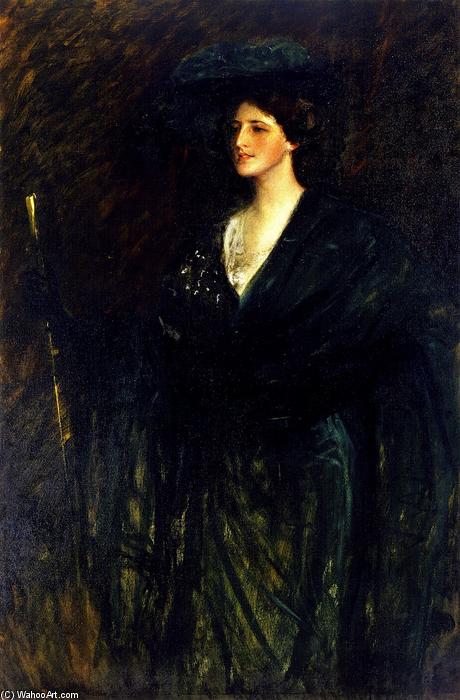
The Emerald Lady: A Romantic Echo of Impressionism
William Merritt Chase’s “The Emerald Lady” isn't merely a portrait; it’s a carefully crafted distillation of Romantic ideals infused with the nascent energy of Impressionism. Painted in 1905, this oil on canvas captures a woman’s gaze—a look imbued with both quiet contemplation and an unspoken melancholy—against a backdrop that dissolves into atmospheric haze.
- Subject Matter: The artwork centers around a female figure, presented head-on, emphasizing her presence as the focal point. Her attire is adorned with shimmering gold jewelry, subtly hinting at wealth and status – elements characteristic of aristocratic portraits prevalent during Chase’s era.
- Style & Technique: Chase skillfully blends Romanticism's emotive intensity with Impressionistic brushwork. Loose, expressive strokes dominate the composition, prioritizing capturing light and mood over precise anatomical detail. The impasto technique—thickly applied paint—creates a palpable textural surface that invites tactile engagement.
- Color Palette: Dominated by deep blues and greens, the palette evokes feelings of serenity and introspection. Strategic use of white highlights illuminates the woman’s face and dress, creating dramatic contrasts that heighten visual impact.
- Composition & Perspective: The vertical orientation draws attention upwards, mirroring the woman's gaze and reinforcing her importance within the frame. Shallow perspective contributes to a sense of intimacy, guiding the viewer’s eye towards the subject while blurring the surrounding environment.
Beyond its aesthetic qualities, “The Emerald Lady” speaks to broader themes of femininity and solitude. The muted colors and diffused light suggest an inner world—a realm of emotion and contemplation—reflecting the Romantic preoccupation with psychological depth. Chase’s masterful handling of light and texture elevates this portrait beyond a simple likeness; it becomes a vessel for conveying nuanced feelings and capturing the elusive beauty of human experience.
- Historical Context: Painted during the height of American Impressionism, “The Emerald Lady” embodies the movement’s commitment to portraying everyday life with sensitivity and observation. It aligns with Chase's broader artistic vision—one rooted in capturing fleeting moments of beauty and emotion—and reflects the influence of artists like Monet and Renoir who championed similar approaches.
- Symbolism: The emerald jewelry symbolizes prosperity and nobility, reinforcing the portrait’s aristocratic subject matter. However, its subdued glow contributes to an overall atmosphere of quiet contemplation, hinting at hidden emotions beneath a veneer of composure.
This artwork exemplifies Chase's dedication to artistic innovation while honoring traditional conventions. Its enduring appeal lies in its ability to evoke emotion and invite interpretation—a testament to the artist’s profound understanding of human psychology and his masterful command of visual language.