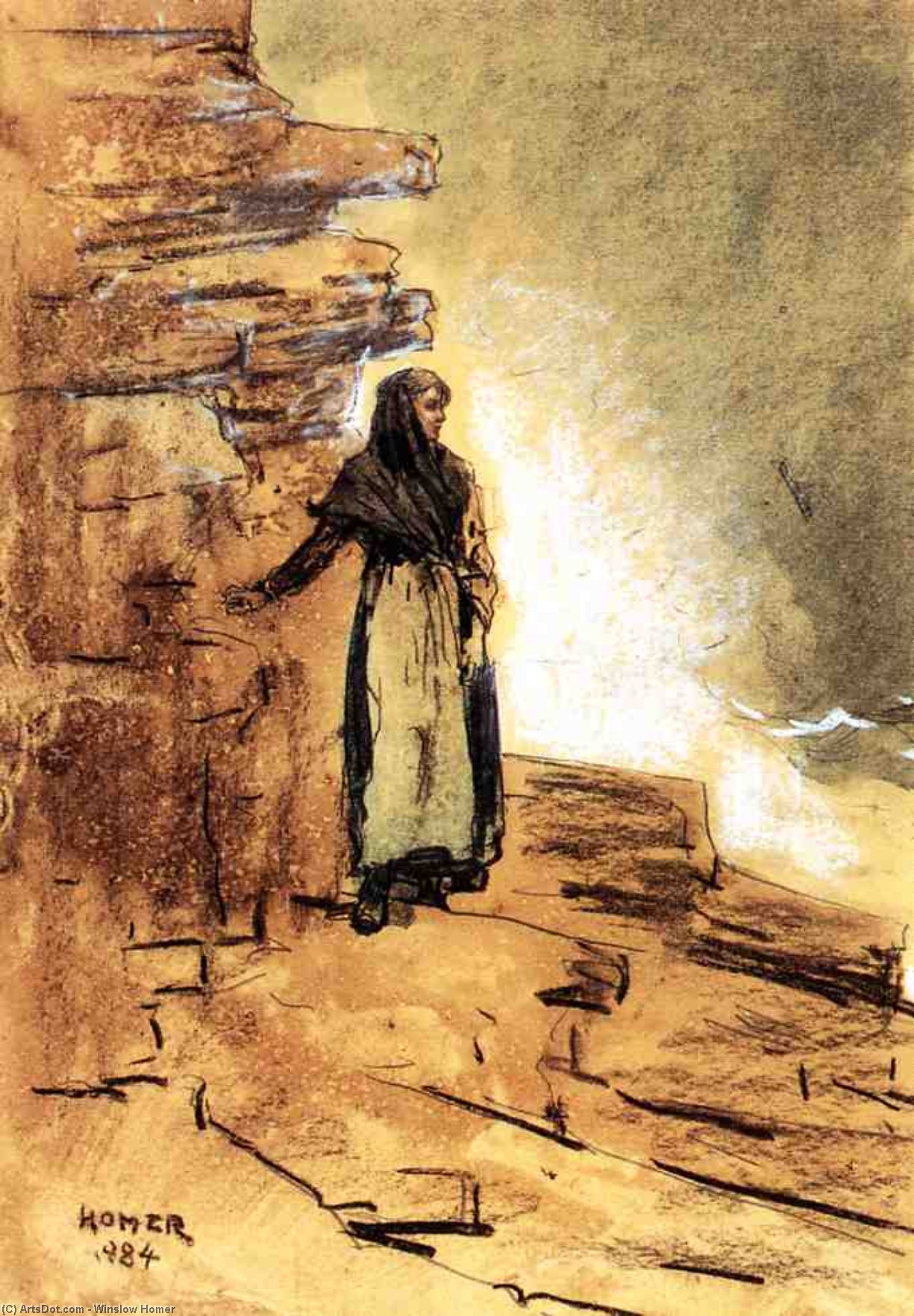
Winslow Homer's "On the Cliff, Prout's Neck" captures a serene moment with a woman contemplating the vast ocean view, showcasing the artist’s signature realism and evocative brushwork. Discover this timeless classic and bring its beauty into your home.
Winslow Homer’s ‘On the Cliff, Prout’s Neck’: A Meditation on Solitude and the American Landscape
Winslow Homer's “On the Cliff, Prout’s Neck” is more than just a depiction of a woman contemplating the sea; it’s a profound exploration of the human condition set against the backdrop of the rugged New England coastline. Painted in 1880, this work exemplifies Homer’s unique approach to art – one rooted not in academic tradition but in direct observation and an intimate understanding of American life. The painting's enduring appeal lies in its ability to evoke a sense of quiet contemplation and the sublime beauty of nature, qualities that resonated deeply with the artist and continue to captivate viewers today.
Subject and Composition
- The central figure, a woman standing on a dramatic cliff overlooking Prout’s Neck in Boothbay Harbor, Maine, immediately draws the eye.
- Her posture – slightly turned towards the viewer, with her gaze fixed on the distant horizon – suggests introspection and perhaps a yearning for something beyond immediate experience.
- Homer masterfully employs atmospheric perspective, using muted blues and grays to create a sense of depth and distance, emphasizing the vastness of the ocean and the imposing nature of the cliffs.
- The composition is deliberately simple, focusing attention on the interaction between the human figure and the powerful forces of the natural world.
Technique and Style – A Masterclass in Watercolor
Homer’s mastery of watercolor is immediately apparent. He utilizes a broken brushstroke technique, layering washes of color to build up form and create subtle gradations of tone. This approach lends the painting an ethereal quality, as if the scene were constantly shifting with the movement of the sea mist. The loose, expressive handling of paint contributes significantly to the work’s emotional impact, conveying not just a visual representation but also a feeling of vulnerability and awe. Unlike many artists of his time who favored oil paints for their richness and detail, Homer's choice of watercolor allowed him to capture the fleeting effects of light and atmosphere with remarkable sensitivity.
Symbolism and Historical Context
“On the Cliff, Prout’s Neck” was created during a period of significant change in American art. While European artists were increasingly embracing Impressionism and Post-Impressionism, Homer remained committed to a more traditional style, albeit one deeply informed by his own experiences. The woman on the cliff can be interpreted as a symbol of solitude, resilience, and perhaps even spiritual seeking – themes that resonated with many Americans during the late 19th century. The painting reflects the growing trend of artists turning their attention to American subjects and landscapes, celebrating the nation’s natural beauty and its evolving identity.
Emotional Impact and Artistic Legacy
Ultimately, “On the Cliff, Prout’s Neck” is a deeply moving work that speaks to our shared human experience. Homer's ability to capture both the grandeur of nature and the quiet dignity of an individual figure creates a powerful emotional resonance. This painting exemplifies Homer’s lasting legacy as one of America’s greatest landscape painters, demonstrating his profound connection to the American spirit and his remarkable skill in translating that connection onto canvas. Its serene beauty continues to inspire viewers seeking solace and contemplation.