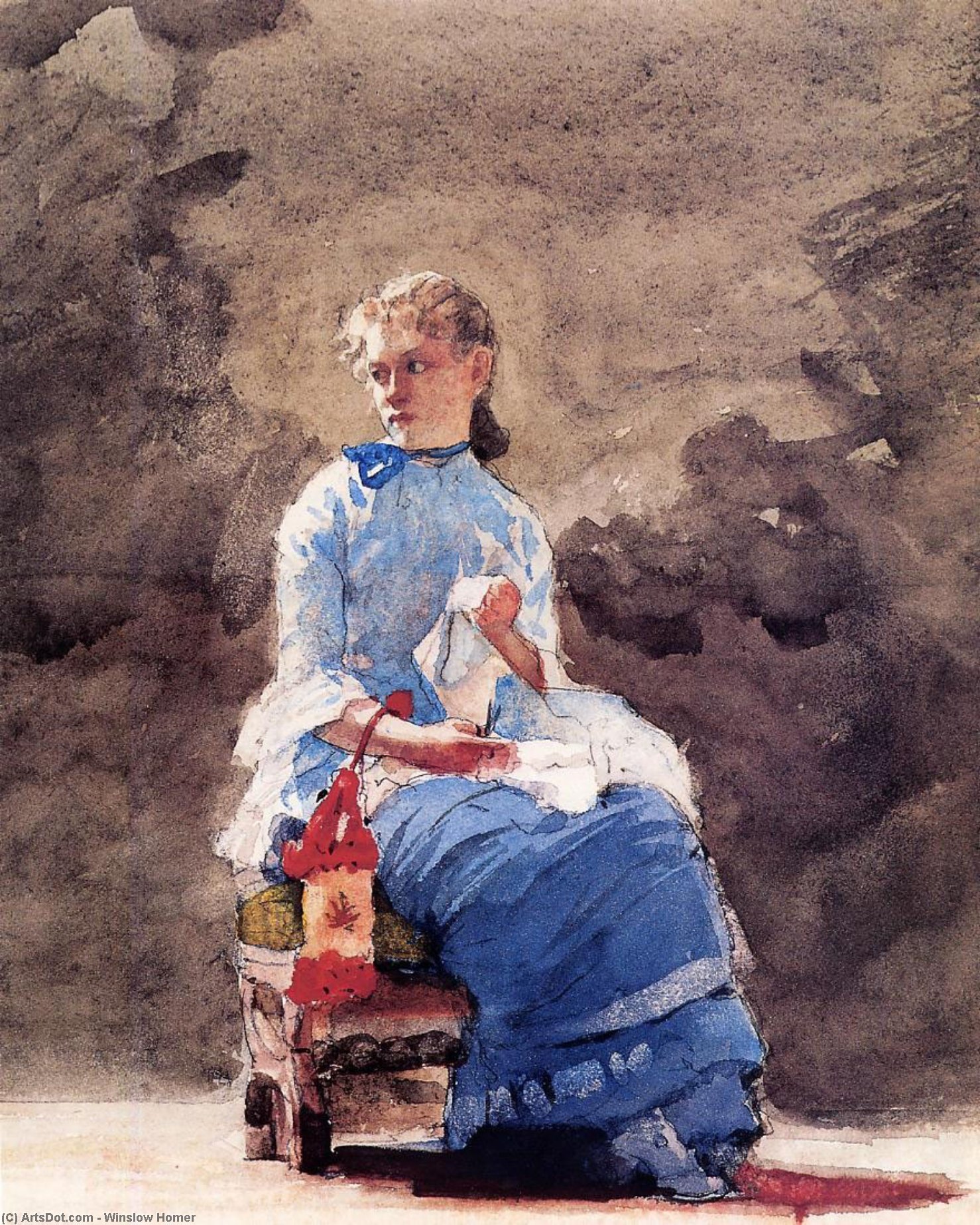
Winslow Homer's Woman Sewing: A Moment of Quiet Reflection
Winslow Homer (1836-1910) stands as one of America’s most revered landscape painters, yet his oeuvre extends far beyond the dramatic vistas that often define his fame. Homer possessed an extraordinary ability to capture not just what he saw but also *how* it felt—a skill honed from humble beginnings as a commercial illustrator and solidified by unwavering dedication to observation. His artistic journey began in Boston’s gritty streets, where he absorbed the rhythms of urban life before transforming into a painter who celebrated the dignity of rural existence. This formative experience instilled in him a profound understanding of human emotion and atmosphere—qualities that permeate his paintings and resonate powerfully with viewers today. Homer's distinctive style is characterized by bold brushstrokes, luminous color palettes, and an unflinching portrayal of everyday subjects. He eschewed grand narratives for intimate scenes, preferring to distill the essence of experience into carefully crafted compositions that convey a sense of profound stillness.
- Subject Matter: Homer’s Woman Sewing depicts a solitary female figure engaged in the meticulous task of sewing—a commonplace activity rendered with remarkable sensitivity. The woman's focused gaze and deliberate movements speak to an inner concentration, capturing a moment of quiet contemplation amidst the bustle of domestic life.
- Style: Homer’s work embodies Realism, prioritizing accurate depiction over idealized representation. He eschewed romantic embellishments in favor of unflinching observation of his subjects—a stylistic choice that aligns perfectly with his humanist worldview.
- Technique: Winslow Homer masterfully employed watercolor paint, utilizing delicate strokes and subtle color harmonies to create an atmosphere of serene tranquility. The artist’s technique is notable for its ability to convey emotion through tonal variations and textural nuances—elements that contribute significantly to the painting's overall impact.
Historical Context: America in the Late 19th Century
Woman Sewing emerged during a pivotal period in American history—the twilight years of the Victorian era. Homer’s paintings reflect the prevailing social values of the time, emphasizing domesticity, resilience, and the importance of labor within the home. The painting captures a snapshot of rural America, portraying a woman performing essential tasks with grace and determination—a visual testament to the fortitude of ordinary women facing challenges head-on. Furthermore, Homer’s work aligns with broader artistic trends of the period, which saw artists increasingly interested in exploring themes of human experience and capturing the beauty found in everyday life. The painting's quietude speaks to a counterpoint to the turbulent political landscape of the era—a reminder that amidst conflict and upheaval, moments of serenity and contemplation hold enduring significance.
Symbolism: Domestic Labor and Inner Reflection
Beyond its visual depiction, Woman Sewing carries symbolic weight. The sewing needle represents diligence, precision, and the transformative power of craft—skills valued within Victorian society as indicators of moral character and industriousness. The woman’s posture conveys a sense of inner peace and self-sufficiency, suggesting that true fulfillment lies in embracing simple pleasures and pursuing meaningful activities. Homer's careful composition draws attention to the interplay between light and shadow, creating a visual metaphor for the balance between outward appearances and inner thoughts—a theme central to Homer’s artistic vision. The bottle serves as a subtle reminder of sustenance and care—elements essential to maintaining domestic harmony and fostering connection with one's surroundings.
Emotional Impact: Tranquility and Observation
Winslow Homer’s Woman Sewing transcends mere representation; it evokes profound emotion through its masterful use of color, texture, and composition. The painting’s muted palette fosters a sense of calm and contemplation—inviting viewers to pause and appreciate the beauty inherent in quiet moments. Homer's technique captures the essence of observation—demonstrating his ability to distill complex emotions into simple visual cues. Ultimately, Woman Sewing serves as an enduring testament to Homer’s artistic genius—a painting that continues to inspire admiration for its understated elegance and its poignant portrayal of human experience.