

 Pregledaj u prostoru
 Kupi print
 Pošalji
 Podeli


 Преузми
 Slični predmeti
 Rendgenski snimak
 Slajdovi
The Oak of Flagey (The Oak of Vercingetorix)


A Monument to Resilience: Unpacking Gustave Courbet’s ‘The Oak of Flagey’
Gustave Courbet's “The Oak of Flagey” (also known as "The Vercingetorix Oak") isn’t merely a landscape painting; it’s a profound meditation on strength, history, and the enduring spirit of a nation. Completed in 1864 during a pivotal moment in French identity formation, this monumental oil on canvas invites us to contemplate not just a tree, but the very roots of France itself. Courbet, a staunch champion of Realism, deliberately eschewed romanticized depictions of nature, opting instead for an unvarnished portrayal that speaks directly to the viewer’s senses and intellect.
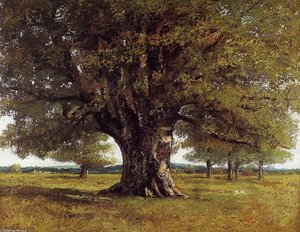
The scene is deceptively simple: a colossal oak tree dominates the composition, standing solitary in a field bathed in diffused light. Yet, within this apparent stillness lies a complex web of meaning. The tree’s gnarled trunk, meticulously rendered with thick impasto and carefully observed shadows, exudes an almost palpable sense of age and resilience – a testament to centuries weathered. Courbet's masterful use of light and dark isn’t about creating beauty for its own sake; it’s about revealing the texture and weight of the oak, conveying its immense presence and anchoring it firmly within the landscape.
Historical Echoes: Vercingetorix and the Spirit of Gaul
The painting's title, “The Oak of Flagey (The Oak of Vercingetorix),” immediately connects this seemingly rustic scene to a significant historical figure. Vercingetorix was the leader of the Gallic resistance against Julius Caesar’s invasion of Gaul in 52 BC. The oak tree itself held immense symbolic importance for the Gauls, representing strength, endurance, and connection to their ancestral lands. Courbet deliberately chose this subject matter during a period of intense national debate regarding French identity – specifically, the relationship between the ancient Celtic heritage and the burgeoning nation-state.
The inclusion of “Caesar’s camp near Alesia, Franche-Comte” in the subtitle further emphasizes this connection. Local sentiment at the time was deeply divided over the precise location of the Roman siege of Alesia, a crucial battle in the Gallic Wars. Courbet's decision to depict the oak tree – a symbol of Vercingetorix and the Gauls – subtly aligned him with the local community’s desire to honor their heritage and challenge the established historical narrative. This act of artistic engagement speaks volumes about Courbet’s commitment to portraying reality, even when it involved navigating complex political and social currents.
Realism's Enduring Legacy: A Bridge Between Eras
“The Oak of Flagey” stands as a cornerstone of the Realist movement, anticipating many developments in subsequent art movements. Courbet’s rejection of idealized forms and his focus on direct observation paved the way for Impressionism and Expressionism, both of which sought to capture the subjective experience of reality. His meticulous attention to detail – from the texture of the bark to the subtle variations in light – demonstrates a profound respect for the subject matter, elevating it beyond mere representation.
Furthermore, Courbet’s work reflects a broader shift in artistic priorities during the 19th century. He moved away from the grand narratives and heroic figures favored by Romanticism, instead choosing to depict everyday life and landscapes with unromanticized accuracy. This focus on the ordinary – the humble oak tree, the quiet field – resonated deeply with viewers and established Courbet as a champion of democratic art.
Bringing ‘The Oak of Flagey’ into Your Space
ArtsDot offers meticulously crafted hand-painted reproductions of “The Oak of Flagey,” allowing you to experience the power and beauty of this iconic masterpiece in your own home. Our skilled artists faithfully recreate Courbet's technique, capturing the painting’s rich textures, dramatic lighting, and profound symbolism. Whether you are an art enthusiast, a collector, or simply seeking a stunning piece of décor, our reproductions provide an authentic and captivating representation of this enduring work of art. Explore our range of sizes and framing options to find the perfect way to bring “The Oak of Flagey” into your world.
Gustav Кјорбе (1819 – 1877)
Gustave Courbet (1819-1877): Osnivač realizma! Istražite slike svakodnevnog života i portrete radničke klase, poput 'Sahranjivanja u Ornansu'. Otkrijte njegov revolucionarni uticaj na umetnost 19. veka.
O ovom umetničkom delu
- Naslov: The Oak of Flagey (The Oak of Vercingetorix)
- Umetnik: Gustav Кјорбе
- Godina: 1864
- Format: Landscape
- Status autorskih prava: Javno vlasništvo
- Pokret: Realist Landscape
- Epoha: Late Medieval
- Tehnika izrade: WallArt
- Kreativni period: Mature Realism
- Ključne reči: courbet , vercingetorix , rural
Osnovne informacije
- Artist: Gustave Courbet
- Year: 1864
- Medium: Oil on canvas
- Subject or theme: Nature, history
- Artistic style: Realistic landscape
- Movement: Realism
- Notable elements: Ancient oak tree
QR kod


