Pregledaj u prostoru
 Kupi print
 Pošalji
 Podeli


 Преузми
 Slični predmeti
 Rendgenski snimak
 Slajdovi
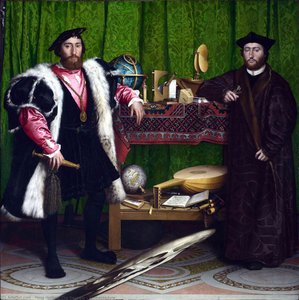
Ambassadors - the ambassadors (detail)


Hans Holbajn Mlađi (1497 – 1543)
Hans Holbein Mlađi (1497-1543), nemačko-švajcarski slikar poznat po realističnim portretima engleske kraljevske porodice, uključujući i Henrika VIII. Njegova dela, poput 'Poslanika', odlikuju detalji i simbolizam, ostavljajući trajan utisak na umetnost.
A Window into Tudor England: Decoding Holbein’s Ambassadors
Hans Holbein the Younger's *Ambassadors* – The Ambassadors (detail) stands as a cornerstone of Northern Renaissance art, born from the crucible of 1533 and forever enshrined in the National Gallery’s hallowed halls. More than just a portrait; it’s an exquisitely crafted tableau that speaks volumes about its subjects—Jean de Dinteville and Georges de Selve—and illuminates the intellectual fervor of Elizabeth I's reign. This painting isn’t merely observed; it’s felt, its meticulous detail transporting viewers back to a moment brimming with ambition, erudition, and subtly unsettling contemplation.The Artist’s Vision: Holbein’s Legacy
Hans Holbein the Younger (1497-1543) wasn't simply a painter; he was an architect of perception. Trained in his father’s workshop alongside a dedication to anatomical precision—a hallmark of Renaissance scholarship—Holbein possessed an unparalleled ability to distill human emotion onto canvas. His output spanned religious commissions, satirical sketches lampooning the courtly elite, and powerfully persuasive propaganda supporting the Reformation, demonstrating a remarkable versatility that cemented his reputation as one of the era’s most influential artists. He captured not just likeness but character, conveying a profound understanding of psychology—a feat rarely achieved in portraiture before him.A Symphony of Symbolism: Objects Speak Volumes
The painting's brilliance extends far beyond its technical mastery; it resides in its dense tapestry of symbolism. Observe the lute and book resting upon the table – emblems of humanist learning and musical appreciation, reflecting Dinteville’s diplomatic pursuits and Selve’s scholarly inclinations. The skull, positioned subtly at the lower right corner—a masterful use of anamorphic projection—serves as a poignant reminder of mortality, confronting viewers with the inescapable reality of human existence alongside the grandeur of worldly achievement. These carefully chosen objects aren't mere decorative elements; they are conduits for conveying deeper philosophical ideas about life and death.Technique & Texture: Oil on Panel – A Renaissance Marvel
Holbein’s choice of medium—oil paint applied to oak panel—was revolutionary for its time. Unlike tempera, which relied on brittle pigments and limited tonal range, oil allowed for unparalleled luminosity and blending capabilities, resulting in textures that capture the subtle nuances of skin tone and drapery folds with breathtaking accuracy. The artist painstakingly layered pigment upon pigment, achieving a remarkable level of realism that continues to astonish art historians today. This technique demanded patience and precision—a testament to Holbein’s unwavering commitment to artistic excellence.Historical Context: Tudor England Under Elizabeth I
*Ambassadors* emerged during the formative years of Elizabeth I's reign, marking a pivotal moment in English history as the nation navigated the turbulent waters of religious reformation and international diplomacy. The painting reflects the intellectual climate of the era—characterized by humanist ideals and a renewed interest in classical learning—and underscores the importance of patronage within the Tudor court. Its presence in the National Gallery serves as a tangible link to this momentous period, inviting viewers to contemplate the legacy of Elizabeth I and the artistic achievements of her time.- Explore this iconic masterpiece at The National Gallery.
- Discover high-quality reproductions available on ArtsDot.
O ovom umetničkom delu
- Naslov: Ambassadors - the ambassadors (detail)
- Umetnik: Hans Holbajn Mlađi
- Godina: 1533
- Format: Portrait
- Status autorskih prava: Javno vlasništvo
- Epoha: Renaissance
- Kontekst korpusa: central to holbein's artistic legacy , religious symbolism & reformation
- Dominantna boja: Phthalo Green
- Ključne reči: symbolism art , portrait painting , renaissance art
- Intenzitet boje: Balanced
Osnovne informacije
- Notable elements or techniques: Anamorphic skull; Symbolism (globes, lute)
- Year: 1533
- Medium: Oil on panel
- Artistic style: Realistic portraiture
- Influences: Early Netherlandish painting
- Movement: Northern Renaissance Art Movement
- Artist: Hans Holbein the Younger
QR kod