

 Pregledaj u prostoru
 Kupi print
 Pošalji
 Podeli


 Преузми
 Slični predmeti
 Rendgenski snimak
 Slajdovi
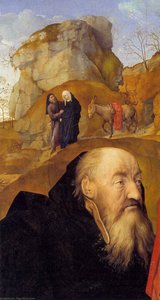
Sts Anthony and Thomas with Tommaso Portinari (detail) (11)


Hugo Van Der Goes (1440 – 1482)
Istražite inovativnu umetnost Huga van der Goesa (1440-1482), flamanskog majstora renesanse. Poznat po dramatičnom realizmu, emotivnim portretima i Portinari oltaru, značajno je uticao na italijansko slikarstvo.
Галерија Уфици (Firenca, Italy)
Otkrijte renesansni puls Firence u galeriji Ufici! Istražite remek-dela Botičelija, Leonardova i Mikelanđela – nezaboravno umetničko iskustvo.
A Window into the Soul: Hugo van der Goes’s Masterpiece
The “Sts Anthony and Thomas with Tommaso Portinari (detail) (11)” by Hugo van der Goes isn't merely a religious painting; it’s a profound exploration of faith, humility, and the human condition. Completed around 1476-79, this intimate detail from the monumental *Portinari Altarpiece* – now residing in the Uffizi Gallery in Florence – offers a concentrated dose of the artist's revolutionary approach to painting. Van der Goes, a pivotal figure bridging the late medieval and early Renaissance periods, shattered established conventions with his intensely realistic portrayal of saints, imbuing them with an unprecedented level of psychological depth and emotional resonance. This particular section captures the essence of that achievement – a palpable sense of reverence and quiet contemplation.
The Flemish Realist’s Breakthrough
Before Van der Goes, Northern European painting often prioritized technical skill and decorative elegance over individual expression and emotional truth. He fundamentally altered this trajectory by embracing a style characterized by meticulous detail, dramatic lighting, and an almost photographic realism. His use of color was particularly groundbreaking – eschewing the bright, idealized hues favored by his predecessors in favor of a more muted, earthy palette that enhanced the sense of depth and volume within the scene. The subtle gradations of tone, achieved through layering thin glazes of oil paint, create a remarkable illusion of texture and form, drawing the viewer directly into the intimate space depicted.
- Composition: The arrangement is carefully balanced, with the three figures – Saints Anthony and Thomas, and Tommaso Portinari – positioned in a triangular composition that draws the eye inward.
- Technique: Van der Goes’s mastery of oil paint allowed him to build up layers of color and texture, creating a luminous and incredibly detailed surface.
- Color Palette: The subdued colors—earth tones, browns, and deep reds—lend an air of solemnity and gravity to the scene.
Symbolism and Spiritual Depth
Beyond its technical brilliance, the painting is rich in symbolic meaning. Saints Anthony and Thomas, both renowned for their wisdom and devotion, represent different facets of Christian faith – Anthony embodying monastic asceticism and Thomas representing theological scholarship. Tommaso Portinari, likely a wealthy patron of the arts, serves as an embodiment of earthly piety and gratitude. The horses, rendered with remarkable detail, are often interpreted as symbols of divine power and grace, pulling the scene upwards towards the heavens. The gesture of Saint Anthony’s hand, reaching out to bless the young Tommaso, speaks volumes about the transformative power of faith and the importance of spiritual guidance.
A Legacy of Emotional Resonance
“Sts Anthony and Thomas with Tommaso Portinari (detail) (11)” is more than just a beautiful painting; it’s a window into the soul. Van der Goes's ability to capture not only the physical likenesses of his subjects but also their inner lives—their emotions, their hopes, and their fears—established a new standard for portraiture and religious art. His influence can be seen in the works of countless artists who followed, solidifying his place as one of the most important figures in the history of Northern Renaissance painting. Today, reproductions of this extraordinary work continue to inspire awe and contemplation, reminding us of the enduring power of faith, beauty, and human connection.
O ovom umetničkom delu
- Naslov: Sts Anthony and Thomas with Tommaso Portinari (detail) (11)
- Umetnik: Hugo Van Der Goes
- Godina: 1476
- Format: Tall
- Status autorskih prava: Javno vlasništvo
- Mesto izlaganja: Галерија Уфици
- Pokret: Early Netherlandish Painting
- Medijum: Oil On Canvas
- Tehnika izrade: WallArt
- Kreativni period: Mature Period
Osnovne informacije
- Artist: Hugo van der Goes
- Medium: Oil on wood
- Artistic style: Flemish Realism
- Influences: Van der Goes
- Year: 1476-79
- Dimensions: 274 x 652 cm
- Notable elements: Realism, emotion
QR kod


