

 Pregledaj u prostoru
 Kupi print
 Pošalji
 Podeli


 Преузми
 Slični predmeti
 Rendgenski snimak
 Slajdovi
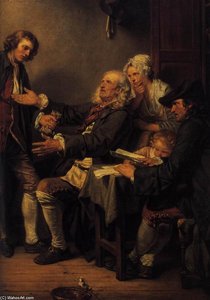
L'Accordée de Village (detail)


Жан Батист Грез (1725 – 1805)
Žan-Baptiste Greze (1725–1805): Istražite emotivno bogate scene žanra i portrete ovog ključnog francuskog slikara Rokoko perioda, poznatog po prikazivanju svakodnevnog života i moralnih lekcija. Slikao je porodične prizore poput "Otac objašnjava Bibliju deci".
Louvre (Paris, France)
Otkrijte bezvremenske remek-dela Louvra! Putujte kroz istoriju umetnosti od drevnog Egipta do renesansnih ikona – Mona Liza, Venere Miloska i još mnogo toga. Pariško kulturno blago čeka na vas! A) Kraljevskom dvorcem isključivo za Luja XIV. B Prema datom tekstu, šta je bila prvobitna svrha palate Louvre?
A Window into Sentiment: Unveiling Greuze’s “L’Accordée de Village”
Jean-Baptiste Greuze’s “L’Accordée de Village,” a meticulously detailed study from the larger painting housed in the Louvre, offers a poignant glimpse into the heart of 18th-century French society. More than just a depiction of a rural gathering, it's a masterclass in capturing human emotion—a hallmark of Greuze’s distinctive style and a reflection of the burgeoning sentimentalism that captivated audiences during his lifetime. The scene unfolds within an intimate interior space, bathed in soft, diffused light, creating an atmosphere of quiet contemplation amidst a flurry of subtle interactions. The composition is carefully orchestrated to draw the viewer into the narrative, focusing on the exchange between an elderly man and a younger woman – a dynamic charged with unspoken anxieties and nascent affection.
The Rise of a Genre Painter and the Sentimental Style
Born in Tournus, Burgundy, in 1725, Jean-Baptiste Greuze’s journey to artistic prominence is a testament to his innate talent and an understanding of his era's evolving tastes. Initially discouraged from pursuing art, he found mentorship with Grandon, who recognized his gift for portraying human feeling. Greuze quickly established himself as a leading figure in the genre painting movement, eschewing the grand historical or mythological subjects favored by the Académie Royale de peinture et de sculpture. Instead, he focused on scenes of everyday life—domestic dramas, moral tales, and poignant moments of familial connection – all rendered with an unparalleled sensitivity to psychological nuance. His work resonated deeply with a public increasingly interested in emotional realism and the exploration of human vulnerability, marking a significant shift away from the formal conventions of earlier art.
“L’Accordée de Village” exemplifies this approach. The painting isn't about a grand event or heroic deed; it’s about the quiet complexities of interpersonal relationships—the unspoken desires, anxieties, and judgments that shape our interactions. Greuze masterfully utilizes subtle gestures, facial expressions, and carefully arranged details to convey these emotions without resorting to overt melodrama.
Decoding the Narrative: Symbolism and Character
The scene is rich in symbolic detail. The elderly man, seated at the table, embodies authority and experience, his posture suggesting a measured deliberation as he listens to the younger woman’s offer. His attire—a dark coat and white breeches—conveys both dignity and a certain solemnity. Conversely, the young woman, dressed in a light-colored gown with a lace collar, represents youth and perhaps a touch of vulnerability. Her outstretched hand suggests an offering, but also a hint of uncertainty or even apprehension. The presence of the other elderly man and the young girl adds layers to the narrative, hinting at a family dynamic—perhaps a cautionary tale about the consequences of youthful impulsiveness or the weight of familial expectations.
Notably, the notary in the background serves as an observer, documenting the scene with meticulous detail – a symbol of the legal and social constraints that govern these interactions. The painting’s composition deliberately draws attention to this central exchange, creating a sense of intimacy and immediacy for the viewer.
Technique and Emotional Resonance
Greuze's technique is characterized by its remarkable realism and meticulous detail. He employed oil on canvas with an almost photographic precision, capturing the textures of fabric, the nuances of skin tones, and the subtle expressions on his subjects’ faces. However, it’s not merely technical skill that defines his work; it’s the way he uses color, light, and composition to evoke specific emotions. The muted palette—dominated by browns, grays, and soft pastels—contributes to the painting's atmosphere of quiet contemplation. The diffused lighting creates a sense of intimacy and vulnerability, while the carefully arranged details draw the viewer’s eye to the key moments of the scene. “L’Accordée de Village” is a testament to Greuze’s ability to translate complex emotions into visual form—a poignant reminder of the enduring power of human connection.
O ovom umetničkom delu
- Naslov: L'Accordée de Village (detail)
- Umetnik: Жан Батист Грез
- Godina: 1761
- Format: Portrait
- Status autorskih prava: Javno vlasništvo
- Mesto izlaganja: Louvre
- Medijum: Acrylic On Canvas
- Tehnika izrade: WallArt
- Kreativni period: Mature Period
- Kontekst korpusa: greuze’s signature emotional style , enlightenment ideals
Osnovne informacije
- Subject or theme: Village life
- Medium: Oil on canvas
- Location: Louvre, Paris
- Artist: Jean-Baptiste Greuze
- Influences: Sentimentality
- Year: 1761
- Title: L'Accordée de Village
QR kod


