Pregledaj u prostoru
 Kupi print
 Pošalji
 Podeli


 Преузми
 Slični predmeti
 Rendgenski snimak
 Slajdovi
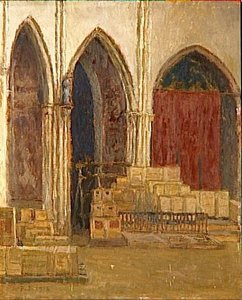
VUE INTERIEURE DE L'EGLISE DES JACOBINS DE TOULOUSE EN 1918


paul jamot (1863 – 1939)
Explore the life & legacy of Paul Jamot (1863-1939), a French painter, curator & art critic. Discover his contributions to museums like the Louvre & Orsay, and his diverse collection spanning Corot to Picasso.
Louvre (Paris, France)
Otkrijte bezvremenske remek-dela Louvra! Putujte kroz istoriju umetnosti od drevnog Egipta do renesansnih ikona – Mona Liza, Venere Miloska i još mnogo toga. Pariško kulturno blago čeka na vas! A) Kraljevskom dvorcem isključivo za Luja XIV. B Prema datom tekstu, šta je bila prvobitna svrha palate Louvre?
Paul Jamot’s “Vue intérieure de l’église des Jacobins de Toulouse” – A Window into Parisian Impressionism
Paul Jamot's "Vue intérieure de l’église des Jacobins de Toulouse," painted in November 1918, stands as a testament to the enduring power of Impressionist art and its ability to capture not just visual reality but also the emotional atmosphere of a pivotal moment in history. This monumental canvas—measuring approximately 41.5 x 27.3 cm (RF 1941 17)—offers viewers an immersive experience into the grandeur of Toulouse Cathedral during the tumultuous years following World War I.- Subject Matter: The artwork focuses squarely on architectural detail—specifically, three towering Gothic arches dominating the cathedral interior. These arches are juxtaposed with stacked boxes representing scaffolding and construction materials, subtly hinting at the ongoing efforts to rebuild France after the devastation of the war.
- Style & Technique: Jamot’s approach aligns perfectly with Impressionism's core tenets. Visible brushstrokes create a textured surface, prioritizing capturing light and color over precise representation. The palette is dominated by earthy hues—ochre, red, and brown—reflecting the stone walls of the cathedral and conveying a sense of solemnity and resilience.
- Historical Context: Painted in 1918, “Vue intérieure” encapsulates the spirit of recovery and optimism that characterized France’s post-war period. The cathedral served as a symbol of national unity and faith amidst the challenges posed by rebuilding society after immense loss.
- Materials & Medium: Oil paint on canvas – a traditional medium that allows for rich pigment saturation and nuanced blending, ensuring the artwork retains its vibrancy over time.
- Provenance: The painting was bequeathed to the Musée du Louvre in 1941 by Paul Jamot himself, cementing its place within Parisian art history and demonstrating his commitment to preserving artistic heritage.
Exploring Paul Jamot’s Artistic Vision
Paul Jamot (1863-1939) was a prominent figure in French Impressionism, alongside luminaries like Monet and Renoir. His artistic journey began with an early fascination for the landscapes of Provence—a region that would inspire countless paintings throughout his career. However, it was his encounter with Edvard Munch’s “The Scream” – a seminal work exploring themes of anxiety and existential dread – that profoundly shaped Jamot's own artistic sensibilities.- Influences: Munch’s expressive use of color and form served as an impetus for Jamot to delve deeper into the psychological dimensions of painting, prioritizing conveying emotion over strict realism.
- Notable Works Beyond “Vue intérieure”: Jamot produced a diverse body of work encompassing landscapes, portraits, and still lifes—each infused with his distinctive Impressionistic style and imbued with a sensitivity to capturing fleeting moments of beauty and feeling.
* Wikipedia: https://en.wikipedia.org/wiki/Paul_Jamot – Provides biographical details and an overview of his artistic output.
* Louvre Museum Database:https://collections.louvre.fr/en/art/paul-jamot-vue-interieure-de-l-eglise-des-jacobins-de-toulous-AQSU2B-en/ – Offers comprehensive information about “Vue intérieure,” including dimensions, materials, and provenance.
* Image Search:https://ArtsDot.com/en/art/paul-jamot-vue-interieure-de-l-eglise-des-jacobins-de-toulous-AQSU2B-en/?srsltid=AfmBOoouRffRY5wOQ3PHJtqGw5OAU_rRSC5ewaVePFmWEjg3mjBS2eHj – Allows you to view a high-resolution image of “Vue intérieure” and discover related artworks by Jamot.
O ovom umetničkom delu
- Naslov: VUE INTERIEURE DE L'EGLISE DES JACOBINS DE TOULOUSE EN 1918
- Umetnik: paul jamot
- Format: Portrait
- Status autorskih prava: Javno vlasništvo
- Mesto izlaganja: Louvre
- Medijum: Oil On Canvas
- Kontekst korpusa: jamot's church series exploration , filtered light
- Paleta boja: Dark
- Dominantna boja: Walnut
- Namena: Accent
Osnovne informacije
- Artistic style: Impressionnisme
- Medium: Huile sur toile
- Subject or theme: Architecture religieuse
- Location: Musée du Louvre
- Influences: Vincent van Gogh
- Dimensions: 41,5 x 27,3 cm
- Title: Vue intérieure de l'église des Jacobins de Toulouse en 1918
QR kod