

 Pregledaj u prostoru
 Pošalji
 Podeli
 Detalji o delu

 Преузми
 Slični predmeti
 Rendgenski snimak
 Slajdovi
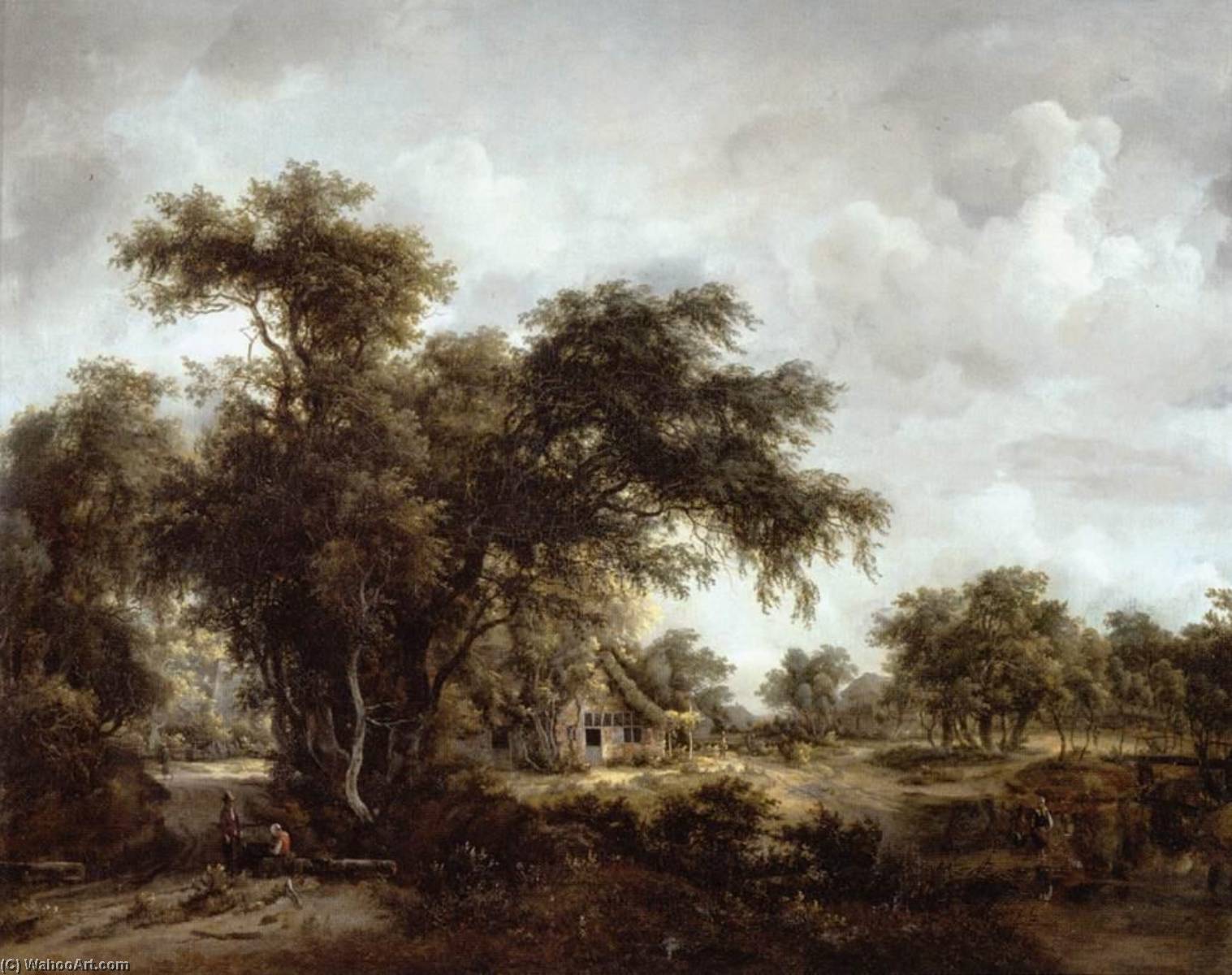
Farm in the Woods
 1662
1662 82.0 x 103.0 cm
 Pročitaj više
Ručno rađena uljana reprodukcija
Ručno oslikano uljanim bojama na platnu u dimenzijama i okviru po vašem izboru, izrađeno po porudžbini od strane naših umetnika. ( Kupi print Kupi digitalnu sliku)




































Izaberite jednu od naših unapred definisanih veličina koje odgovaraju originalnim proporcijama umetničkog dela.

Можете унети сопствене димензије како бисте прилагодили дело одређеном оквиру или простору. Ако одабрана величина не одговара пропорцијама оригинала, слика ће бити исечена или проширена додатним елементима који се ручно насликавају. Дигитални prikaz ће вам бити послат на одобрење пре почетка производње.
Имајте на уму да преглед на екрану не одражава стварно исецање или проширење. Само приказ (mockup) ће тачно приказати коначну композицију.
Иако су доступне прилагођене величине, препоручујемо да одаберете димензију из дефинисане листе како бисте сачували оригиналне пропорције.
Nakon narudžbine, tim ArtsDot.com će klijentu putem e-pošte poslati uputstva i dostaviti prikaz predloženog rešenja
Isporuka širom sveta () za 3/4 nedelje umesto uobičajenih 5 nedelja. (23 август). Bez kompromisa po pitanju kvaliteta.

Besplatna ekspresna dostava širom sveta

Visokokvalitetno laneno platno

Kompletno osiguranje transporta

Garancija povraćaja carine i uvoznih dažbina

Garancija vernosti boja

Politika povrata u roku od 60 dana (samo u slučaju nedostataka)

Garancija povrata novca od 100%

Popust pri grupnoj kupovini
 Opcija sa staklom dostupna je samo za dimenzije manje od 110 cm

Farm in the Woods
Tehnika reprodukcije
Dimenzije reprodukcije
-


Konačna cena
$ 263
Opis umetničkog dela
Composition and Symbolism
The painting depicts a serene farm scene surrounded by trees, with several people engaging in various activities. The atmosphere is peaceful, highlighting the harmony between humans and nature. The use of warm colors and soft brushstrokes adds to the overall sense of tranquility. Light and shadow are skillfully used to create depth and dimension in the painting.Artist's Style and Influences
Meyndert Hobbema's style is characterized by his use of earthy tones and emphasis on landscape elements. His work was influenced by the Dutch Golden Age, a period of significant cultural and artistic growth in the Netherlands. Hobbema's paintings often featured everyday scenes, making his work relatable and endearing to audiences.- View more of Meyndert Hobbema's works on ArtsDot.com
- Learn more about the Musée du Louvre and its collection on Wikipedia
The Farm in the Woods is a testament to Meyndert Hobbema's skill as a landscape painter, and its serene beauty continues to inspire and captivate audiences today.
Srodna umetnička dela




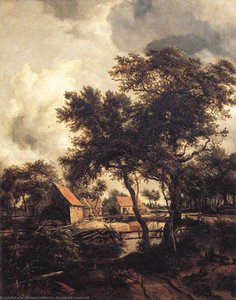
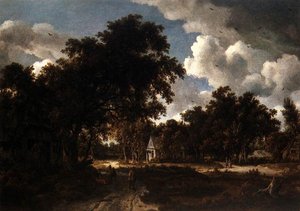
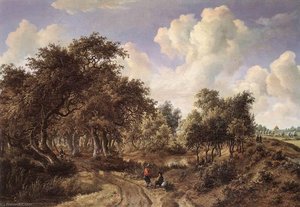
Biografija umetnika
Meindert Lubbertszoon Hobbema: The Painter of Tranquil Woodland
Meindert Lubbertszoon Hobbema stands as a cornerstone of Dutch Baroque landscape painting, recognized for his masterful depictions of serene woodland scenes and meticulously rendered rural vistas that embody the spirit of the Golden Age. Born in Amsterdam and baptized on 31 October 1638, Hobbema’s artistic journey was profoundly shaped by his early connection to the legendary Jacob van Ruisdael. Under the tutelage of this titan of Dutch landscape painting, Hobbema developed a collaborative bond that would define his stylistic evolution. Together, they embarked on sketching expeditions throughout the Netherlands, meticulously capturing atmospheric conditions and topographical features, establishing a tradition of plein air painting that prioritized a direct, intimate engagement with the natural world.
This formative experience instilled in Hobbema an unwavering commitment to realism and a profound appreciation for the subtle interplay of light and shadow. His early years were marked by a dedication to observing the nuances of the Dutch countryside, a practice that would eventually lead him to become one of the most celebrated landscape artists of his era. While much of his early life remains shrouded in the quietude of historical records, his artistic lineage is clear, rooted in the rigorous observation and meticulous detail championed by his mentor, Van Ruisdael.
A Legacy of Observation and Technique
Hobbema’s distinctive style is characterized by its remarkable clarity and precision, achieved through painstaking observation and meticulous brushwork. Unlike many of his contemporaries who favored idealized or mythological representations, Hobbema relentlessly pursued accuracy in portraying the natural landscape. His canvases often feature wooded paths, meadows bathed in soft sunlight, and watercourses reflecting the shifting sky. He famously employed a technique known as gezichtsblick, or “face view,” which involved positioning himself directly before his subject matter to capture its essence with unparalleled immediacy.
This approach resulted in works that felt vibrantly alive, imbued with an atmospheric depth that drew the viewer into the scene. His mastery of light and shadow—often utilizing chiaroscuro to create dimensionality—allowed him to transform simple rural vistas into profound meditations on nature. Whether depicting a sun-drenched forest clearing or a quiet watermill, Hobbema’s technical skill ensured that every leaf, branch, and ripple in the water contributed to a larger sense of harmony and balance.
Masterpieces and Artistic Evolution
As his career matured, Hobbema’s work began to exhibit a specialized focus that distinguished him from his master. While Van Ruisdael often explored more dramatic and turbulent landscapes, Hobbema became renowned for his "sunny forest scenes," characterized by roads opening through woods and glistening ponds nestled within fairly flat landscapes. This evolution toward a more tranquil and luminous aesthetic allowed him to capture a specific type of Dutch peace that resonated deeply with the era's sensibilities.
Several of his works remain enduring icons of the Dutch Golden Age:
- The Avenue at Middelharnis (1689): Perhaps his most famous achievement, this painting showcases a different side of his talent, presenting a structured and grand perspective that departs from his typical dense woodlands.
- Wooded Landscape (1662): A masterpiece of composition, where trees, birds, and clouds coalesce to create a sense of profound peacefulness.
- A Watermill beside a Woody Lane (1665): An exquisite example of his ability to integrate architectural elements into the lush, organic textures of the forest.
- A Watermill (1666): Housed in the Rijksmuseum, this work demonstrates his exceptional skill in using light and shadow to create a sense of depth and movement within a river setting.
Through these works, Hobbema achieved a historical significance that transcends mere representation. He did not merely paint the Netherlands; he captured the very soul of its landscape during a period of unprecedented prosperity and cultural flowering. His ability to find the extraordinary within the ordinary—the quiet beauty of a sunlit path or the stillness of a woodland glade—ensured his place in the pantheon of the great Dutch Masters, leaving behind a legacy of tranquility that continues to captivate art lovers centuries later.
meyndert hobbema
1638 - 1709
Osnovne informacije
- Artistic Movement Or Style: Dutch Baroque
- Artists Or Movements Influenced By This Artist: ['Dutch Landscape Painting']
- Artists Who Influenced This Artist: ['Jacob van Ruisdael']
- Date Of Birth: October 31, 1638
- Date Of Death: December 7, 1709
- Full Name: Meindert Lubbertszoon Hobbema
- Nationality: Dutch
- Notable Artworks:
- The Avenue at Middelharnis
- A Watermill beside a Woody Lane
- Place Of Birth: Amsterdam, Netherlands

