Introduction
Imagine walking into a room where the walls don't just hold color, but pulse with the rhythm of a restless soul. To encounter the works of Eugène Henri Paul Gauguin is to step away from the predictable and into a world of raw, sun-drenched emotion and symbolic mystery. He was an artist who dared to abandon the safety of a successful Parisian financial career to chase a deeper, more primal truth, seeking it in the rugged landscapes of Brittany and the lush, dreamlike expansational vistas of Tahiti.
Gauguin’s journey was one of profound transformation. Moving far beyond the fleeting light of the Impressionists, he pioneered a style that embraced bold, flat planes of color and heavy outlines—a movement known as Synthetism . His canvases do not merely replicate what the eye sees; they translate what the heart feels. Through his use of vibrant, often non-naturalistic hues, he bridged the gap between the visible world and the spiritual realm, inviting us to find beauty in the exotic, the ancient, and the untamed.
Today, these masterpieces remain deeply resonant. In our modern, often digital age, Gauguin’s work offers a tactile, soulful connection to the earth and to human instinct. His ability to weave together personal struggle, cultural fascination, and aesthetic rebellion continues to inspire interior designers and art lovers alike, bringing a sense of adventure and profound depth to any contemporary home.
As we guide you through this curated selection, prepare to be captivated by the textures and tones that defined an era. From his early explorations of French landscapes to his most iconic Tahitian compositions, we invite you to discover the top 25 artworks that continue to define the legendary legacy of Paul Gauguin.
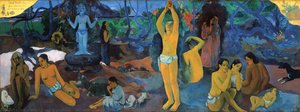
Where do we come from what are we where are we going - Eugène Henri Paul Gauguin
 Where do we come from what are we where are we going - Eugène Henri Paul Gauguin
To encounter Where do we come from, what are we, where are we going? is to stand before a profound visual poem that captures the very essence of the human soul. As one of the most significant pieces in the top 25 artworks of Eugène Henri Paul Gauguin, this monumental masterpiece transcends mere canvas; it is an allegorical journey through the cycle of existence.
Gauguin utilizes his signature Post-Impressionist technique—employing flat planes of vibrant, symbolic color and bold outlines—to weave a dreamlike Tahitian landscape. The composition moves with a rhythmic, almost hypnotic flow, guiding the eye from the innocence of infancy to the contemplative wisdom of old age. Deep blues and lush greens create a serene yet melancholic atmosphere, perfect for adding a layer of intellectual depth and soulful mystery to a refined contemporary interior. For the discerning collector, this work offers more than just aesthetic beauty; it provides a timeless window into the search for meaning, making it an incomparable centerpiece for any sophisticated home gallery.
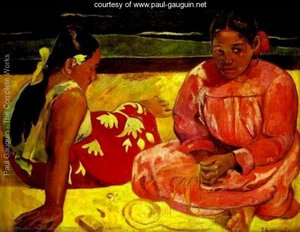
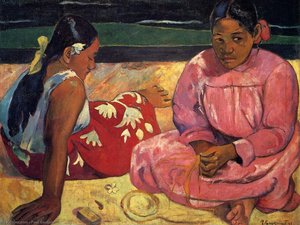
Two Women on the Beach - Eugène Henri Paul Gauguin
 Two Women on the Beach - Eugène Henri Paul Gauguin
To encounter Two Women on the Beach is to step directly into a Tahitian reverie, a moment of profound stillness captured by Eugène Henri Paul Gauguin in 1891. This masterpiece holds its place among the top 25 artworks of Gauguin because it represents a radical departure from Western realism, favoring the emotional truth of color over mere photographic accuracy. The scene unfolds with a quiet, prestigious intimacy; two Polynesian women sit in serene contemplation, their presence anchored by bold, flat planes of ochre and warm earth tones.
Gauguin’s use of Cloisonnism —defining forms with dark, stained-glass-like contours—creates a rhythmic, decorative beauty that feels incredibly modern. The vibrant reds and sun-drenched pinks of the figures' garments offer a striking contrast against the simplified landscape, imbuing the canvas with a tactile, soulful energy. For the contemporary collector, this work brings a sense of exotic escapism and timeless luxury to a room, acting as a window into a world of symbolic depth and breathtaking, saturated light.
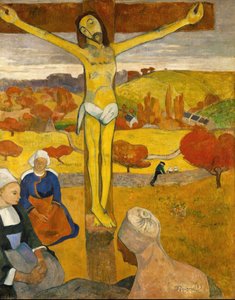
Yellow Christ - Eugène Henri Paul Gauguin
 Yellow Christ - Eugène Henri Paul Gauguin
Step into the quiet, heavy atmosphere of 1889 Brittany, where the air feels thick with both sorrow and spiritual mystery. In Yellow Christ , Paul Gauguin moves away from the fleeting light of Impressionism to embrace something much deeper and more symbolic. The scene is not a realistic depiction of suffering, but a dreamlike vision defined by bold, flattened planes of color and striking outlines reminiscent of stained glass.
The palette is hauntingly beautiful; a luminous, sickly yellow illuminates the figure of Christ, contrasting sharply against the earthy greens and deep blues of the landscape. Through his signature Synthetist technique, Gauguin uses thick, textured brushstrokes to create an emotional weight that feels almost tactile. This isn't just a religious icon; it is a masterclass in using color to convey raw human feeling.
Bringing a piece of this profound intensity into your home offers more than just decor; it provides a focal point for deep reflection and creative inspiration. Whether placed in a quiet reading nook or as a commanding statement in a modern living space, the Yellow Christ invites a sense of soulful contemplation and timeless elegance.
The Loss of Virginity (also known as The Awakening of Spring) - Eugène Henri Paul Gauguin
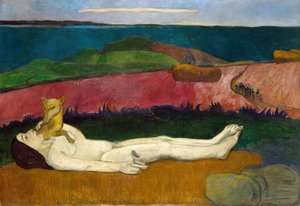 The Loss of Virginity (also known as The Awakening of Spring) - Eugène Henri Paul Gauguin
There is a profound, quiet magic in The Loss of Virginity (also known as The Awakening of Spring) that pulls you into a dreamscape where the boundaries between the human soul and the wild earth simply dissolve. In this 1891 masterpiece, Gauguin invites us to witness a moment of surreal stillness; a reclining figure rests upon a sun-drenched shore, watched over by the watchful, cunning presence of a fox. It is a painting that breathes with the rhythm of nature itself.
This work earns its place among the top 25 artworks of Eugène Henri Paul Gauguin because it perfectly encapsulates his transition into Symbolism. Through bold, flattened perspectives and a vibrant palette of deep blues and earthy pinks, Gauguin moves beyond mere observation to capture an emotional truth. At ArtsDot.com, we believe such evocative beauty should be accessible to every home. Our hand-made oil reproductions are meticulously crafted to preserve these thick, expressive brushstrokes and the soulful, atmospheric light, allowing you to bring this piece of Tahitian mystery into your own living space with all its original texture and wonder.
Mahana no atua (Day of God) - Eugène Henri Paul Gauguin
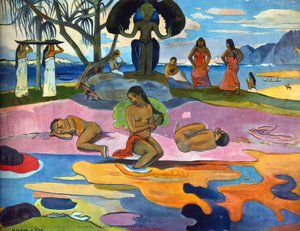 Mahana no atua (Day of God) - Eugène Henri Paul Gauguin
In Mahana no atua (Day of God) , the viewer is immediately struck by the tactile energy of Gauguin’s brushwork. The surface of the canvas vibrates with thick, expressive impasto, where heavy layers of paint create a physical topography that mirrors the raw, spiritual intensity of the Tahitian ritual depicted. This isn't merely a flat image; it is a rhythmic dance of color, where earthy greens and deep browns collide with sudden, luminous bursts of pink and orange to evoke a sense of divine presence.
This masterpiece earns its place among the top 25 artworks of Eugène Henri Paul Gauguin through its revolutionary use of flattened perspective and symbolic color, moving far beyond mere representation into the realm of pure emotion. At ArtsDot.com, our mission is to honor this profound materiality. Our handmade oil reproductions are meticulously crafted to preserve that essential three-dimensional quality—capturing every visible brushstroke and textured ridge—allowing you to bring the soulful, sun-drenched spirit of Gauguin’s Tahitian vision into your own home with museum-grade authenticity.
Self Portrait with Hat - Eugène Henri Paul Gauguin
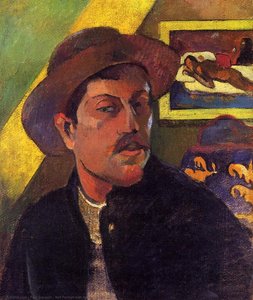 Self Portrait with Hat - Eugène Henri Paul Gauguin
In Self Portrait with Hat , Gauguin invites us into a deeply personal encounter, offering much more than a mere likeness. This 1893 masterpiece captures the very essence of his transition into Synthetism, where the artist moves beyond capturing light to expressing the weight of human emotion. As one of the most significant works in our collection of the top 25 artworks of Eugène Henri Paul Gauguin, it serves as a profound study of identity and introspection.
The painting’s visual language—characterized by a serious, melancholic gaze and a striking contrast between his dark attire and warm, earthy tones—possesses a timeless, moody elegance. For the modern decorator, this piece brings an incredible sense of intellectual depth and soulful character to a room. Its bold use of color and structured composition pair beautifully with contemporary minimalist interiors or more eclectic, curated spaces, where a single, powerful focal point can transform a wall into a window for reflection. It is not just a portrait; it is an invitation to feel the artist's inner world.
Tahitian Women Bathing - Eugène Henri Paul Gauguin
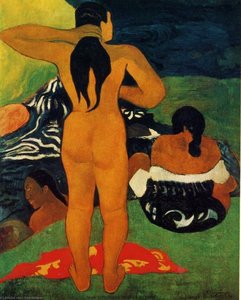 Tahitian Women Bathing - Eugène Henri Paul Gauguin
When you look closely at Tahitian Women Bathing by Eugène Henri Paul Gauguin, the first thing that captures your soul is the incredible materiality of his technique. You can almost feel the thick, rhythmic application of paint where Gauguin applied pigment directly from the tube, creating a textured surface that defies simple description. This isn't just a flat image; it is a symphony of Synthetism , where bold blocks of fiery orange, deep tropical blues, and lush greens collide to create a dreamlike, hallucinatory intensity.
This masterpiece earns its place among the top 25 artworks of Gauguin because it captures his revolutionary departure from Impressionism toward a more symbolic, emotional reality. At ArtsDot.com, we believe this tactile depth should never be lost to a mere print. Our handmade oil reproductions are meticulously crafted to preserve those very brushstrokes and the three-dimensional soul of the original, allowing you to bring the vibrant, sun-drenched spirit of Tahiti into your own home with museum-grade prestige.
Three Tahitians - Eugène Henri Paul Gauguin
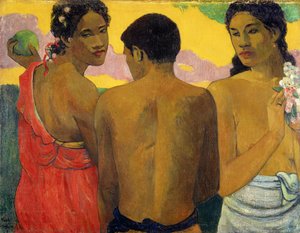 Three Tahitians - Eugène Henri Paul Gauguin
Close your eyes. Can you feel the sun-drenched warmth radiating from Three Tahitians by Eugène Henri Paul Gauguin? It is not merely light hitting a canvas; it is a language of emotion . Gauguin did not simply paint the tropical atmosphere of 1899; he composed it, using bold, flattened planes of pigment to create a rhythmic, musical pulse that vibrates through the verdant landscape.
In this masterpiece, the artist invites us into a world where color serves as a portal. The vibrant yellows, deep reds, and lush greens do not just reflect the Polynesian environment—they invent a new reality, one far removed from the constraints of Western civilization. As you gaze upon the figures standing amidst the wild flora, you feel the weight of their quiet contemplation. This work is essential to the top 25 artworks of Gauguin because it captures that elusive, spiritual essence of the Pacific. Now, open your eyes. That transformative light is waiting to spill into your home, turning your walls into windows of discovery and profound inspiration.
Little Girls (Landscape with Two Breton Girls) - Eugène Henri Paul Gauguin
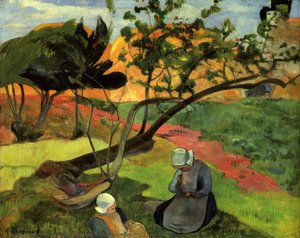 Little Girls (Landscape with Two Breton Girls) - Eugène Henri Paul Gauguin
In the quiet corners of the Musée d’Orsay lies a masterpiece that transcends mere landscape painting. Paul Gauguin's 1889 work, Little Girls (Landscape with Two Breton Girls) , is a profound window into the artist's soul during his transformative Breton period. As Gauguin sought refuge from the industrial march of Europe, he turned toward the rugged, tradition-steeped landscapes of Brittany to find a primal truth. This canvas invites you to step away from modern chaos and into a world defined by harmony and innocence.
The scene unfolds with breathtaking peace, centered around two young girls resting beneath a lush, protective canopy. Dressed in traditional Breton attire, their presence grounds the painting in cultural reality, yet Gauguin elevates the moment through Cloisonnism —using bold, flattened planes of color and dark outlines to create an emotive impact. With vibrant reds, deep greens, and striking blues, the brushwork feels organic and alive. To hang this piece is not just to decorate a wall; it is to invite a sense of enduring serenity and symbolic depth into your home, transforming your space into a true gallery of the soul.
Vairumati - Eugène Henri Paul Gauguin
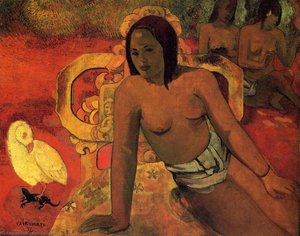 Vairumati - Eugène Henri Paul Gauguin
To encounter Vairumati by Eugène Henri Paul Gauguin is to step directly into the soul of Tahiti, discovering a masterpiece that feels less like a painting and more like a vivid, sun-drenched memory. As one of the most captivating entries in our collection of the top 25 artworks of Eugène Henri Paul Gauguin, this 1892 work stands as a breathtaking testament to his revolutionary Post-Impressionist spirit. The central figure radiates an undeniable dignity, her presence anchored by a palette of cerulean blues and fiery oranges that seem to pulse with life.
Gauguin masterfully weaves a sense of communal intimacy, where the delicate detail of a small bird perched near the chair suggests a profound harmony between humanity and the natural world. For the modern collector, Vairumati offers more than just historical significance; its bold, flattened forms and saturated hues bring a sophisticated, exotic energy to a refined interior. It is a piece that invites conversation, embodying a timeless beauty that transforms any room into a sanctuary of culture and deep, emotional resonance.
The White Horse - Eugène Henri Paul Gauguin
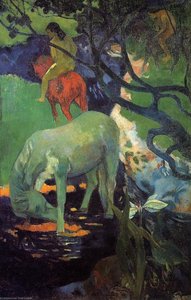 The White Horse - Eugène Henri Paul Gauguin
Owning a piece inspired by The White Horse by Eugène Henri Paul Gauguin is more than a decorative choice; it is an investment in a profound artistic legacy and a testament to refined, worldly taste. As one of the top 25 artworks of Gauguin, this 1898 masterpiece serves as a cornerstone of Post-Impressionism, celebrated for its departure from realism toward a soulful, symbolic language. The painting captures a breathtaking Tahitian vista where a magnificent white horse drinks from a crystalline stream, surrounded by lush, vibrant greens and deep blues that evoke a sense of mythic purity.
Gauguin’s use of the Synthetist technique—featuring flattened planes of color and expressive, textured brushstrokes—creates a rhythmic, dreamlike atmosphere that transcends mere landscape painting. This work holds immense historical value, representing the artist's spiritual quest for authenticity. Today, bringing a high-quality reproduction of this masterpiece into your home allows you to infuse modern luxury interiors with unparalleled aesthetic authority. Whether placed in a sun-drenched living room or a quiet study, the painting’s bold palette and serene mood command attention, offering the same prestige and emotional depth found in the world's finest galleries.
Les Alyschamps - Eugène Henri Paul Gauguin
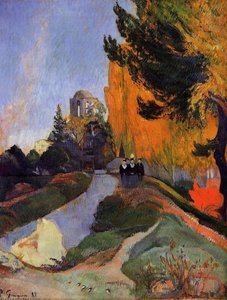 Les Alyschamps - Eugène Henri Paul Gauguin
In Les Alyschamps by Eugène Henri Paul Gauguin, a deep, soulful blue anchors the composition, casting a mood of tranquil intensity that feels both serene and profoundly mysterious. This masterpiece, a vital entry in our collection of the top 25 artworks of 'Eugène Henri Paul Gauguin' , showcases his revolutionary Synthetist style. Rather than mere observation, Gauguin uses a bold palette of ochre, crimson, and lush greens to synthesize emotion and form, reducing the landscape to its most evocative essence. The way the light seems to glow from within the canvas is nothing short of magical.
For those looking to infuse their own home with this same sense of discovery, this painting offers incredible design inspiration. The rich, saturated tones are perfect for creating a focal point in a modern dining room or a sophisticated study. By incorporating these deep blues and earthy accents into your decor, you can curate a space that feels grounded yet spiritually uplifting—bringing the transformative power of Post-Impressionism directly into your living space.
Still Life with Teapot and Fruit - Eugène Henri Paul Gauguin
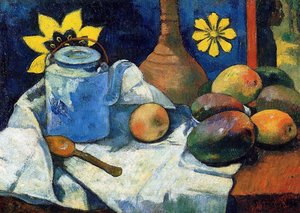 Still Life with Teapot and Fruit - Eugène Henri Paul Gauguin
Imagine stepping into a sun-drenched Tahitian kitchen, where the air is thick with the scent of ripening tropical fruit and the quiet warmth of a midday ritual. In Still Life with Teapot and Fruit , Gauguin invites us to pause within this sensory sanctuary. Created in 1896, this masterpiece captures more than just objects; it embodies a philosophy of finding profound beauty in the humble and the everyday.
This work earns its place among the top 2abilities 25 artworks of Eugène Henri Paul Gauguin through its revolutionary use of color and form. Moving away from delicate Impressionism, Gauguin employs bold, flattened shapes and a vibrant palette of ochre, deep red, and lush green to celebrate life's abundance. The heavy, textured brushstrokes bring a tactile energy to the teapot and scattered fruit, turning a simple arrangement into a powerful symbol of vitality. Bringing such a piece into your home does more than decorate a wall; it introduces a sense of grounded serenity and a soulful connection to the primal beauty of nature, transforming any modern room into a space of deep, artistic reflection.
Woman Holding a Fruit - Eugène Henri Paul Gauguin
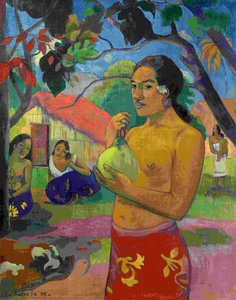 Woman Holding a Fruit - Eugène Henri Paul Gauguin
In Woman Holding a Fruit , Paul Gauguin invites you into an intimate encounter that feels both deeply personal and strikingly universal. As you gaze upon the central figure, her steady, soulful eyes establish an immediate connection, pulling you away from the modern rush and into the lush, sun-drenched atmosphere of Tahiti. The vibrant crimson of her traditional skirt, accented by bright yellow blossoms, dances against a backdrop of deep blues and verdant greens, showcasing the bold, non-naturalistic palette that defines his Post-Impressionist mastery.
This piece is more than just a beautiful landscape; it is a window into a dreamlike world of abundance and quiet reflection. The symbolic weight of the fruit and the tranquil conversation unfolding in the shade create a sense of profound peace. Incorporating this masterpiece into your home can transform a quiet corner or a personal sanctuary into a space for deep contemplation, bringing the exotic warmth and emotional depth of Gauguin’s most iconic visions directly to your walls.
Sunken Path, Wooded Rise - Eugène Henri Paul Gauguin
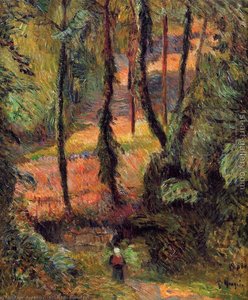 Sunken Path, Wooded Rise - Eugène Henri Paul Gauguin
In Sunken Path, Wooded Rise , Gauguin achieves a breathtaking structural harmony that makes this piece an essential entry in the top 25 artworks of Eugène Henri Paul Gauguin. The composition is anchored by the rhythmic, winding geometry of the path, which acts as a visual guide, pulling your gaze through layers of verdant depth. There is a profound sense of balance here; the verticality of the trees provides a steadying architecture against the organic, flowing lines of the forest floor.
This mastery of form creates a timeless perfection that resonates deeply with modern sensibilities. Much like the principles of modern minimalist design , Gauguin uses simplified shapes and a deliberate arrangement of color to ground the viewer. The way the earthy ochres and deep greens interact offers a serene, uncluttered focal point, making it an ideal inspiration for a clean, contemporary home aesthetic. It is not merely a forest scene, but a masterclass in using spatial balance to evoke a mood of quiet, soulful contemplation.
Marahi Metua no Tehamana (also known as Tehamana Has Many Ancestors) - Eugène Henri Paul Gauguin
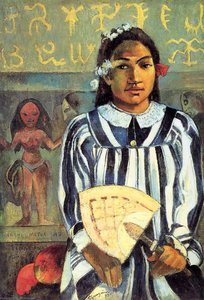 Marahi Metua no Tehamana (also known as Tehamana Has Many Ancestors) - Eugène Henri Paul Gauguin
While many view Gauguin’s time in the South Pacific as a mere tropical escape, Marahi Metua no Tehamana (also known as Tehamana Has Many Ancestors ) was born from a much more complex reality. Created in 1893, this masterpiece captures the young Teha’amana, a figure central to Gauguin's deeply personal and controversial Tahitian life. The painting is a sensory feast; Gauguin moves away from the fleeting light of Impressionism toward a bold, Post-Impressionist palette of deep blues, earthy ochres, and rich reds that demand your attention.
The technical genius lies in his use of symbolism to bridge two worlds. Amidst the serene portraiture, the unexpected placement of apples and mysterious glyphs on the background wall creates a layered, enigmatic atmosphere. It is a profound exploration of lineage and the collision of missionary influence with indigenous roots. Bringing such a powerful, storied work into your space—perhaps as a large-scale canvas print in a home study—infuses your environment with a sense of intellectual depth and the courageous, wandering spirit of one of the top 25 artworks of Eugène Henri Paul Gauguin .
Night Cafe in Arles (Madame Ginoux) - Eugène Henri Paul Gauguin
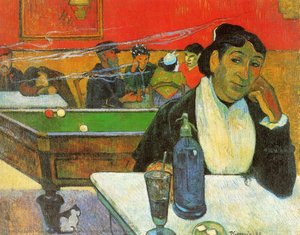 Night Cafe in Arles (Madame Ginoux) - Eugène Henri Paul Gauguin
In Night Cafe in Arles (Madame Ginoux) , Gauguin captures a moment of profound, quiet introspection amidst the vibrant energy of a nocturnal social hub. As you gaze upon Madame Ginoux, her steady, contemplative presence acts as an emotional anchor against the striking, saturated red walls and the lively green of the billiard table. There is a beautiful psychological depth here; she exists in a private world of thought even while surrounded by the movement of the café, making this piece a universal mirror of our own moments of solitude within a crowd.
As one of the top 25 artworks of Eugène Henri Paul Gauguin , this masterpiece offers more than just visual drama. The bold Post-Impressionist colors and expressive brushstrokes create a sensory experience that can transform a personal sanctuary into a space for deep reflection. Whether you are drawn to its historical connection to Van Gogh or its ability to spark conversation, bringing this piece into your home allows you to surround yourself with the powerful, evocative spirit of Arles, turning any room into a gallery of soulful storytelling.
Vase of Peonies I - Eugène Henri Paul Gauguin
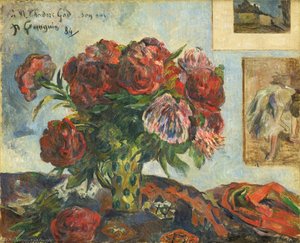 Vase of Peonies I - Eugène Henri Paul Gauguin
Before he was the legendary wanderer of Tahiti, Gauguin was a man navigating the rigid structures of Parisian society, and Vase of Peonies I captures him at a breathtaking crossroads. Painted in 1884, this work serves as a vibrant manifesto of his departure from Impressionism. While his contemporaries chased the fleeting flicker of light, Gauguin leaned into the weight of color, using deep, crimson reds to pulse with life and emotion.
The composition is a masterclass in symbolic balance; the lush, scarlet blooms are not merely botanical studies but anchors of passion and vitality. As you gaze upon the woman poised near the vase, you feel the intentionality of his flattened planes and bold, expressive brushstrokes. This piece represents a monumental conceptual leap toward Symbolism, where art seeks to depict the soul rather than just the eye. Bringing such a masterpiece into your personal space—perhaps as a centerpiece in a modern study—infuses your environment with a sense of profound focus and creative ambition, turning a quiet corner into a sanctuary of sophisticated inspiration.
Jeanne d'Arc, or Breton girl spinning - Eugène Henri Paul Gauguin
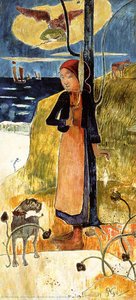 Jeanne d'Arc, or Breton girl spinning - Eugène Henri Paul Gauguin
There is a profound, quiet magic in witnessing Jeanne d'Arc, or Breton girl spinning by Eugène Henri Paul Gauguin. It captures a moment of pure, rhythmic serenity—a young woman lost in the simple, meditative task of spinning wool against the rugged beauty of the Brittany coast. This masterpiece earns its place among the top 25 artworks of Eugène Henri Paul Gauguin because it marks a pivotal departure from Impressionism toward a more symbolic, soulful way of seeing. Through his signature Cloisonnism style, Gauguin uses bold, flat areas of color and heavy outlines to transform a rustic scene into something spiritual and eternal.
The painting’s palette of warm ochre and deep crimson creates an emotional warmth that feels both grounded and ethereal. As you gaze upon the textured brushstrokes and the symbolic strength of the solitary tree, you feel the pulse of history. At ArtsDot.com, we believe this kind of evocative beauty shouldn't be confined to museums. Our hand-painted oil reproductions meticulously preserve Gauguin’s vibrant pigments and tactile depth, allowing you to invite this sense of peaceful, historical wonder into your own living space.
Christ in the Garden of Olives - Eugène Henri Paul Gauguin
 Christ in the Garden of Olives - Eugène Henri Paul Gauguin
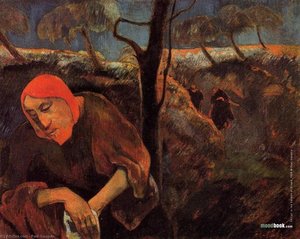
In Christ in the Garden of Olives , Gauguin doesn't just depict a biblical moment; he composes a silent, spiritual sonata. As you gaze upon this 1889 masterpiece, notice how the light doesn't merely illuminate the scene—it breathes life into the heavy, contemplative atmosphere. The striking red of Christ’s hooded robe acts as a visual heartbeat against a palette of earthy browns and tranquil blues, drawing your eye to a moment of profound isolation and divine reflection.
This piece earns its place among the top 25 artworks of Eugène Henri Paul Gauguin because of its revolutionary use of Symbolism. Moving away from rigid realism, Gauguin uses flattened perspectives and bold, emotive colors to capture what is felt rather than just what is seen. The serene landscape becomes a sanctuary where nature and divinity intertwine. Bringing a reproduction of this work into your space does more than decorate a wall; it invites a portal of introspection and soulful warmth into your home, turning a simple room into a gallery of deep, emotional resonance.
The Universe Is Created - Eugène Henri Paul Gauguin
 The Universe Is Created - Eugène Henri Paul Gauguin
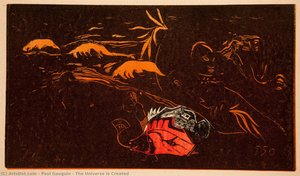
In the quiet, heavy stillness of The Universe Is Created by Eugène Henri Paul Gauguin, time seems to suspend itself between the shore and the infinite. This masterpiece holds its place among the top 25 artworks of Eugène Henri Paul Gauguin because it transcends mere landscape painting, offering instead a profound, symbolic meditation on life, death, and the mysteries of existence. As you gaze upon the canvas, the saturated blues of the coast and the rugged textures of the mountains breathe a sense of primordial drama into the room.
Gauguin’s departure from Impressionism is palpable here; his bold, unblended brushstrokes create a tactile rhythm that invites deep contemplation. The presence of the kneeling figure and the silent, watchful birds evokes a mood of spiritual gravity that can transform a modern living space into a sanctuary of thought. Whether you are drawn to its vibrant, complementary color palettes or its hauntingly beautiful narrative, this piece brings an unparalleled layer of sophistication and soulful depth to any curated home collection.
Children in the Pasture (also known as Orchard below Bihorel Church) - Eugène Henri Paul Gauguin
 Children in the Pasture (also known as Orchard below Bihorel Church) - Eugène Henri Paul Gauguin
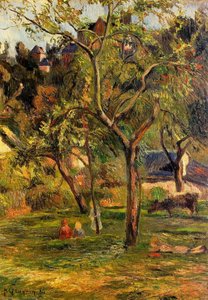
In Children in the Pasture (also known as Orchard below Bihorel Church ), the lines of nature aren’t merely drawn; they are choreographed . Painted in 1884, this masterpiece captures a sun-drenched moment in Brittany where Gauguin’s brushwork begins to dance. The composition is not just a landscape; it is a dance frozen in time , where the vibrant greens of the lush pasture and the deep, textured impasto of the apple tree create a rhythmic pulse of life.
As you gaze upon the dappled shadows and the warm ochres of the children’s clothing, you feel a profound sense of innocence. Gauguin moves away from photographic reality toward a symbolic, emotional truth, using bold colors to evoke the joy of a summer afternoon. This piece is a vital part of our collection of the top 25 artworks of Eugène Henri Paul Gauguin because it demonstrates how art can transform a simple scene into something spiritual. What if your living room could hold that same balance? What if your walls could breathe rhythm and invite this same serene, pastoral energy into your home?
Title in Swedish: Landskap från Bretagne - Eugène Henri Paul Gauguin
 Title in Swedish: Landskap från Bretagne - Eugène Henri Paul Gauguin
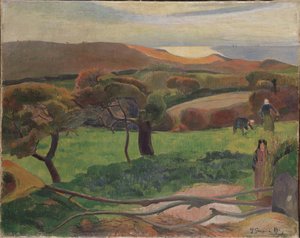
Imagine standing in a sun-drenched meadow, where the air feels heavy with the scent of earth and the quiet hum of nature. This is the profound stillness captured in Landskap från Bretagne by Eugène Henri Paul Gauguin. Created in 1889, this masterpiece invites you to step away from the noise of modern life and into a world of symbolic serenity. As you gaze upon the sprawling fields and luminous sky, you feel the pulse of the Breton countryside, rendered through Gauguin’s revolutionary use of bold ochre, crimson, and turquoise.
This work earns its place among the top 25 artworks of Eugène Henri Paul Gauguin because it transcends mere landscape painting; it is a spiritual encounter. Through thick, expressive impasto strokes, Gauguin captures not just a vista, but an emotion—a sense of resilience and abundance. Bringing such a piece into your home does more than decorate a wall; it introduces a window to tranquility, allowing the vibrant, textured energy of Post-Impressionism to infuse your daily environment with meaning and timeless beauty.
Haystack, near Arles - Eugène Henri Paul Gauguin
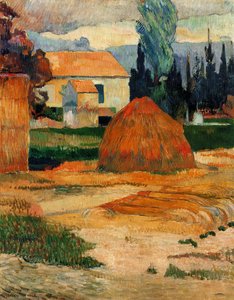 Haystack, near Arles - Eugène Henri Paul Gauguin
Imagine standing in the sun-drenched fields of Provence, where the warmth of the light feels almost tangible against your skin. This is the sensory world Gauguin invites us into with Haystack, near Arles by Eugène Henri Paul Gauguin . Created in 1888, this piece captures a pivotal moment of artistic intersection, where the vibrant energy of Van Gogh’s influence meets the structural brilliance of Cézanne. The painting is anchored by a luminous, golden haystack that radiates an almost spiritual abundance, its brilliant yellow hues contrasting beautifully with the earthy greens and soft whites of the distant landscape.
As you observe the interlocking planes of color and the deliberate, rhythmic brushwork, you feel the profound tranquility of rural life. It is more than a landscape; it is a meditation on fertility and the cycle of nature. Including this work in our collection of the top 25 artworks of Eugène Henri Paul Gauguin is essential, as it showcases his mastery of color as an emotional language. Today, bringing such a masterpiece into your home does more than decorate a wall—it introduces a timeless sense of peace and a soulful, sun-soaked atmosphere to your living space.
Christmas night - Eugène Henri Paul Gauguin
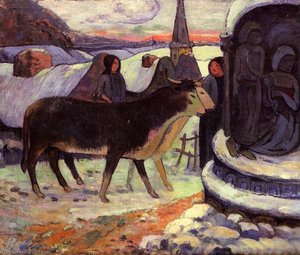 Christmas night - Eugène Henri Paul Gauguin
While many associate Gauguin with the tropical heat of Tahiti, Christmas Night (1894) captures a much more mystical, frost-touched moment from his time in Brittany. It is a piece where the artist moves away from mere observation to embrace Synthetism , using bold outlines and flattened planes of color to evoke a spiritual weight that Impressionism simply could not reach.
In this masterpiece, Gauguin orchestrates a symphony of deep purples, twilight blues, and solemn shadows. The scene is anchored by an ox statue bathed in ethereal light, surrounded by figures in dark headdresses that suggest a profound connection to Celtic mysticism. By juxtaposing these rich, unblended hues, he creates a sense of rhythmic movement—a lively yet reverent gathering under a piercing church spire. This painting is not just a landscape; it is an emotional landscape.
Bringing the heavy, contemplative atmosphere of Christmas Night into your personal space can transform a modern home office or study. The deep, saturated tones and structured composition provide a sophisticated backdrop that inspires focused, profound thought and a sense of quiet, creative ambition.
Conclusion
As the light fades on our journey through Gauguin’s vibrant world, we are left with more than just images of distant shores and sun-drenched figures; we carry away a sense of the profound courage it takes to seek one's true self. These twenty-five masterpieces are far more than mere relics of a bygone era or static treasures tucked away in museum halls. They are living, breathing presences that continue to pulse with the same rebellious spirit and raw emotion that drove the artist from the stock exchanges of Paris to the lush landscapes of Tahiti.
To gaze upon his work is to feel a timeless human connection—a shared longing for authenticity, beauty, and the mysteries that lie beneath the surface of our everyday lives. Whether it is the bold, symbolic colors that redefine a room's mood or the deep, soulful textures of a hand-painted canvas, Gauguin’s legacy offers us a way to invite wonder into our own modern sanctuaries. His brushstrokes remind us that art is not just something to be observed, but something to be felt and lived with every day.
We invite you to continue this discovery and find the piece that speaks to your own story within our full collection . Let the warmth of his palette and the depth of his vision transform your space into a place of endless inspiration.