The Kalevala's Embrace: Gallen-Kallela’s Early Inspiration
 Wikipedia: Akseli Gallen-Kallela
Akseli Gallen-Kallela (born Axel Waldemar Gallén; 26 April 1865 – 7 March 1931) was a Finnish painter who is best known for his illustrations of the Kalevala, the Finnish national epic. His work is considered a very important aspect of the Finnish na...
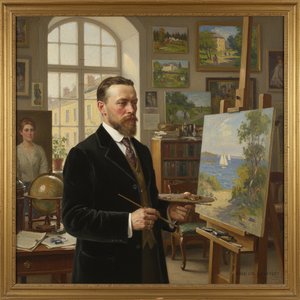
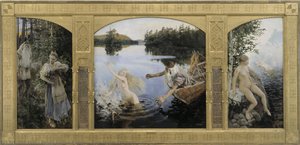
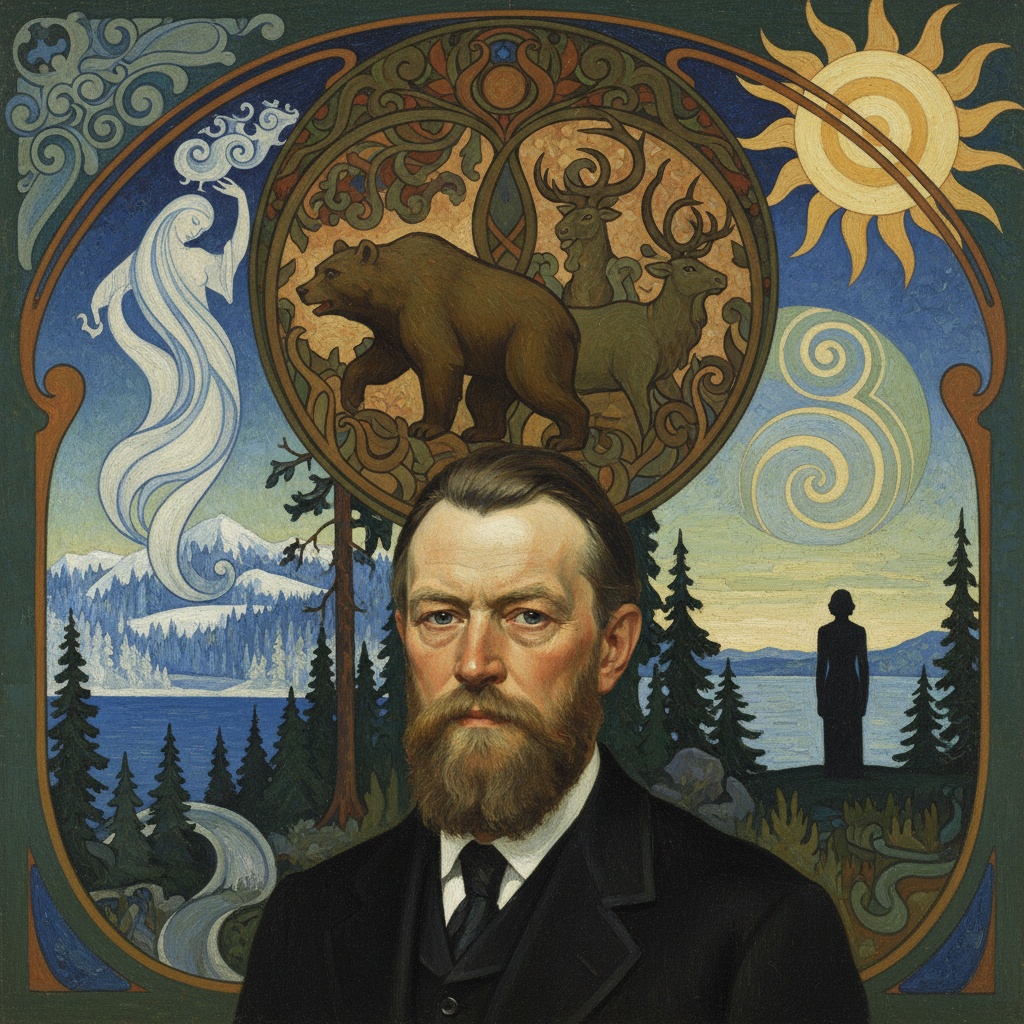
Akseli Gallen-Kallela, born Axel Waldemar Gallén in 1865, wasn’t merely a painter; he was a cultural architect, tasked with visually constructing a Finnish national identity at a pivotal moment in the nation's history. His journey began not with grand artistic ambition, but with a deep immersion into the ancient oral traditions of his homeland – specifically, the *Kalevala*, Finland’s epic poem. This collection of folklore and mythology, compiled in the 19th century from Karelian and Finnish oral traditions, became the bedrock of Gallen-Kallela's artistic vision. Before the rise of a unified national consciousness, the *Kalevala* offered a shared heritage, a tapestry woven with tales of creation, heroism, tragedy, and the profound connection between the Finnish people and their land. Gallen-Kallela didn’t simply illustrate these stories; he sought to embody them, to translate the spirit of the epic into a visual language that resonated with a burgeoning sense of national pride.
Initially trained in Paris under established academic standards, Gallen-Kallela found himself drawn back to Finland, compelled by an almost magnetic pull towards its unique cultural landscape. His early works reflect this internal struggle – a blending of European techniques with distinctly Finnish subject matter. He wasn’t content to merely depict scenes *from* the *Kalevala*; he wanted to evoke the very essence of the epic, the raw power and mystical beauty that lay at its heart. This desire would propel him beyond realism and into the realm of National Romanticism.
From Realism to Romantic Nationalism: A Defining Artistic Shift
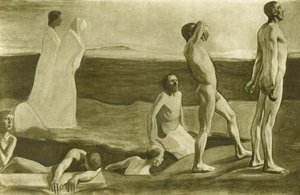 RESURRECTION
Magnificent "Resurrection" by Akseli Gallen-Kallela – a cornerstone of Finnish National Romanticism. Explore this iconic painting's symbolism & beauty. Hand-painted reproduction available.
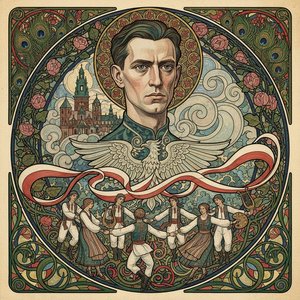
The late 19th century witnessed a surge in Romantic nationalism across Europe, a movement fueled by a yearning for cultural authenticity and self-determination. In Finland, this sentiment was particularly potent, as the nation navigated its complex relationship with Russia. Gallen-Kallela became a leading figure in this artistic awakening, consciously rejecting the prevailing academic styles in favor of a uniquely Finnish aesthetic. This wasn’t simply an aesthetic choice; it was a political statement.
His shift from realism to Romantic nationalism manifested in several key ways. He began to prioritize symbolism over strict representation, imbuing his landscapes with emotional weight and mythological significance. The human figures within his paintings became archetypes – embodiments of Finnish strength, resilience, and connection to nature. He also embraced a darker, more dramatic palette, reflecting the often-somber tone of the *Kalevala*’s narratives. Paintings like “Resurrection” (1894) exemplify this transformation; it's not merely a depiction of a biblical scene but a powerful allegory for Finnish rebirth and national awakening. The stark contrast between light and shadow, the angular forms, and the intense emotionality all speak to a nation grappling with its identity.
Symbolic Landscapes & Mythological Narratives: Decoding Gallen-Kallela’s Visual Language
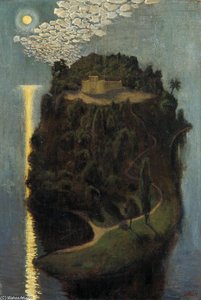 The Island of the Blessed
Explore 'The Island of the Blessed' by Akseli Gallen-Kallela – a stunning National Romantic landscape painting. Discover its dreamy atmosphere, moonlit beauty & Finnish symbolism.
Gallen-Kallela's mastery lay in his ability to imbue landscapes with profound symbolic meaning. His paintings aren’t simply depictions of the Finnish countryside; they are portals into a mythological realm, where ancient spirits reside and the boundaries between reality and legend blur. “The Island of the Blessed” (1893) is a prime example – a dreamlike vision of a moonlit landscape, steeped in Finnish folklore. The ethereal atmosphere, the stylized forms, and the subtle use of color create a sense of otherworldly beauty and mystery.
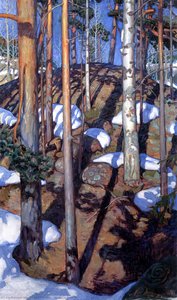
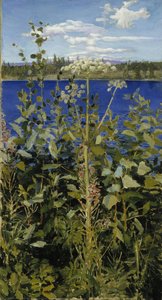
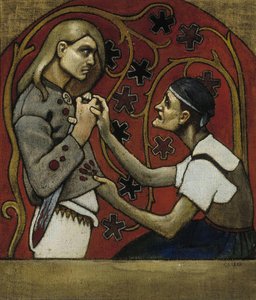
He meticulously researched Karelian culture, spending time among the people and absorbing their traditions and beliefs. This immersion informed his depictions of mythological figures like Lemminkäinen, Kullervo, and Aino – characters who became synonymous with Finnish national identity through Gallen-Kallela’s interpretations. His use of specific motifs—pine trees representing strength and endurance, water symbolizing life and renewal, and the ever-present presence of the sky reflecting both hope and foreboding—created a visual lexicon that resonated deeply with his audience. The artist wasn't just telling stories; he was constructing a national mythology.
Kalela and Beyond: The Artist’s Life as a Reflection of His Art
Gallen-Kallela didn’t simply paint Finnish identity; he *lived* it. In 1895, he built Kalela, a magnificent log cabin on the shores of Lake Ruovesi, designed to be a physical embodiment of his artistic vision and a sanctuary for Finnish culture. The cabin itself became a symbol – a testament to the artist’s commitment to authenticity and self-sufficiency. It was constructed using traditional methods, with local materials, reflecting his deep respect for Finnish craftsmanship and heritage.
His life wasn't without tragedy; the loss of his young daughter Impi Marjatta in 1895 profoundly impacted his work, leading to a period of intense emotional exploration. This personal grief found expression in darker, more powerful paintings, reflecting themes of loss, resilience, and the cyclical nature of life and death. His travels also played a crucial role – from his early studies in Paris to his later expeditions to Kenya, each experience broadened his perspective and enriched his artistic vocabulary. Even his decision to finnicize his name from Gallén to Gallen-Kallela in 1907 was a deliberate act of cultural affirmation.
Gallen-Kallela's Enduring Legacy: Impact on Finnish Identity and Modern Art
Akseli Gallen-Kallela’s impact on Finnish art and national identity is immeasurable. He didn’t just create beautiful paintings; he forged a visual language that helped define what it meant to be Finnish at a critical juncture in the nation's history. His work inspired generations of artists, writers, and thinkers, shaping Finland’s cultural landscape for decades to come.
His influence extends beyond the borders of Finland as well. Gallen-Kallela’s embrace of symbolism and his exploration of mythological themes resonated with broader trends in modern art, influencing movements like Art Nouveau and Symbolism. Today, his paintings continue to captivate audiences worldwide, offering a glimpse into a unique cultural heritage and a testament to the power of art to shape national consciousness. ArtsDot offers stunning reproductions of Gallen-Kallela’s masterpieces, allowing you to bring the spirit of Finland into your own home. Explore our collection and discover the enduring beauty and profound symbolism of this iconic artist.